Category Archives: Birds

Striated Thornbills of the Iron Bark Track

Near the turn off from the main highway (also called the Great Ocean Road) along the Point Addis Road is a small carpark and the start to a wonderful short walk around a mixed growth forest. At the moment the tall Iron Bark trees are flowering and while there may not be a huge number of species there are very good numbers of a few forest species. Walking around the forest track we came across the usual birds like Red Wattlebirds, Eastern Yellow Robins, New Holland Honeyeaters and Rainbow Lorikeets and a few rarer birds like the Gang Gang Cockatoo and Varied Sitella. While trying to find a Painted Button Quail that we could hear calling we became immersed in a small feeding flock of Striated Thornbills. Their cousins the Brown Thornbill are quite common in most forests and even in my own street in suburbia but striated seem to be a bit rarer and difficult to photograph – they are always on the go, hunting for insects and chasing each other. It is a real treat to find (usually by their calls) and photograph these tiny 10 cm birds.
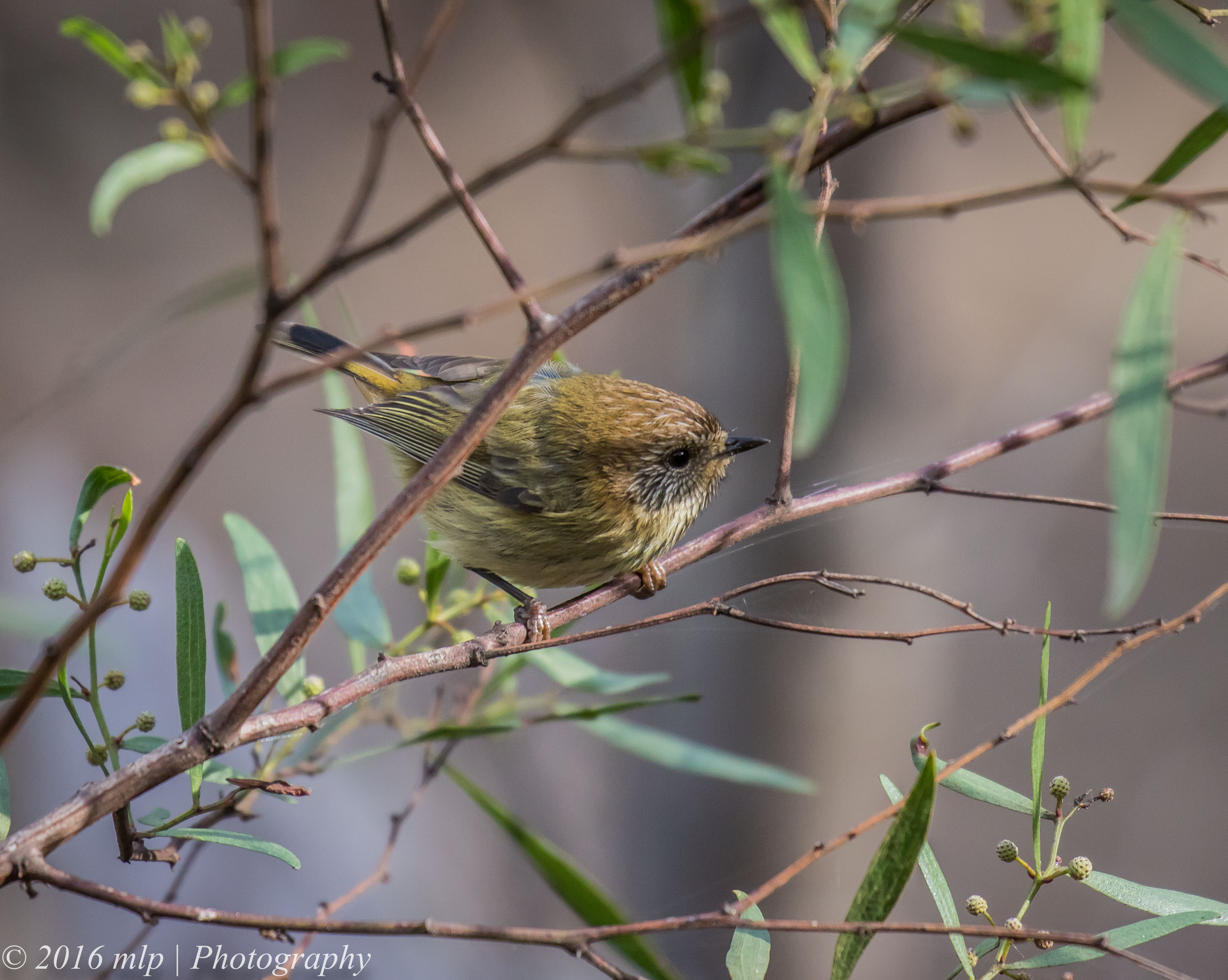
Striated Thornbill, Point Addis Iron Bark Track, Victoria
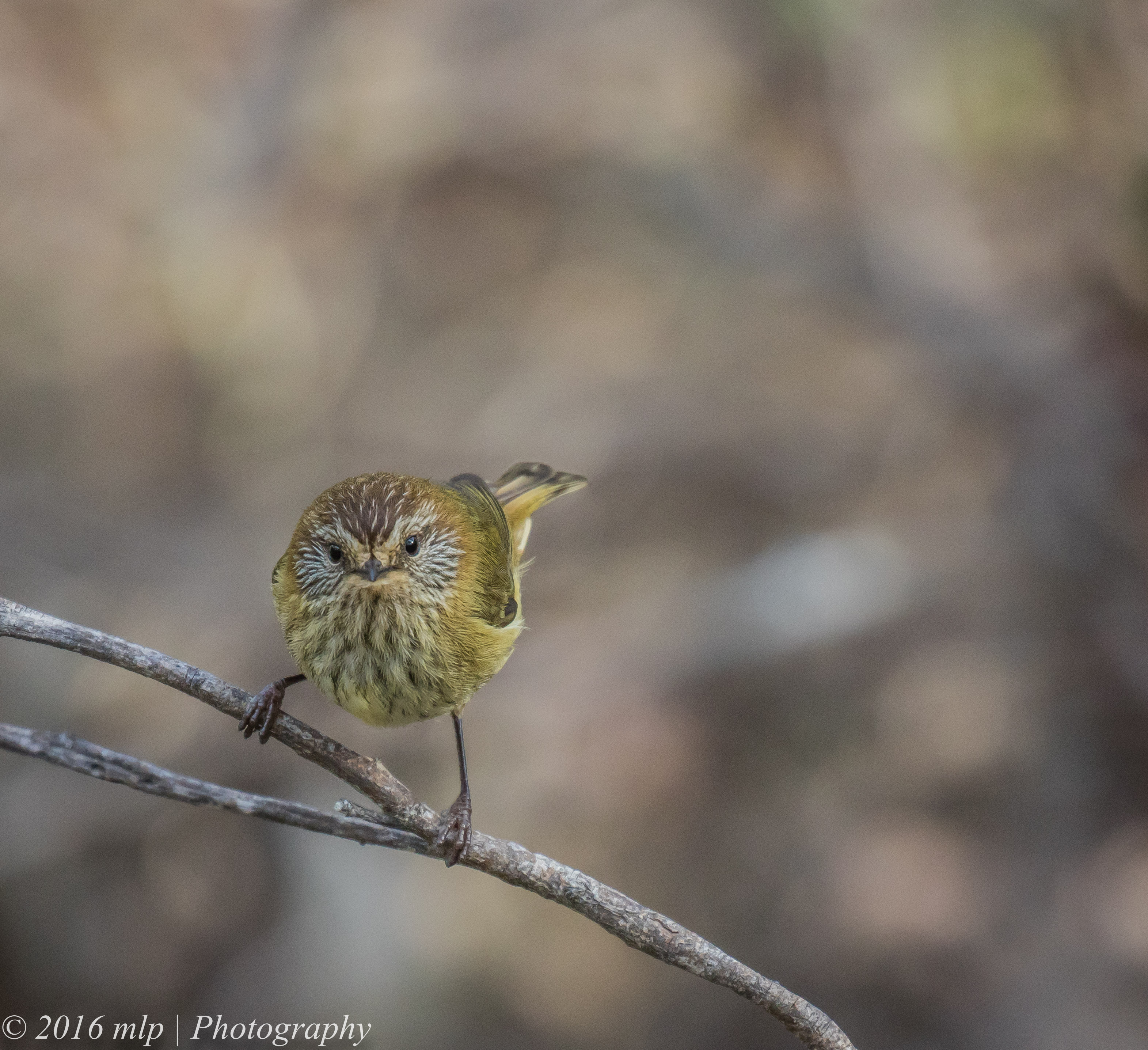
Striated Thornbill, Point Addis Iron Bark Track, Victoria

Striated Thornbill, Point Addis Iron Bark Track, Victoria

II
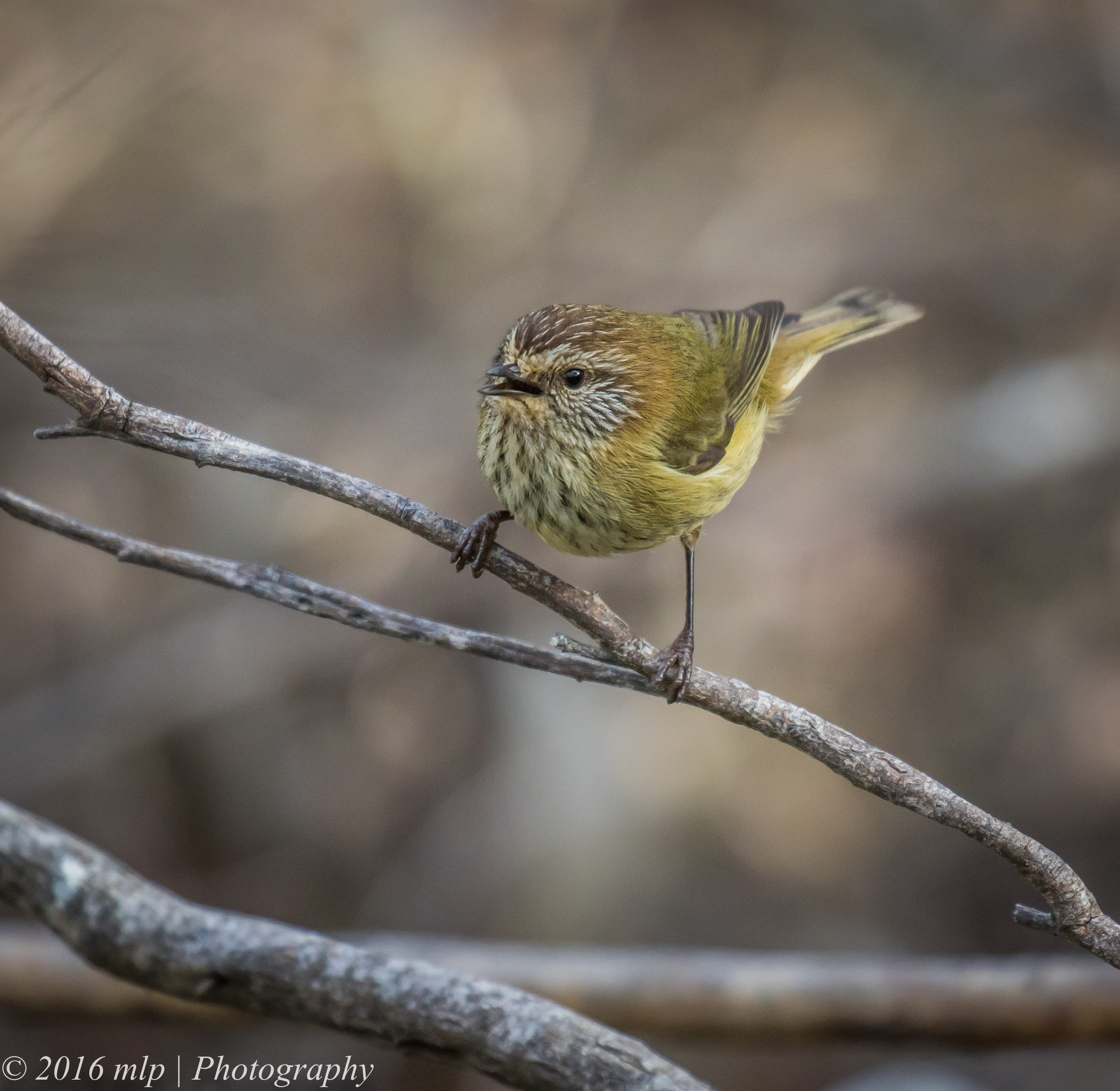
Striated Thornbill, Point Addis Iron Bark Track, Victoria

III

Point Cook Coastal Park

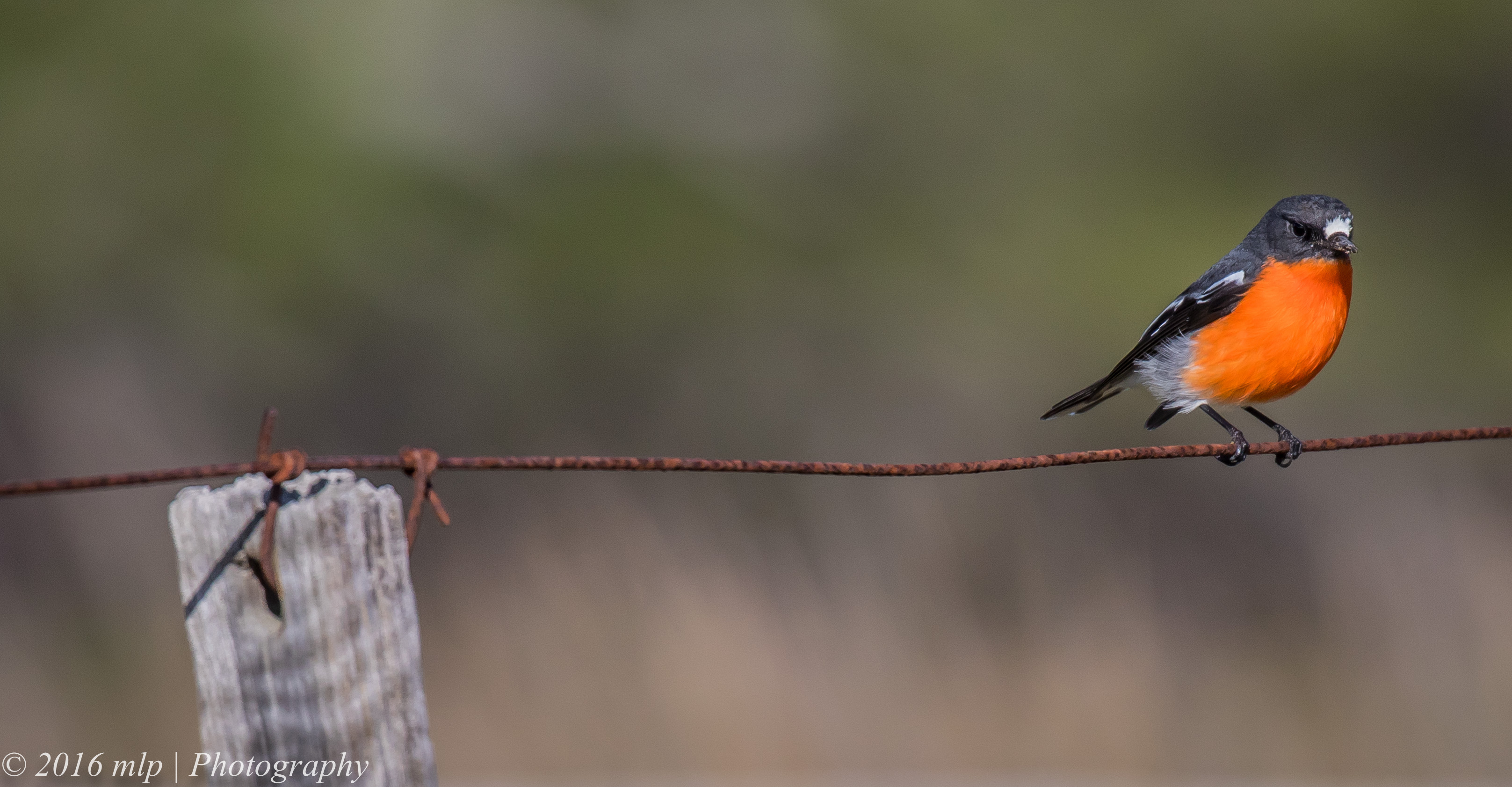
Over the long weekend, I visited the Point Cook Coastal Park to see what was around. At the gate leading to the beach track was a male Flame Robin. Like other robins he perches on a low vantage point and then pounces onto his prey. He did not spend much time on the ground and was quickly back to his lookout, scanning for the next juicy insect…

Flame Robin, Point Cook Coastal Park

Flame Robin, Point Cook Coastal Park

Flame Robin, Point Cook Coastal Park

Back on the lookout….

Hidden Bassian Thrush

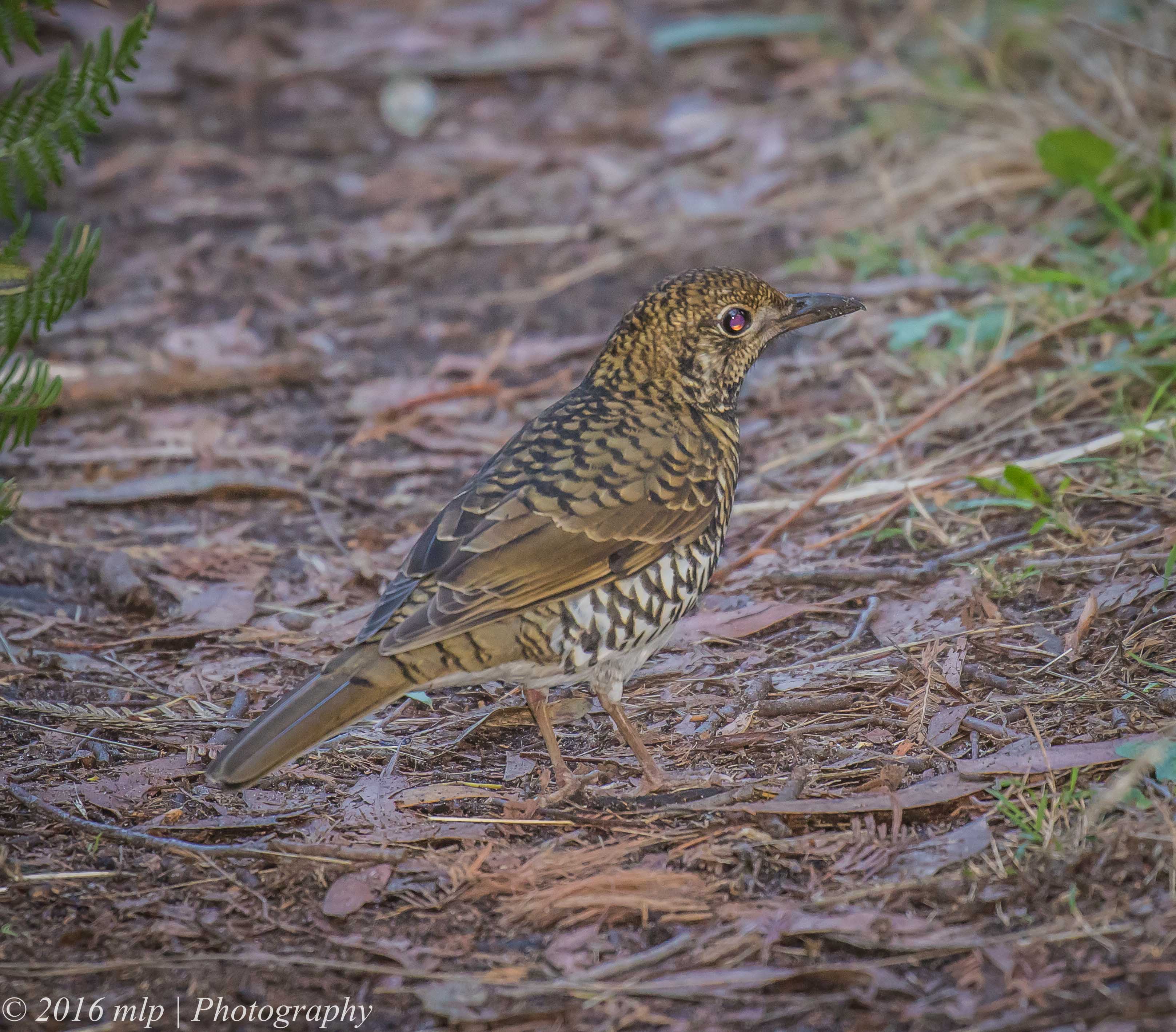
I have visited Greens Bush a few times recently. It is part of the Mornington Peninsula National Park. It is a good spot to visit between seasons as many bird species tend to migrate along the ridge lines heading North or South and I have a good chance of finding something interesting.  On this occasion I was looking out for Owls and Nightjars. I think it would be a superb spot for Powerful Owls as the vegetation is right (deep shaded cool gullies) and there seems to be plenty of preferred prey (possums and I am sure some  sugar-gliders). I saw many signs of Ring Tailed Possums including quite a few Dreys and even a tree that was packed with a colony with one hanging out…While walking along the track I flushed a Bassian Thrush. The Bassian has a similar habit as the Blackbird (but it a native and much more handsome). The Thrush skulks along paths and shoots off into the low scrub when scared. The one below kept just ahead of me and then flew to a low branch to watch me. I think it was a young bird as usually they are quite wary and fast to disappear.

Bassian Thrush, Greens Bush, Mornington Peninsula National Park, Victoria

Bassian Thrush, Greens Bush, Mornington Peninsula National Park, Victoria

Bassian Thrush, Greens Bush, Mornington Peninsula National Park, Victoria

Bassian Thrush – very well camouflaged on a bush track, hard to see until they flush

Bassian Thrush, Greens Bush, Mornington Peninsula National Park, Victoria

II

Ring Tailed Possum, Greens Bush, Mornington Peninsula National Park, Victoria

Ring Tailed Possum colony in a tree…

The local Botanic Gardens

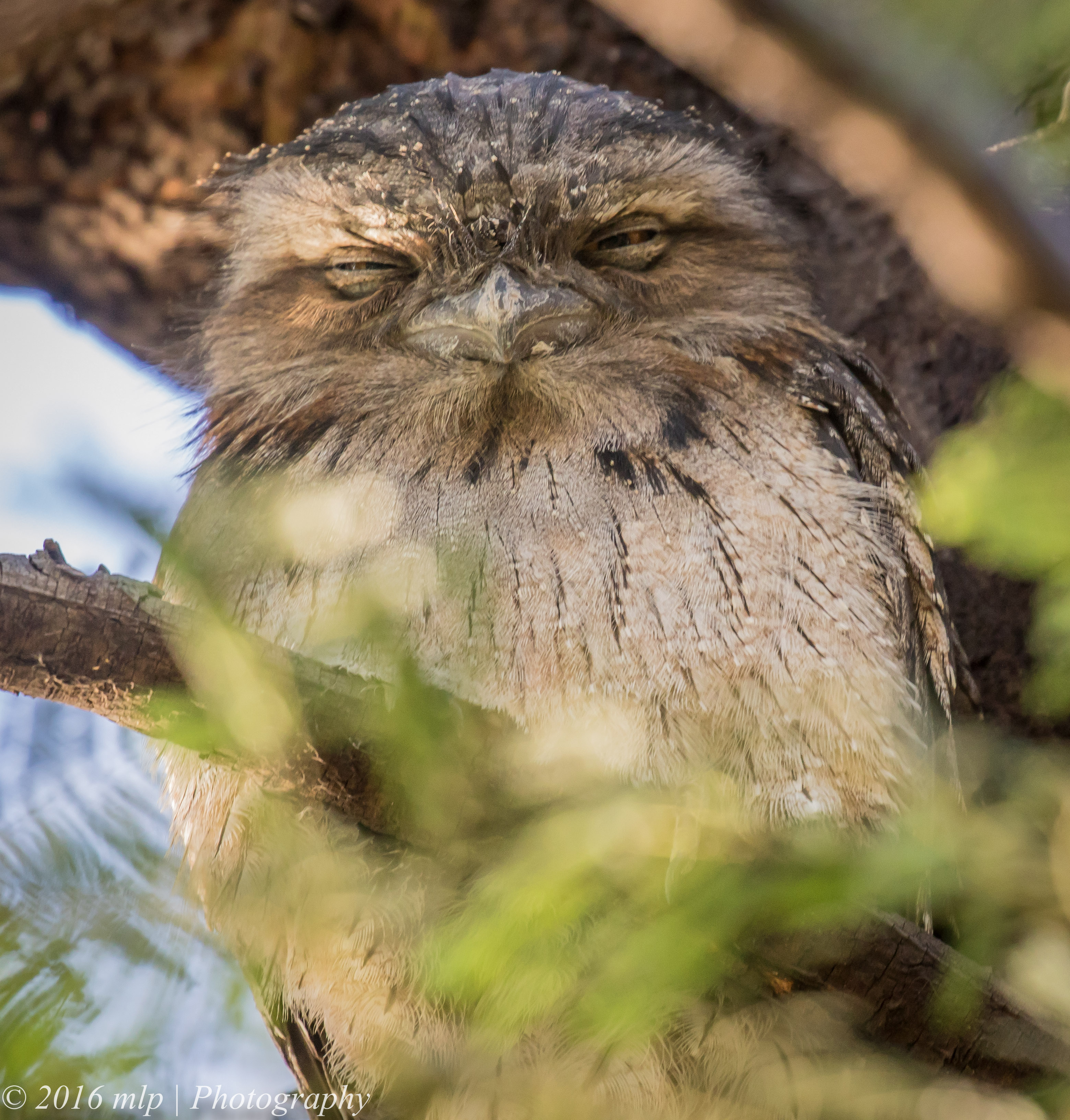
St Kilda is an old sea-side holiday destination of Melbourne city. Tourists would travel all day by horse and buggy and coach to go to St Kilda and areas of Elwood for a holiday at the beach. It had many old residential mansions and private hotels that are now sub-divided into units. As an old area that was a thriving holiday resort and had a vibrant local business scene, it was lucky enough to create and retain a beautiful Botanic Garden that is still going strong today. It has a good range of mature trees and enough feeding opportunities to maintain a local and resident population of bird species. As usual one of my favourites is a small family of Tawny Frogmouths.

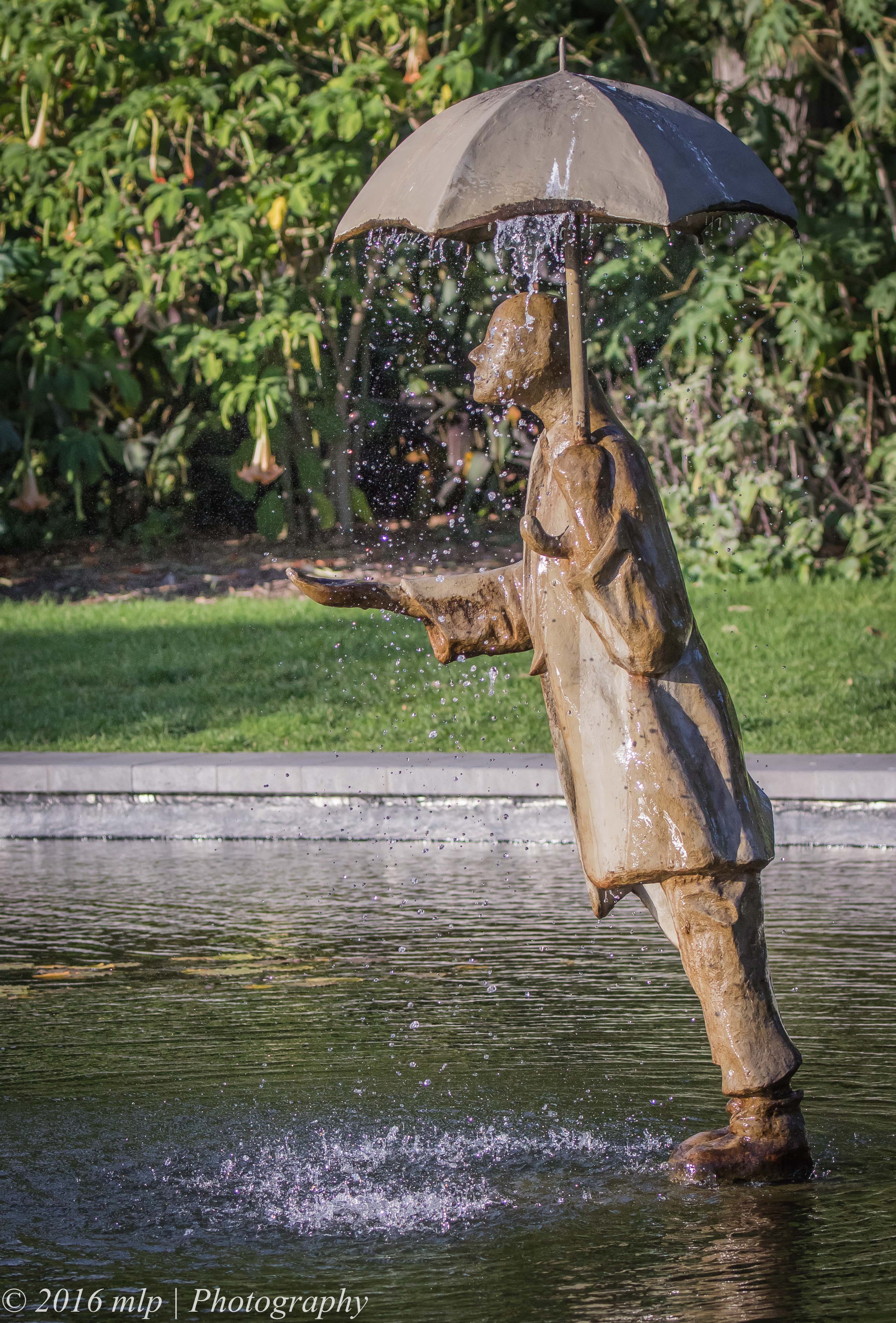
Rain Man, St Kilda Botanic Gardens

Rain Man, St Kilda Botanic Gardens

Red Flowering Gum, St Kilda Botanic Gardens

Red Flowering Gum, St Kilda Botanic Gardens

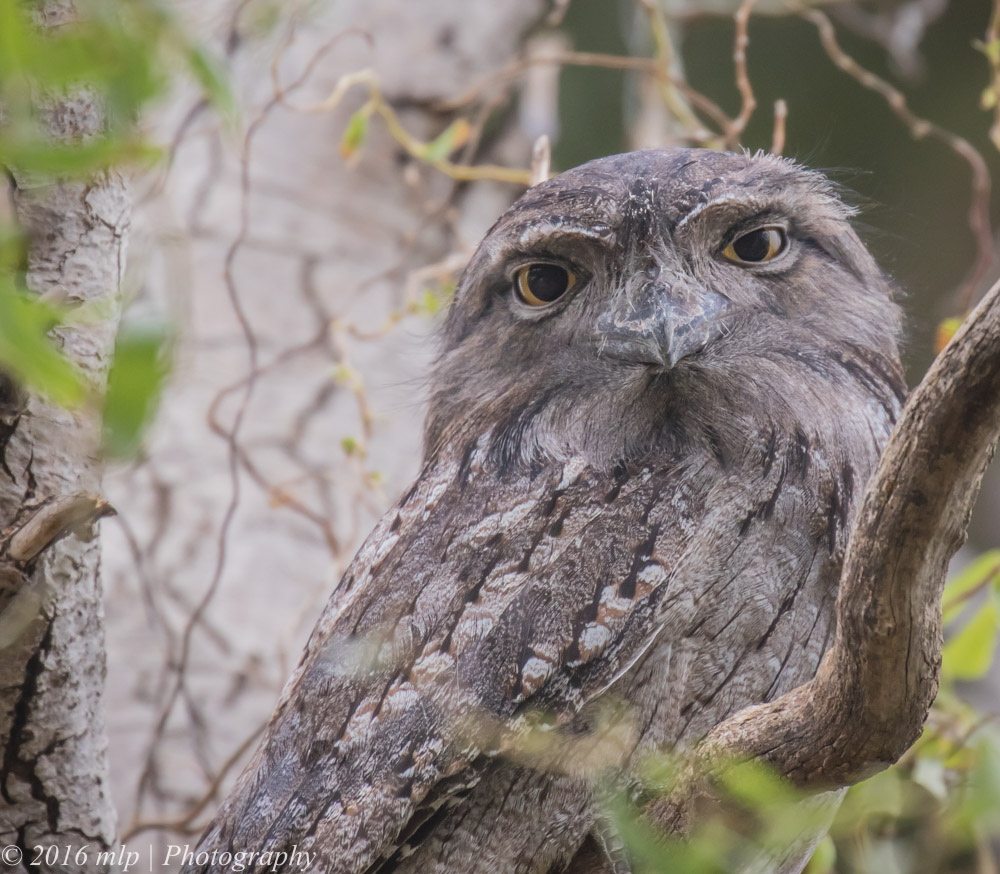
Tawny Forgmouths, St Kilda Botanic Gardens

Tawny Forgmouths, in the native section of the gardens

Tawny Forgmouths, St Kilda Botanic Gardens

Keeping an eye on the watchers…

Flowers around the Rose Garden Rotunda, St KIlda Botanic Gardens 1

Flowers around the Rose Garden Rotunda, 

Alert but not alarmed…

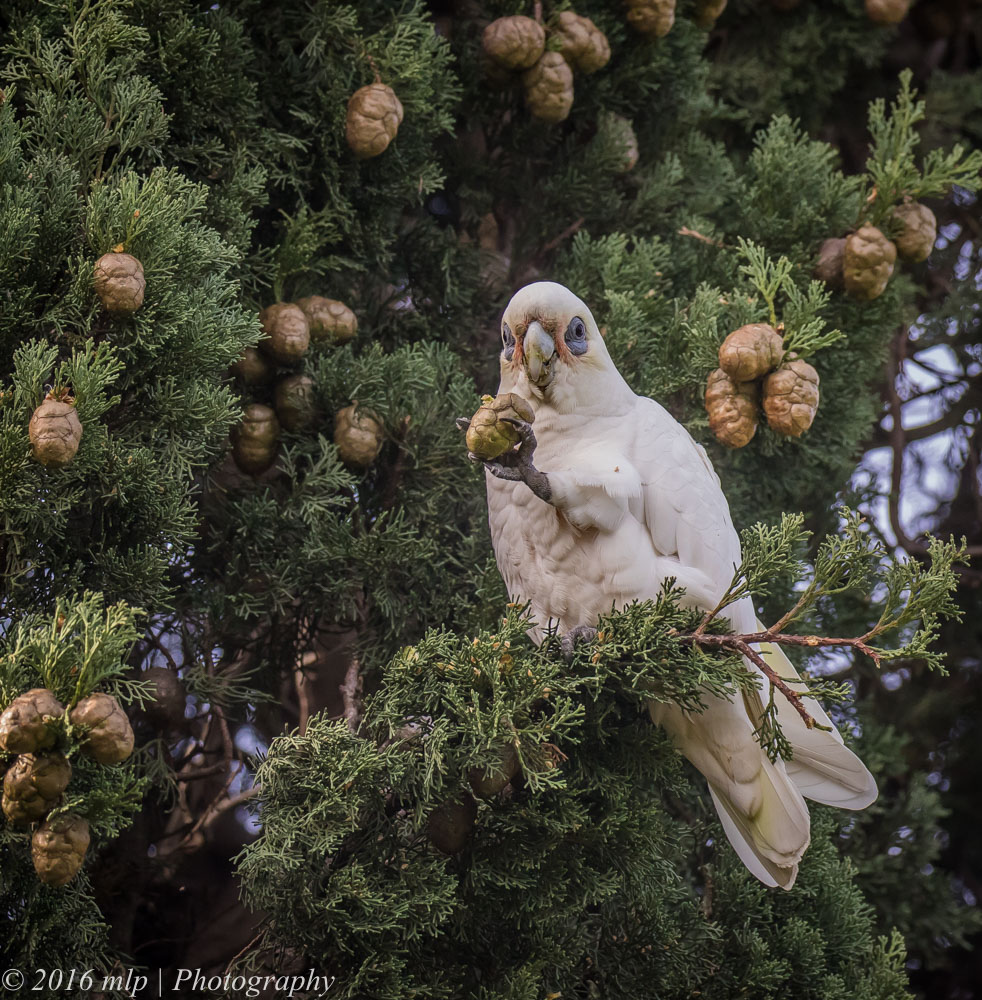
On the weekend I met up with my local “gang” of birders and we wandered up  Elster Creek to the Golf Course lake and had a look around…besides finding a turtle (my first Eastern Long Necked), we also watched the feeding antics of the local Little Corellas feeding on the ripe seed cones of a tall skinny conifer. They use their feet like we would use our hands. I noticed that when the Noisy Miners (a local, aggressive Honeyeater) screeched out their alarm calls the Corellas stopped feeding and quickly looked skyward but did not seem overly concerned (did the alert suggest a certain generally non-threatening predator?)…I have seen a number of bird species do this…I am convinced there is a common bird language.

Little Corella, Elster Creek, Victoria

Little Corella enjoying a seed cone from a Conifer…

Little Corella, Elster Creek, Victoria

Watching us watch him…

Little Corella, Elster Creek, Victoria

Looking skyward when the alarm call goes out from a different bird species…

Eastern Long necked turtle, Elster Creek, Victoria

Eastern Long necked turtle, Elster Creek, Victoria

Roadside stop with the Yellow-tailed Black Cockatoos

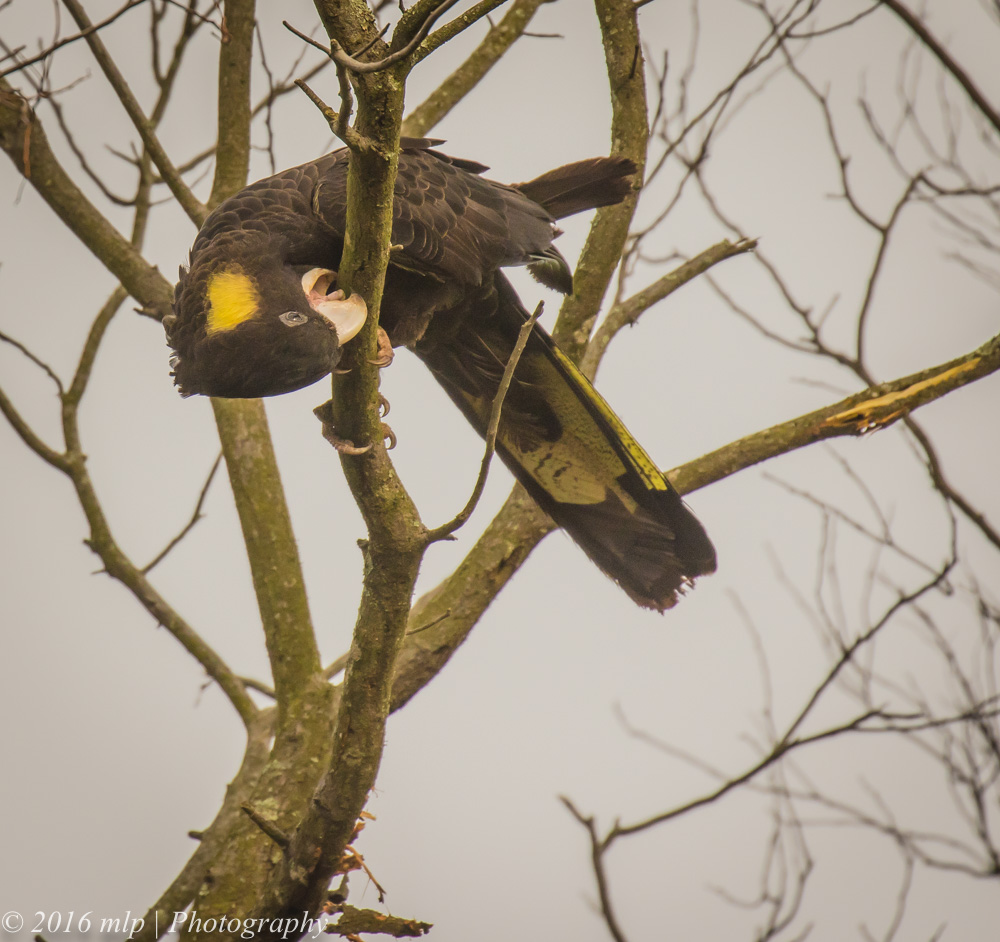
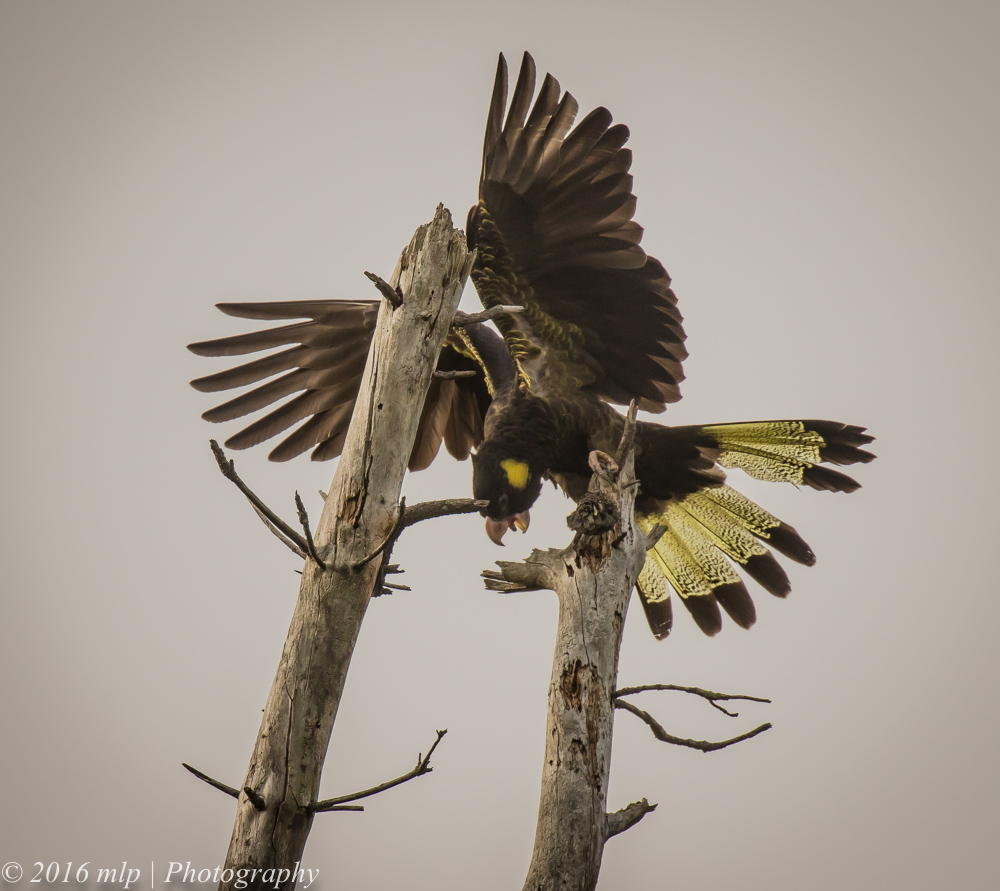
On the way down to the Mornington Peninsula with the Port Phillip Birders (Elwood/St Kilda Branches) to look for Black Faced Cormorants at Merricks Beach, and Albatross at Cape Schank, we stopped to watch the feeding antics of a family of Yellow-tailed Black Cockatoos. They were working a dead wattle tree that seemed to be full of wood borer grubs.

Yellow-tailed Black Cockatoo, Mornington Peninsula, Victoria

Yellow-tailed Black Cockatoo, Mornington Peninsula, Victoria

Yellow-tailed Black Cockatoo, Mornington Peninsula, Victoria

II

Yellow-tailed Black Cockatoo, Mornington Peninsula, Victoria

Finding a wood borer grub

Yellow-tailed Black Cockatoo, Mornington Peninsula, Victoria

Yellow-tailed Black Cockatoo

Yellow-tailed Black Cockatoo, Mornington Peninsula, Victoria

A pair of Yellow-tailed Black Cockatoo

Yellow-tailed Black Cockatoo, Mornington Peninsula, Victoria

Male Yellow-tailed Black Cockatoo (with pink eye rings), female or juvenile behind

Birders, Greens Bush, Mornington Peninsula, Victoria

The hard core team from Port Phillip Birder at Greens Bush, Mornington Peninsula, Victoria


A Boobook Owl hunting in the veggie garden

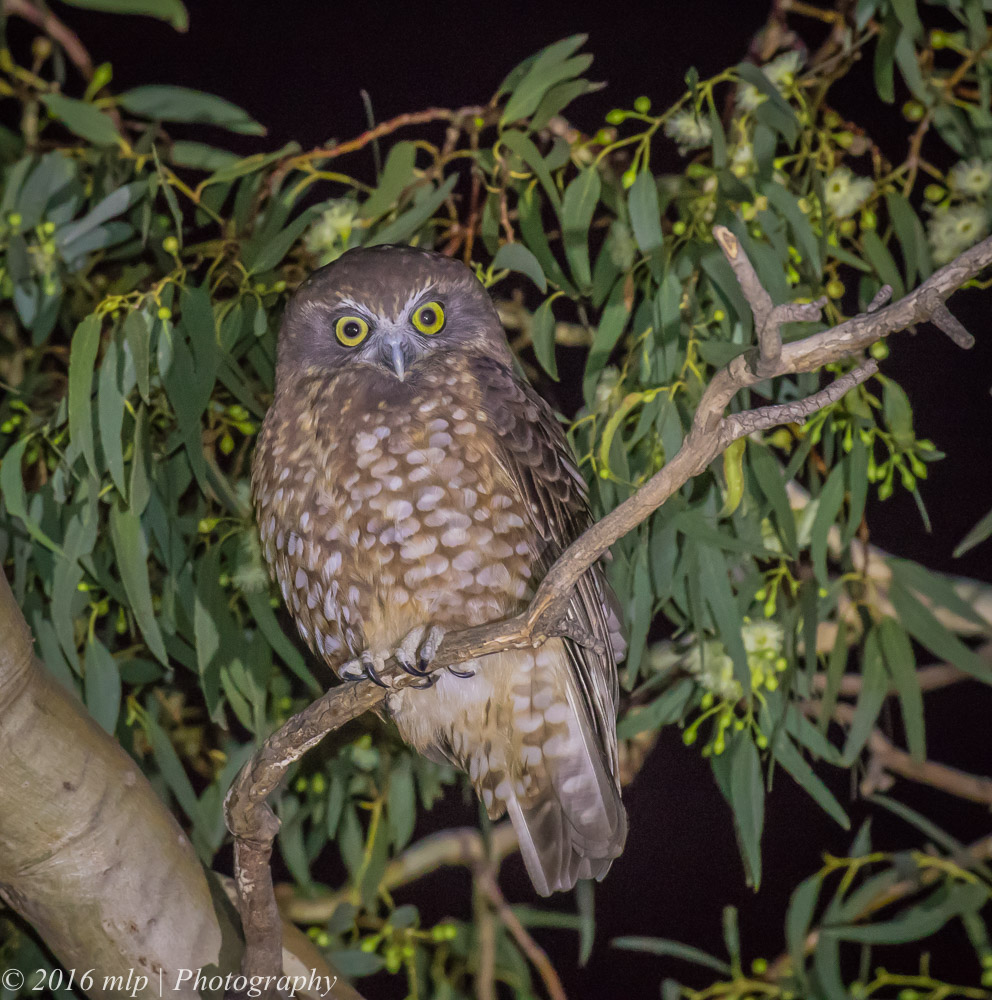
After an afternoon of wandering around Elster Creek and Elsternwick Lake with the local birding gang , I went home and was reviewing the images of the day when an sms came in from Gio (a local naturalist) that he had found a Southern Boobook Owl at the local school above their veggie patch. Postponing dinner, gearing up and heading out in a rush I found Gio, and soon after the Boobook high up in the Red Gum. I have seen a few owls and Tawny Frogmouths locally lately and will hopefully see many more. It is a good sign of a healthy environment.

Southern Boobook, Elster Creek, Elwood Victoria

Southern Boobook, Elster Creek, Elwood Victoria

Southern Boobook, Elster Creek, Elwood Victoria

II

“My” Powerful Owl

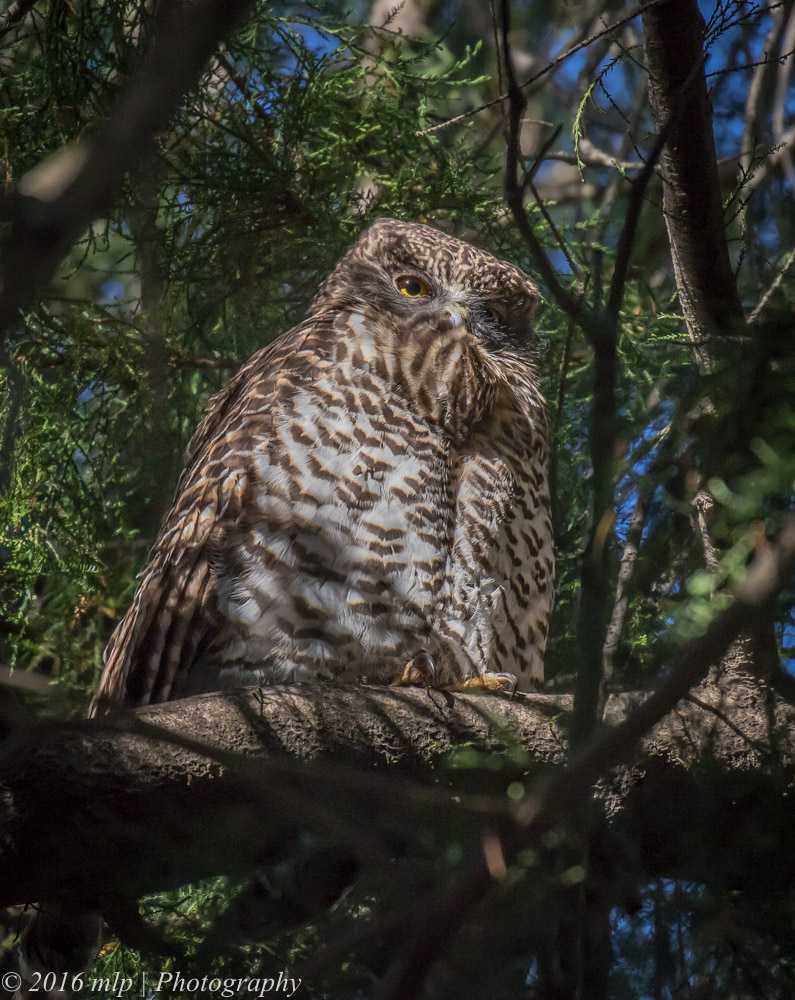
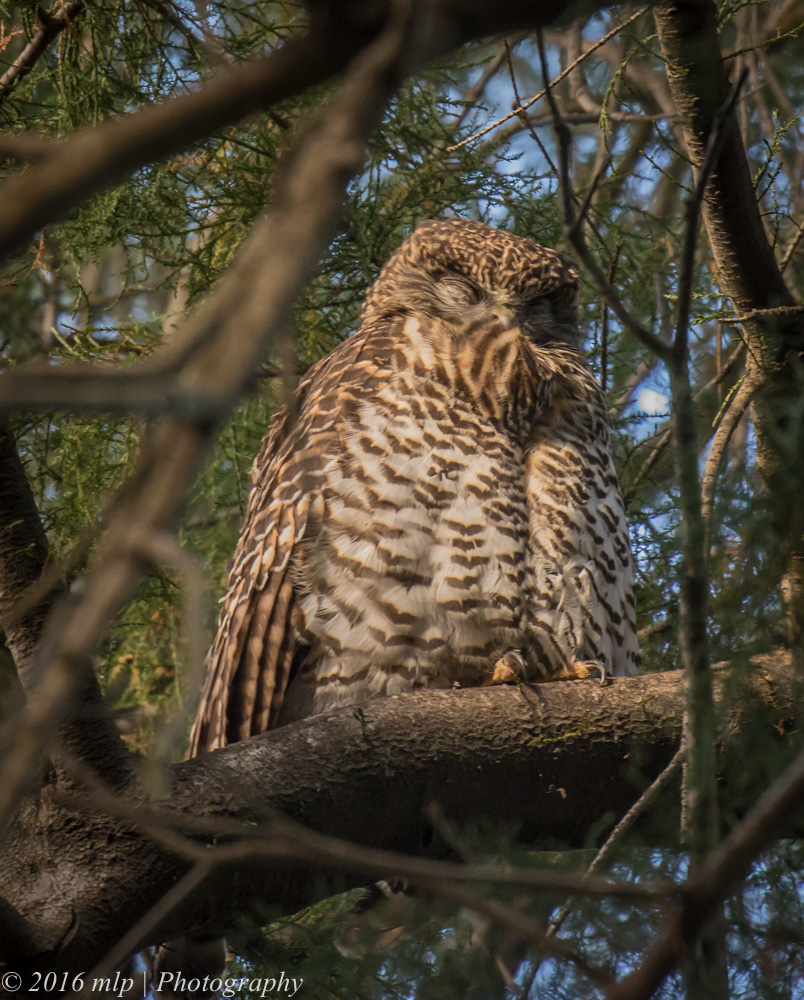
Our visit to the Botanical Gardens on the weekend was to search for the reported Powerful Owl. We found it at the southern end of the Fern Gully walk amongst the tall pines and conifers of the New Zealand section – high up and with a small window of cleared space that we could just photograph through without too many branches and twigs in the way. It was interesting to watch as various birders and garden visitors took turns owning the owl for the period of time they stood below and watched it. Once the birders who found it, before we entered the scene, left (very easy to find a rare bird when you see people with binocs looking up into a tree with interest), we were left there watching and taking photographs. Walkers-by were interested in what we were up to and asked…suddenly “our” bird was on display and we become the tour guides – educating visitors about the large Powerful Owl. While watching with my binocs and taking photos I spouted off my facts about the bird and then was surprised when I turned around and found  a large bunch of people listening and watching…seems I am a natural show off – I thoroughly enjoyed it…I only had a few good facts:

  1. largest nocturnal bird in Australia,
  2. can be quite urbanised if the right food and daytime roosts are around,
  3. eats other birds, large brush tailed and ring tailed possums and sugar gliders,
  4. nests in large old growth tree hollows which are scare and usually only located in untouched forests hence the issue with their rareness and growing endangered status in many areas of South Eastern Australia
  5. mates for life (sometime over 30 years)
  6. generally sedentary (territorial) – i.e. does not migrate like many species.
  7. roosts on a branch in deep shade during the day, often seen still clutching the previous night’s catch.
  8. decapitates its catch and then roosts for the day. Animal and bird heads, old bones and white bird poo splashes on the ground and on foliage below a tree is a good indicator of a regular roost spot.
  9. Hunts throughout the trees with excellent night vision and swoops on prey using its massive talons to catch prey.
  10. Young powerful owls are large and have quite a bit of white downy feathering


Powerful Owl, Melbourne Botanic Gardens

Powerful Owl, Melbourne Botanic Gardens

Powerful Owl, Melbourne Botanic Gardens

II

Powerful Owl, Melbourne Botanic Gardens

The owl’s attention was diverted when a small dog moved along the path towards us.

Powerful Owl, Melbourne Botanic Gardens

Back to sleep…

Bell Ringers of the Royal Gardens

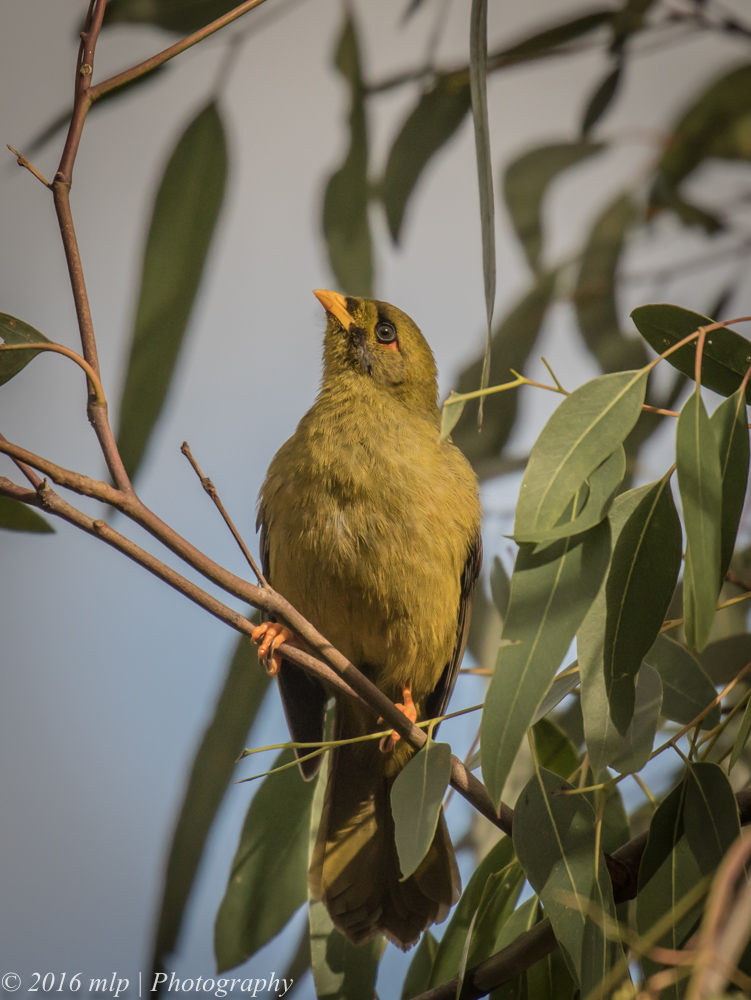
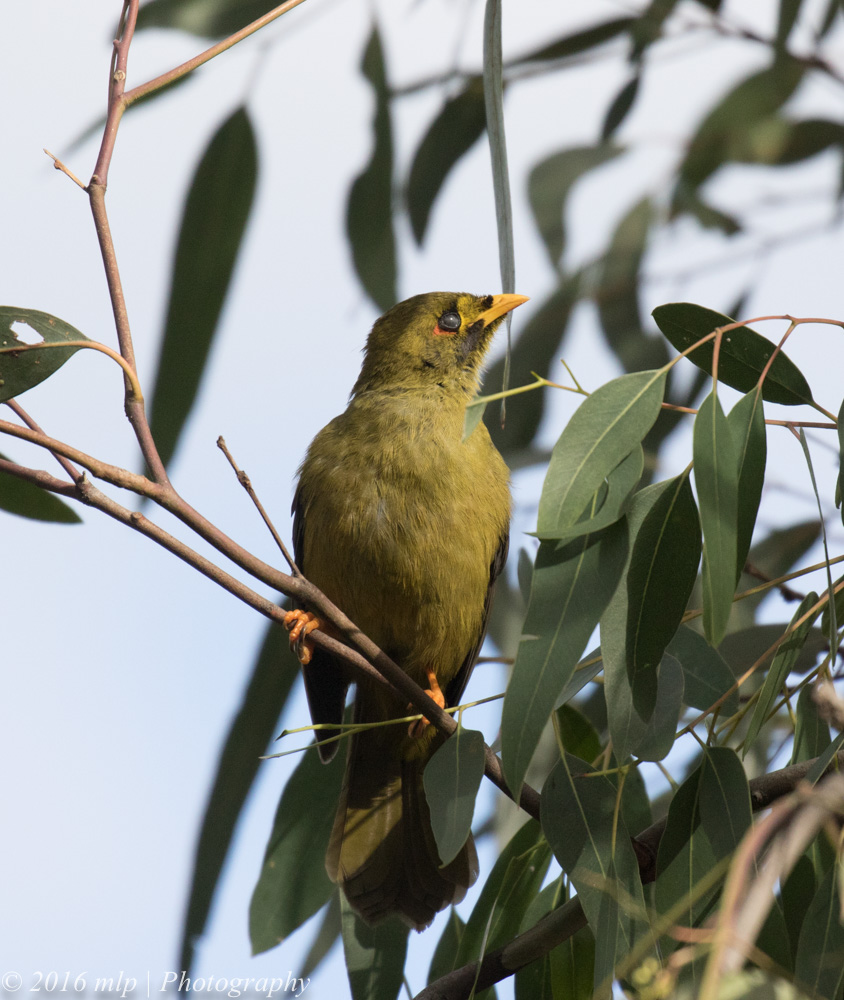
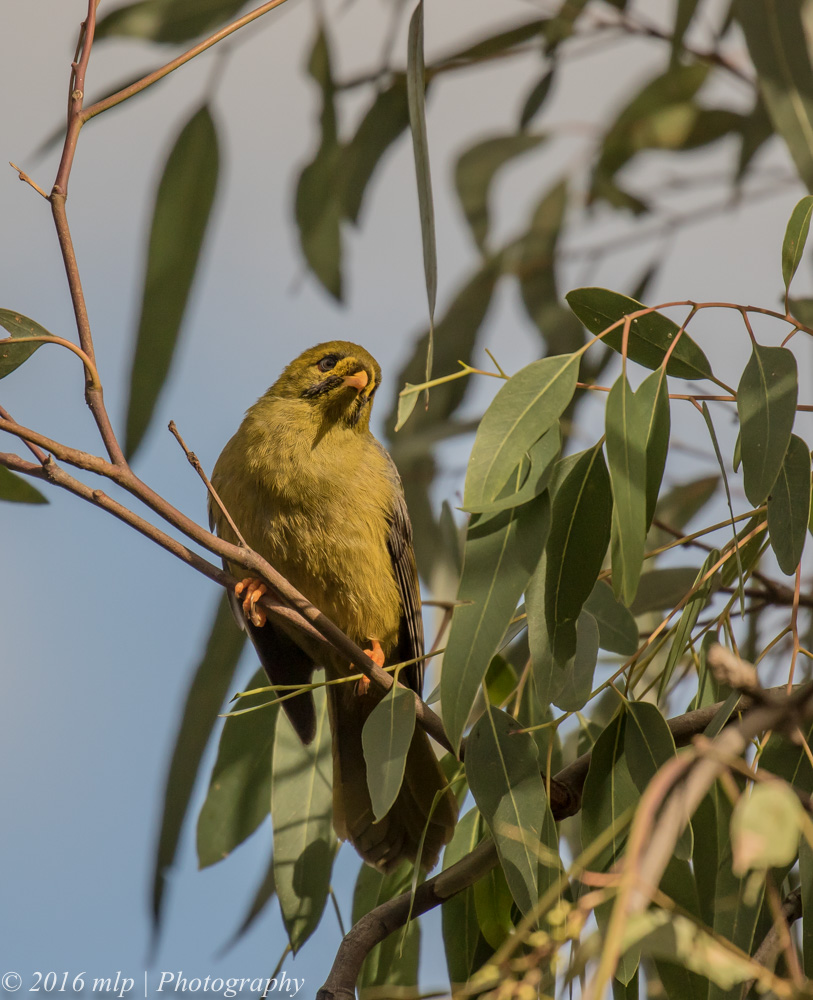
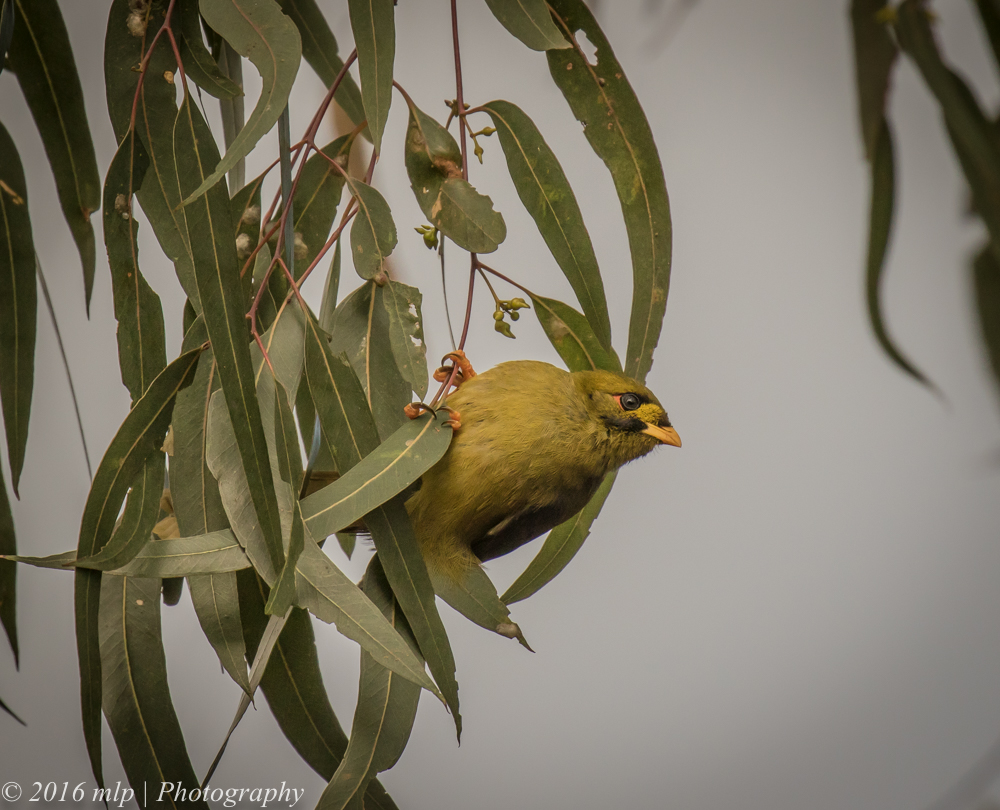
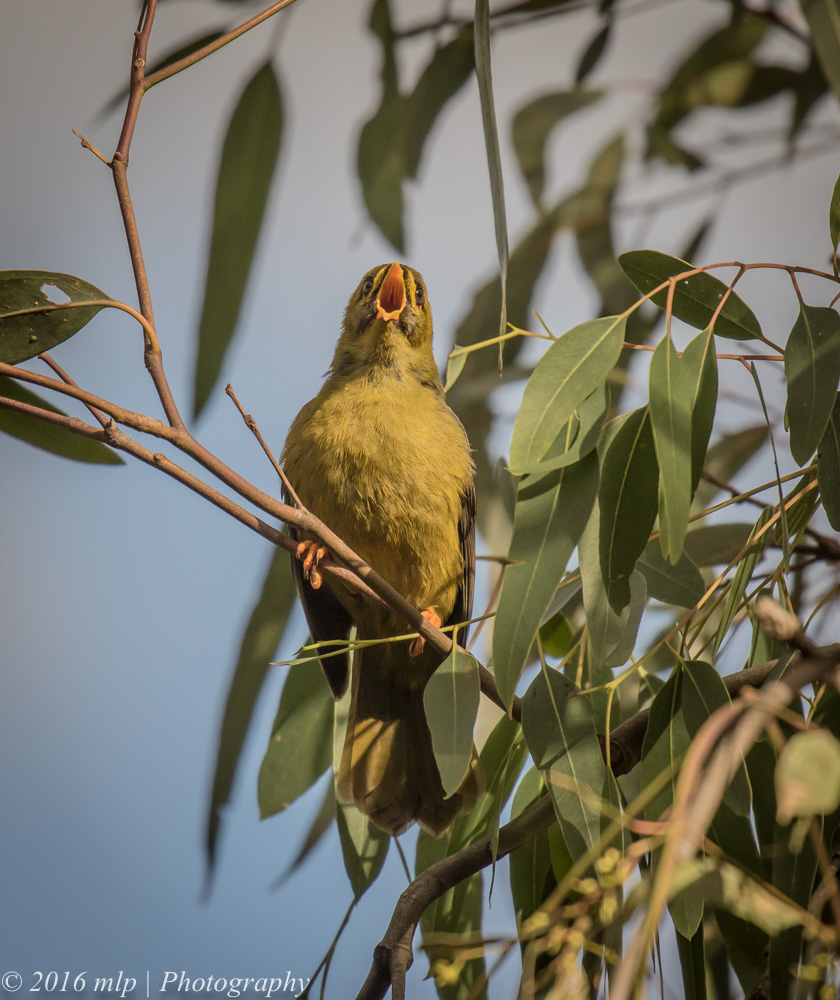
On the weekend a mate and I headed to the Royal Botanic Gardens of Melbourne. A Powerful Owl had been reported and we were keen to find it. While we wandered about we also walked through the Bell Miner Colony. The Bell Miner also called a Bellbird is a small honeyeater that lives in large social groups. They are very aggressive to other birds and will defend their food source which is “bell lerp”, a sugary secretion of a small insect that feeds on gum leaves. The bird has a very distinctive call, a bell chime or ping. The ping is a territorial call and extremely loud when ones chimes next to your ear. The red marking of the eye indicates a mature adult. The gardens are one of the few locations that the species can be easily seen. They are small, olive green and usually stay high in the trees. The birds at Botanic Gardens seem to be used to people and come down quite low and with a bit of time can be photographed (and recorded).

Play to hear the colony sound from the Gardens.

Bell Miner, Melbourne Botanic Gardens

Bell Miner, Melbourne Botanic Gardens

Bell Miner, Melbourne Botanic Gardens

II

Bell Miner, Melbourne Botanic Gardens

III

Bell Miner, Melbourne Botanic Gardens

IV

Bell Miner, Melbourne Botanic Gardens

“ping”

Juvenile Bell Miner, Melbourne Botanic Gardens

Juvenile Bell Miner

The Roost Tree

While heading downstream along my local creek I noticed a lump on a dead branch of a Willow Tree that did not quite look right. Moving closer I realised it was one of the local nocturnal Tawny Frogmouths on a daytime roost. It was difficult to photograph but I found a way to get closer by walking into the parking area of one of the apartment blocks nearby. As I moved around the tree I found the partner of the Frogmouth that I had seen from across the creek. It was tucked into a little branch shelter and just about invisible. This species are masters of camouflage and often roost in the open. They are rarely noticed and survive well in an urban space. Even when discovered that can just watch you or move into their camouflaged pose (I am just a branch stump) or just go back to sleep. They are territorial and will roost in a close-by series of trees in a neighbourhood.  It is surprising how many pairs there are in Elwood considering it is an inner city suburb. Always a welcome find…

Elster Creek Tawny Frogmouth, Elster Creek, Elwood, Victoria

An football sized object in the tree that did not quite blend in…

Elster Creek Tawny Frogmouth, Elster Creek, Elwood, Victoria

Elongated branch stump pose

Elster Creek Tawny Frogmouth, Elster Creek, Elwood, Victoria

II

Elster Creek Tawny Frogmouth, Elster Creek, Elwood, Victoria

III

Elster Creek Tawny Frogmouth, Elster Creek, Elwood, Victoria

IV

Elster Creek Tawny Frogmouth, Elster Creek, Elwood, Victoria

Expressive and curious eyes

Elster Creek Tawny Frogmouth, Elster Creek, Elwood, Victoria

The partner on the other side of the tree. 

Nervous Birds at the Pooh Farm

Over the last 3 months I have been making regular visits to the Western Treatment Plant in Werribee, near the Avalon Airport. The local fields, irrigated by the recycled and treated water have recently been harvested and ploughed. This has brought many Raptors to the   WTP particularly Whistling and Black Kites. These two species are regular visitors and resident at the lagoons and nearby fields anyway but huge numbers have come in including many juveniles. We also found a nice pair of Musk Ducks  – the male has a large bill lobe that becomes inflated in the mating season. The two below were happily sunning themselves in one of the overflow canals.

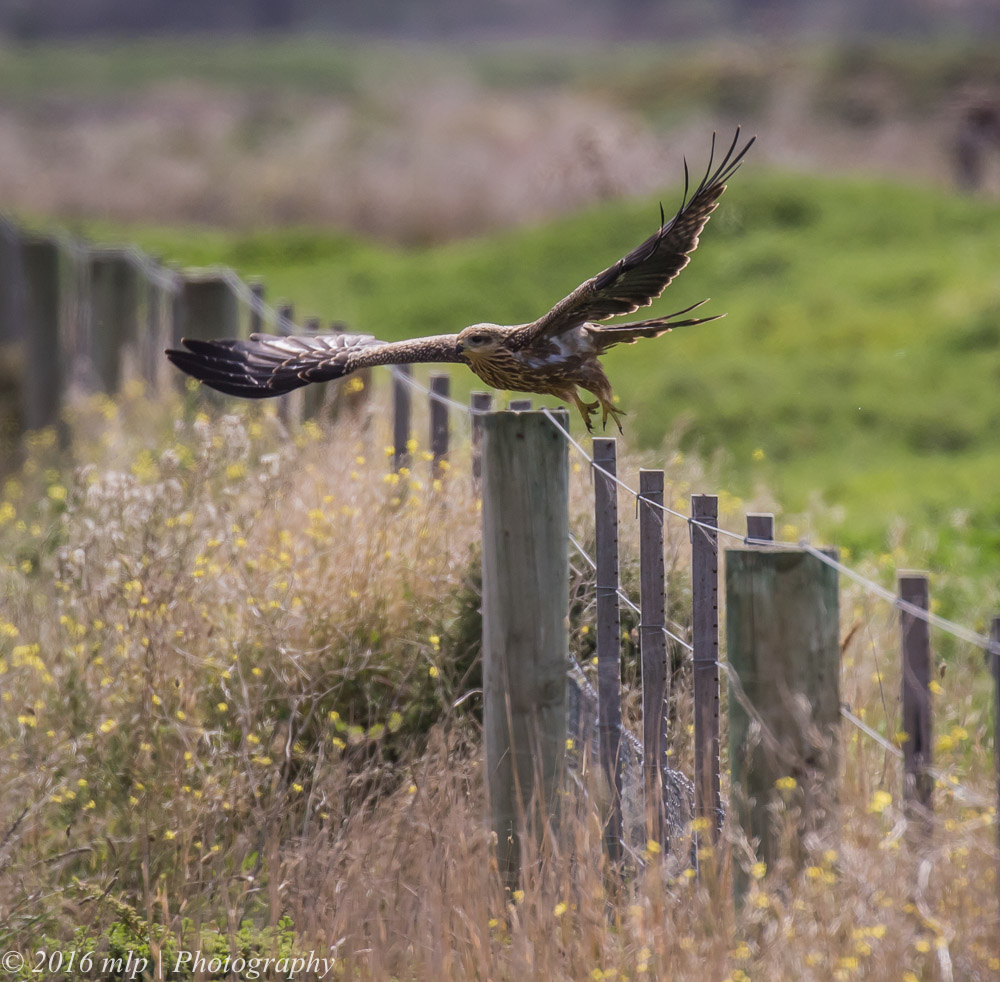
Juvenile Black Kite, WTP, Victoria

Juvenile Black Kite, WTP, Victoria

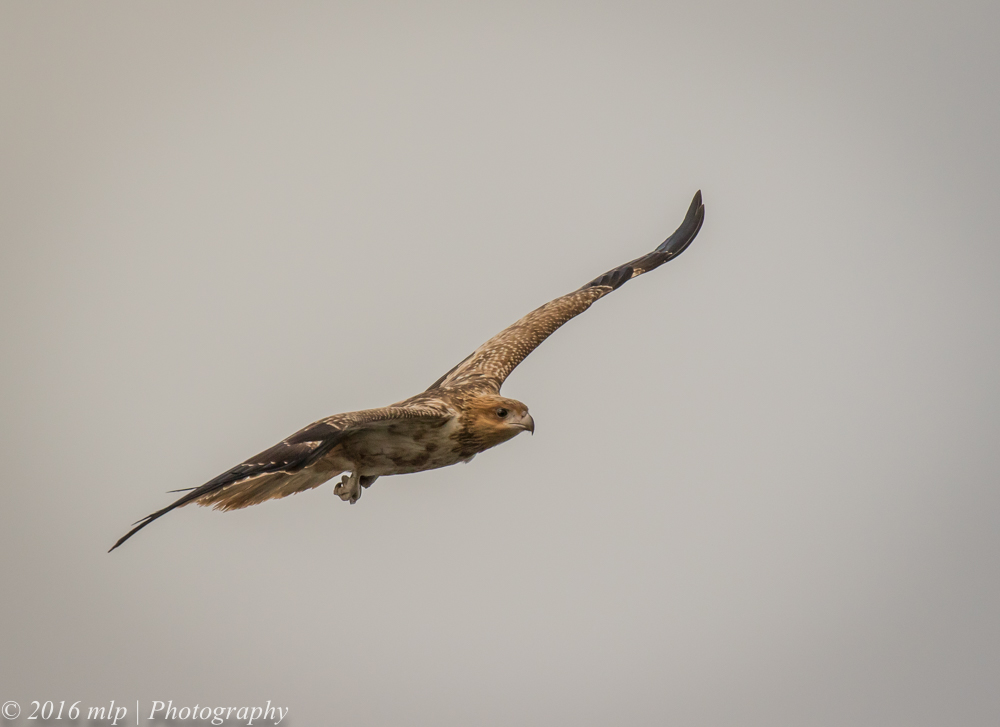
Whistling Kite, WTP, Victoria

One of dozens of Whistling Kites on the prowl

White Fronted Chat, WTP, Victoria

Nervous and very wary White Fronted Chat

Musk Ducks, WTP, Victoria

A female (left) and Male Musk Ducks

Female Musk Duck, WTP, Victoria

Female Musk Duck

Female Musk Duck, WTP, Victoria

II
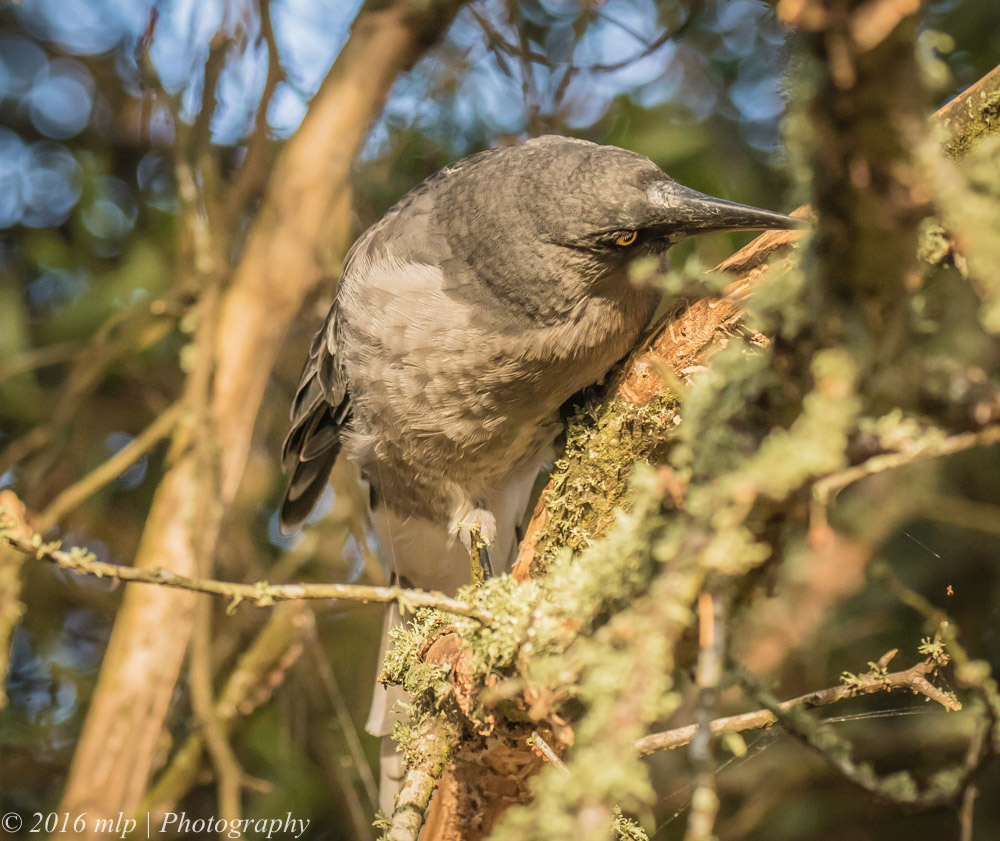
A hungry Grey Currawong

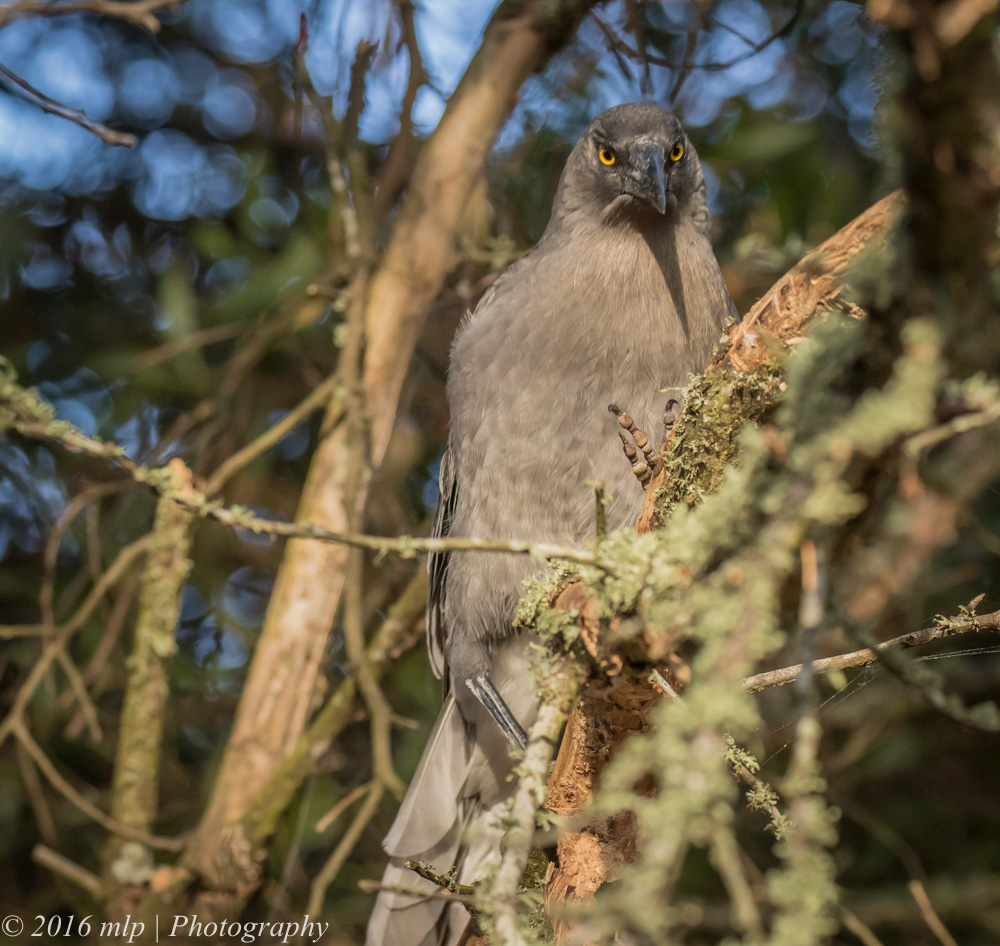
On a long weekend stay at Daylesford, I went for an early morning walk around the lake. I had been getting up early to try and find a Nankeen Night Heron still hunting. I did find one and enjoyed excellent views but it was too dim to take any decent pics. While walking back to the house I came across a Grey Currawong. I usually see Pied Currawongs around my own area but only see Greys when I go down the  Mornington Peninsula or into Central Victoria. The Grey has a very distinctive call quite different to the Pied. I watched this bird hunt for grubs under the bark of a dead tree. It was very determined and was quite happy to ignore me as I worked around the tree looking for better shots.

Grey Currawong, Daylesford Lake, Victoria

Grey Currawong, Daylesford Lake, Victoria

Grey Currawong, Daylesford Lake, Victoria

II

Grey Currawong, Daylesford Lake, Victoria

very determined to find grubs

Grey Currawong, Daylesford Lake, Victoria

IV

A master fisherman takes a break…

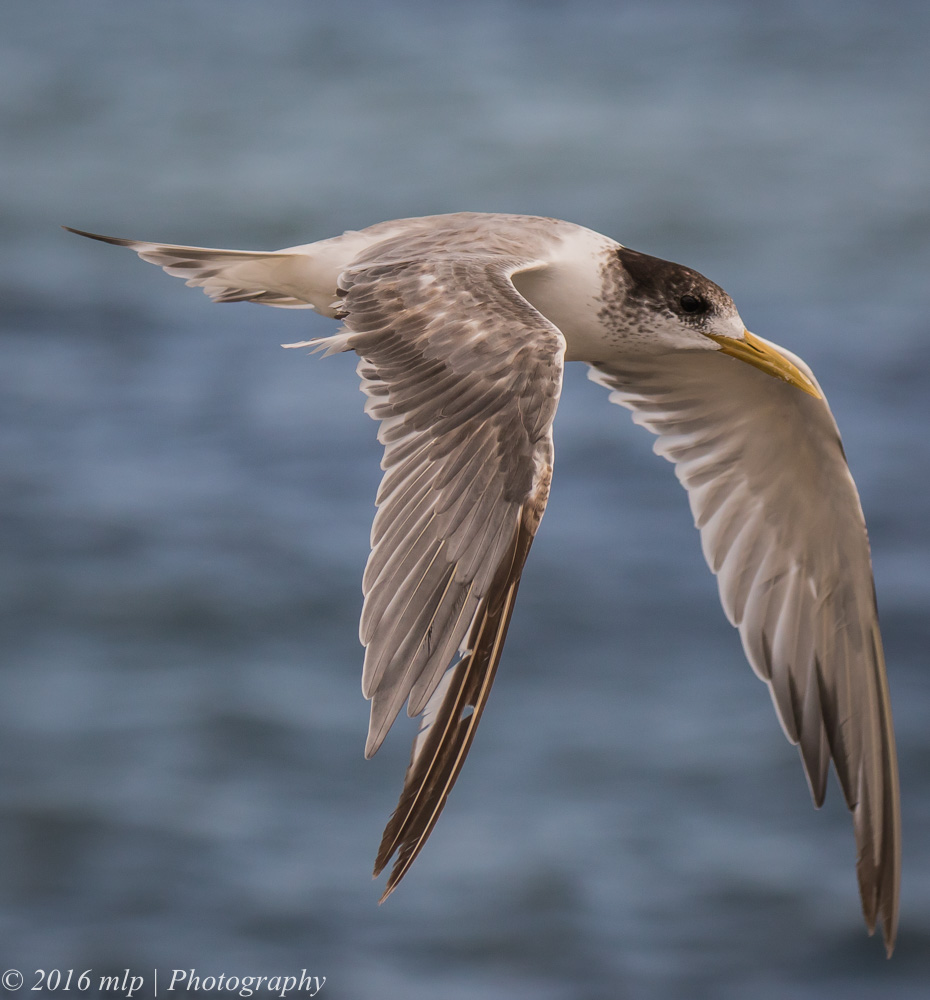
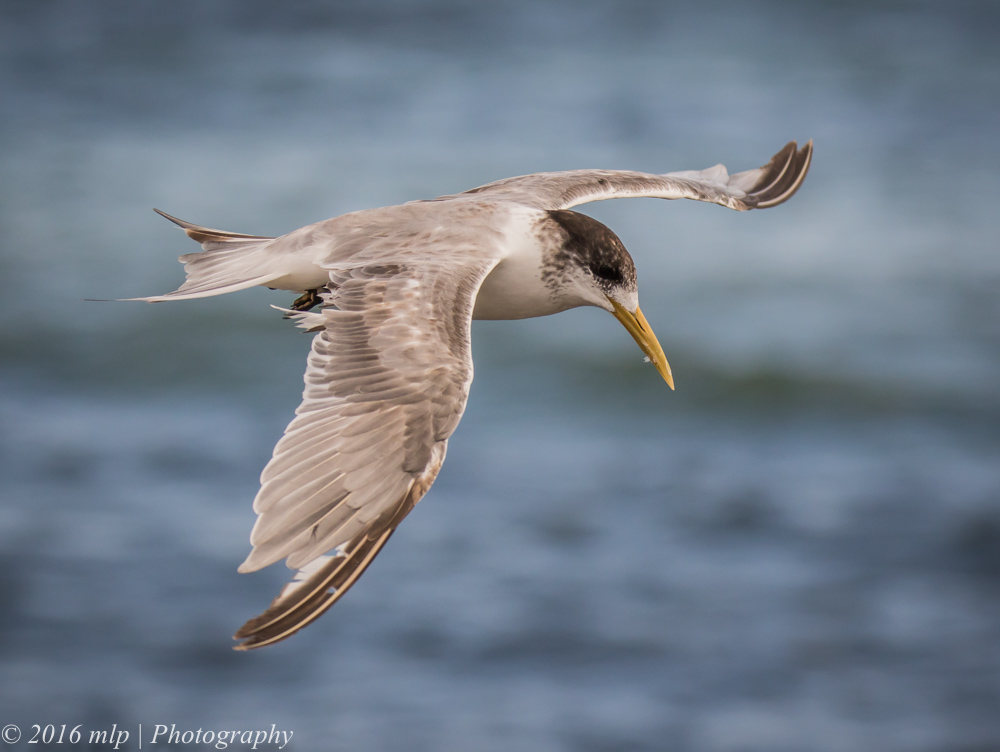
On a walk along the Elwood foreshore with a few photography/birding friends we found this Crested Tern on the stone pier. We have often seen Crested Terns here and this one was quite comfortable with us walking up quite close to take a few photos. Later when reviewing the images I noticed that it had been tagged. I have photographed another Crested Tern last year that was also tagged. The Tern’s scientific name is Thalasseus bergii  – Thalasseus from Greek “fisherman” and Bergius, a German museum specimen collector , from the early 1800’s.

Crested Tern, Elwood Beach, Victoria

Crested Tern, Elwood Beach, Victoria

Crested Tern, Elwood Beach, Victoria

II

Crested Tern, Elwood Beach, Victoria

III

The Boss is back….

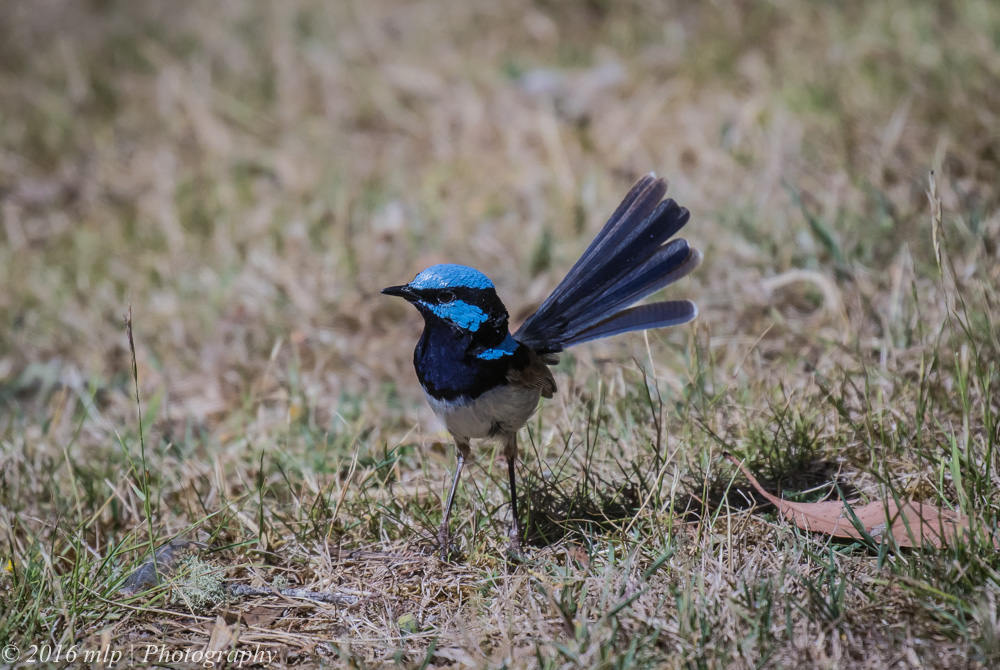
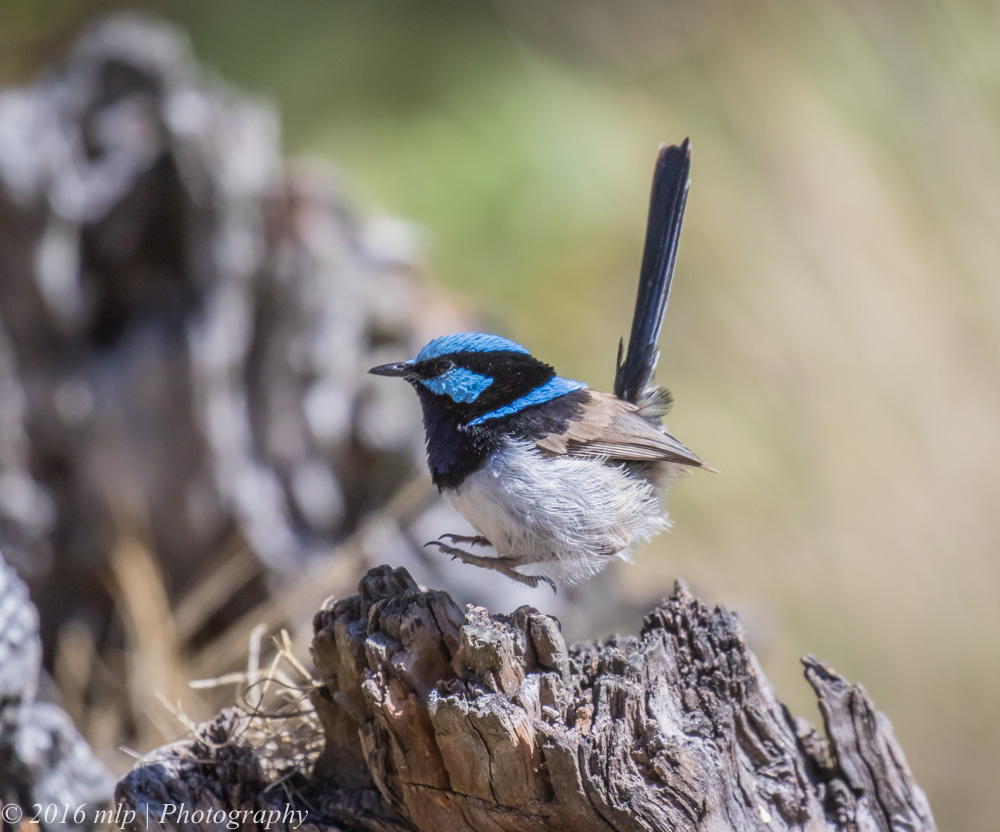
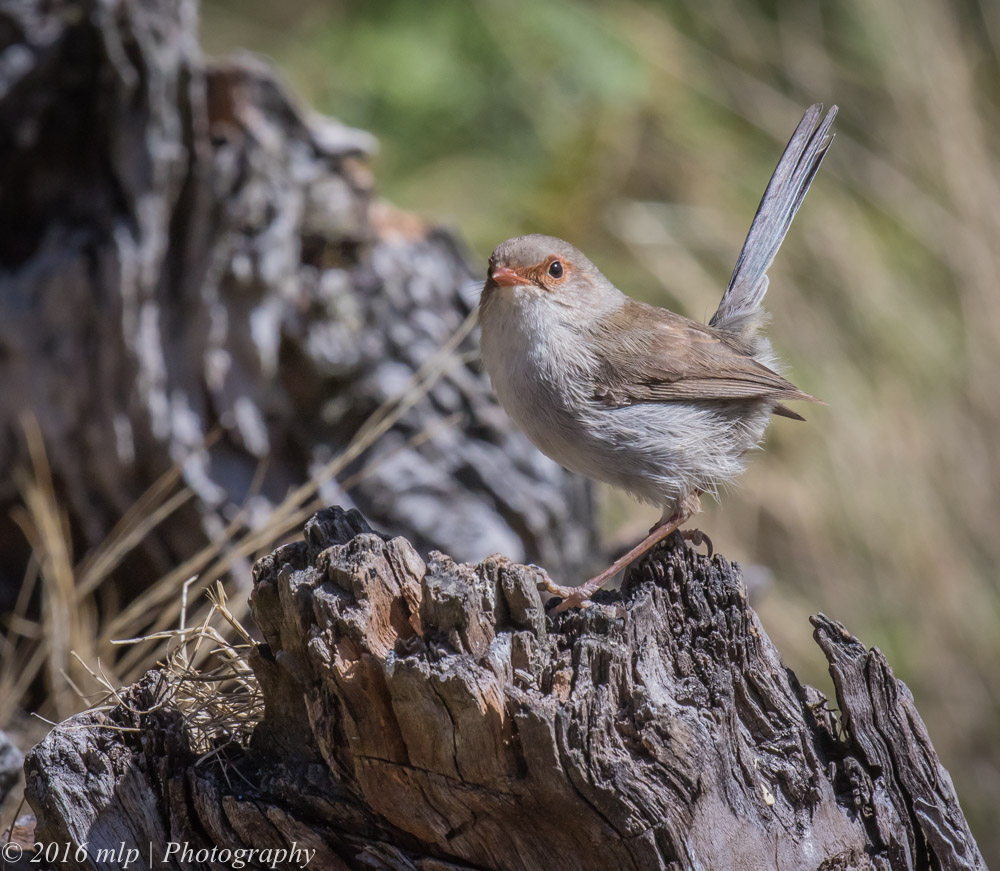
On a section of the Great South West Walk in the Lower Glenelg National Park, I stopped for a photography break and was soon joined by a pair of Superb Fairy Wrens, a male in beautiful blue breeding plumage and an adult female. The female is dominant in the pairing and may have a group of suitors in the area. The Fairy Wren certainly made sure the male knew she was in charge. Each time he jumped to the top of a stump she chased him off…it seemed to be a bit of a game between them…

Male Superb Fairy Wren, Great South West Walk, Lower Glenelg National Park, Victoria

Male Superb Fairy Wren, Great South West Walk, Lower Glenelg National Park, Victoria

Female Superb Fairy Wren, Great South West Walk, Lower Glenelg National Park, Victoria

 The female Superb Fairy Wren keeping an eye on the local players…

Male Superb Fairy Wren, Great South West Walk, Lower Glenelg National Park, Victoria

Male Superb Fairy Wren keeping a lookout and claiming the stump..

Male Superb Fairy Wren, Great South West Walk, Lower Glenelg National Park, Victoria

A quick hop off the stump

Female Superb Fairy Wren, Great South West Walk, Lower Glenelg National Park, Victoria

The boss is back…

Preening along the creek…

While walking along Elster Creek, I photographed a flock of Australian Wood Ducks that have been in the area over the summer. Wood Ducks breed in large numbers with parents and the occasional aunt raising up to 16 chicks. The one photographed below was grooming its finer down feathers. I thought the wind was blowing the feathers forward but as I photographed the duck it raised and lowered the feathers at will as it preened.

Australian Wood Duck, Elster Creek, Victoria

Australian Wood Duck, Elster Creek, Victoria