Tag Archives: Australia

A Growling Grass Frog

On a visit to the Western Treatment Plant we stopped at the Crake pit in T-Section which due to intermittent rain has maintained a water level that is perfect for several species of Crake. Along with watching and photographing the crakes we heard a Growling Grass Frog – a frog becoming more rare and endangered in many areas of Southern Australia including Victoria. It is also called the Southern Bell Frog and rather unkindly: the Warty Swamp Frog. I quite like the name Growling Grass Frog. It has a deep drawn out call and you assume it is a larger frog but when seen it not very big at all. Recently I started to record sounds of various birds and pretty much anything else I could get close to. I have found that there are very few areas that don’t have man-made noise pollution in the background – freeways near wetlands, boats along the coast, distant chainsaws and trail bikes far out in the forests. Luckily in this case the background sounds were two rather melodic birds: the Australian Reed Warbler and a Little Grassbird.

Click on the play button to hear the Growling Grass Frog
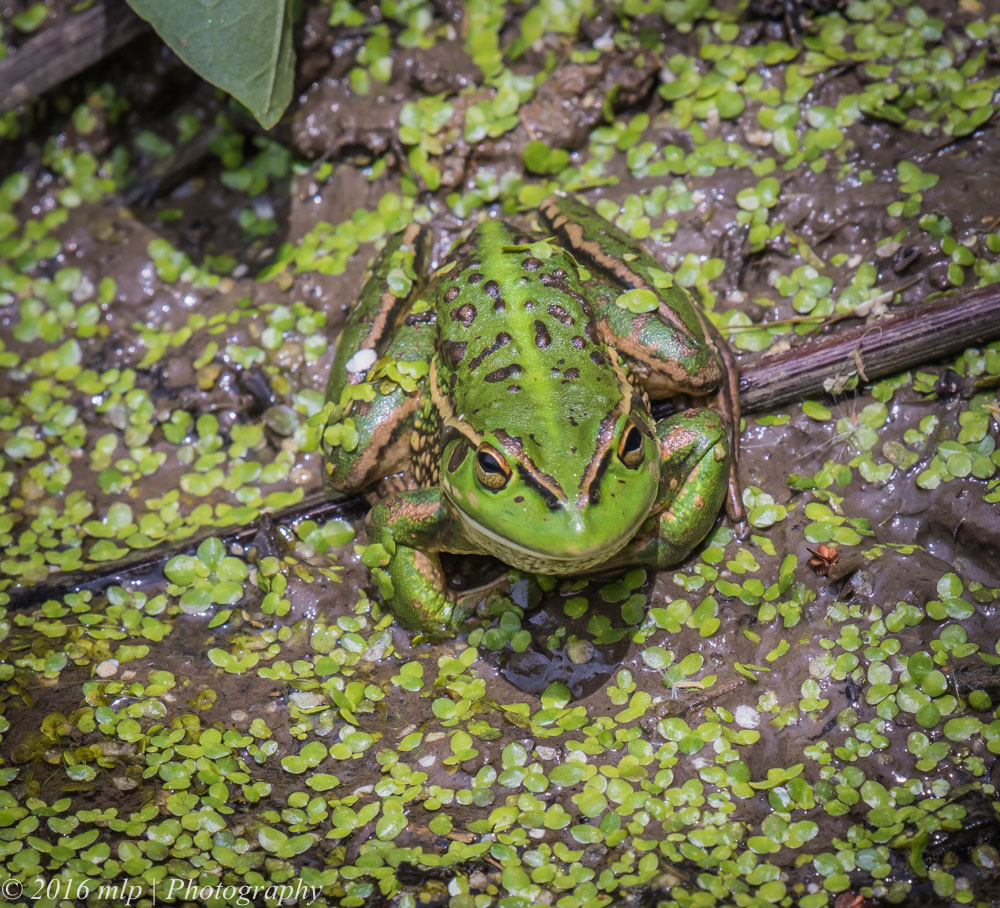
Growling Grass Frog, Western Treatment Plant, Werribee

Growling Grass Frog, Western Treatment Plant, Werribee
Thornbill and the Magic Fantail

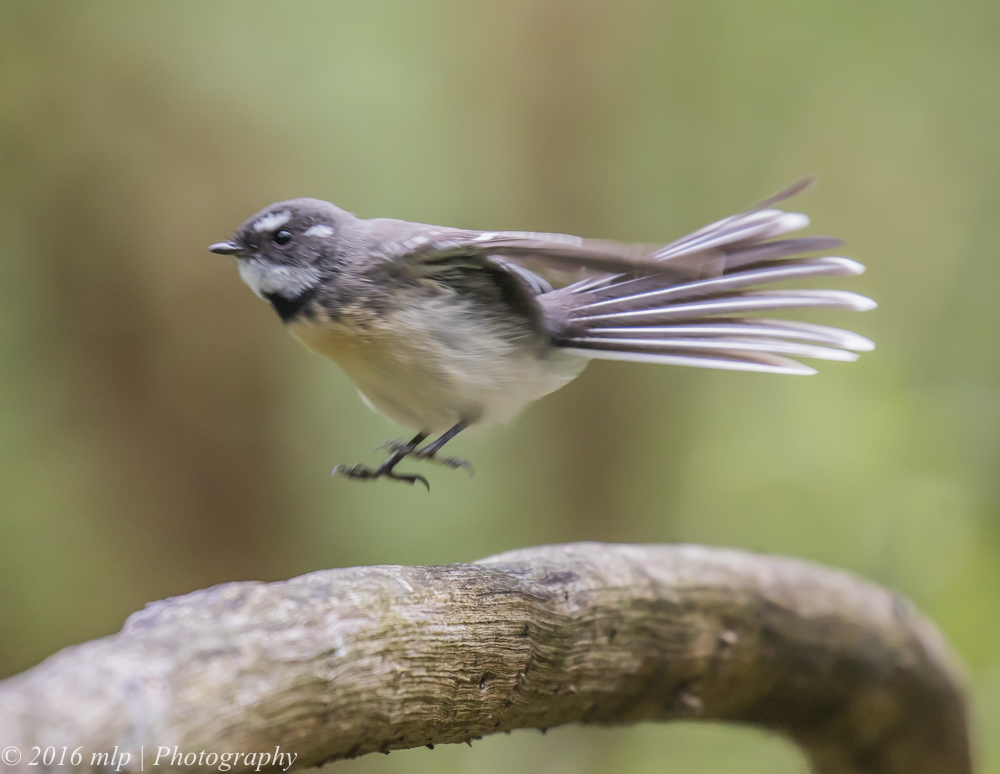
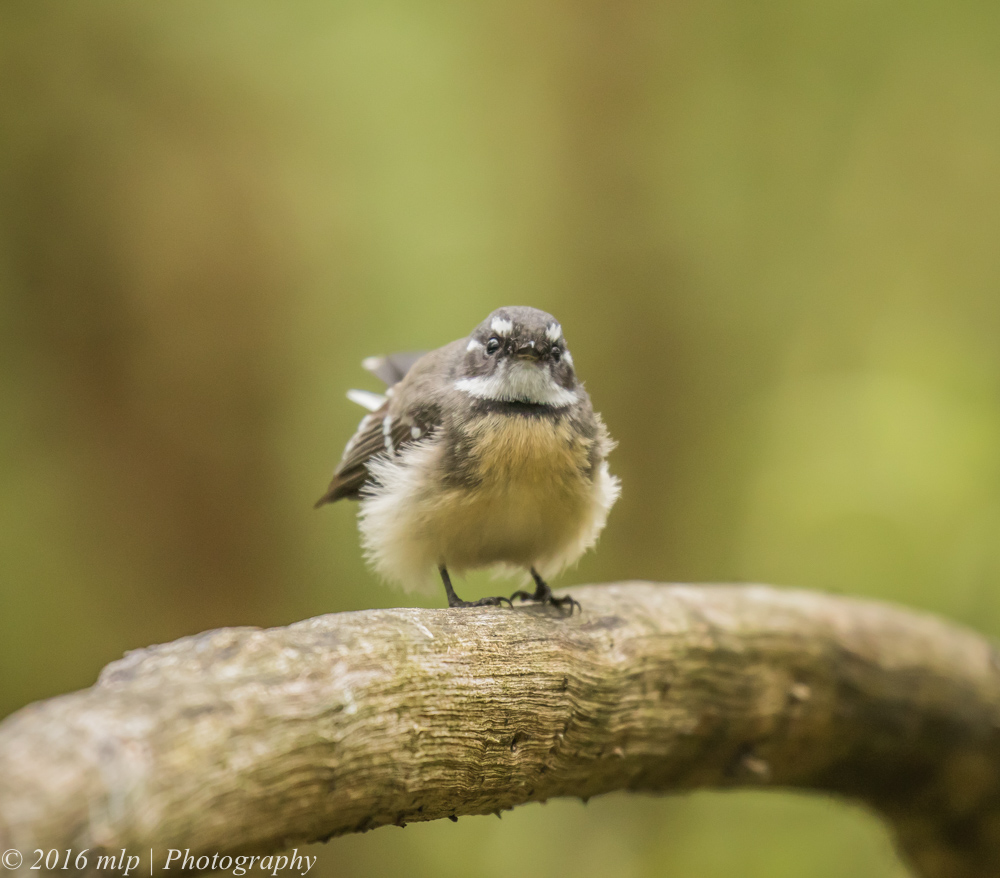
I travelled down the Western Port Bay coastline over the long weekend and camped at Balnarring Beach with some friends. On Sunday I met up with my mate John and explored a new site – a long forested gully called Wuchatsch Reserve in Nyora.  The site had an impressive list of forest birds including Crimson and Eastern Rosellas, Spinebills, Silvereyes and a good number of honeyeaters. While watching the honeyeaters we found a small flock of Striated Thornbills and a Grey Fantail hunting flies off a branch.

Striated Thornbill, Wuchatsch Reserve, Nyora, Victoria

Striated Thornbill, Wuchatsch Reserve, Nyora, Victoria

Striated Thornbill, Wuchatsch Reserve, Nyora, Victoria

II

Grey Fantail, Wuchatsch Reserve, Nyora, Victoria

Grey Fantail watching the watchers…

Grey Fantail, Wuchatsch Reserve, Nyora, Victoria

a quick jump in the air…

Not a Grey Fantai, Wuchatsch Reserve, Nyora, Victoria

and magic…

A bright red cap

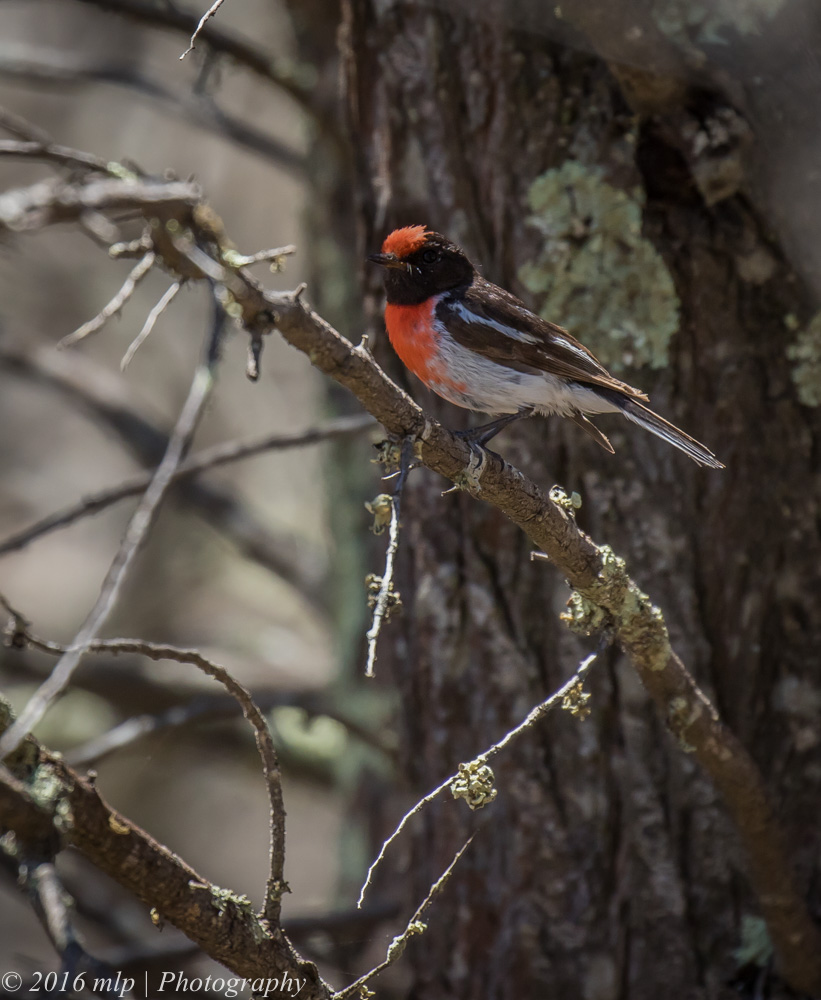
On a drive around the Little Desert National Park as part of my compass tour of Vic,  I stopped and walked through a copse of pine trees looking for anything that might be out in the heat. I found a group of small robins and followed them for a while trying get a clear shot through the branches. A  male Red-capped Robin finally popped into view. The robins are like little raptors, they perch on a branch and when they spot something they pounce down and catch the prey. If you stand still for a while they just ignore you and you can get quite close.

Red-Capped Robin, Little Desert National Park Victoria

Red-Capped Robin, Little Desert National Park Victoria

Too hot to be bothered…

By the time I had left the Nurcoung Bushland Reserve it was getting quite hot (by mid-afternoon it would be low 40’s). Driving out along the rough bush tracks,  I spotted a large male Grey Kangaroo resting in the hole he had scraped in the shade of a bit of scrub. He sat up as I walked closer and then decided it was too hot to leave the shade…he probably reckoned he could take me…I reckon he could too. I walked back to the car and left him to it…

Male Grey Kangaroo, Nurcoung Reserve, Victoria

Male Grey Kangaroo, Nurcoung Reserve, Victoria

Male Grey Kangaroo, Nurcoung Reserve, Victoria

II

Looking for desert rarities

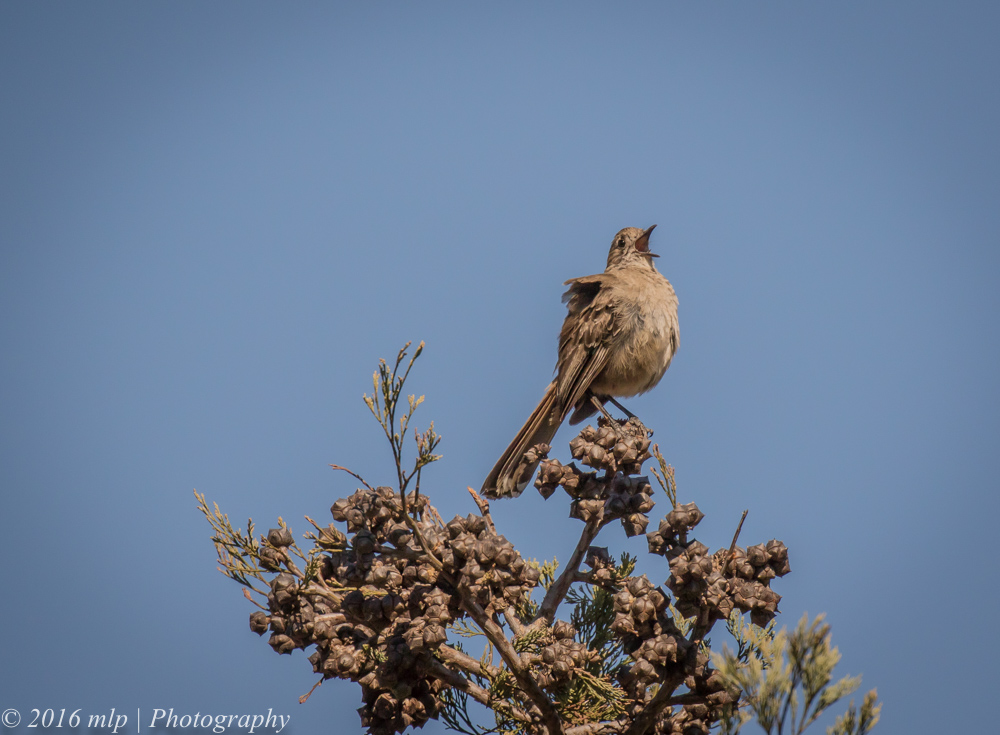
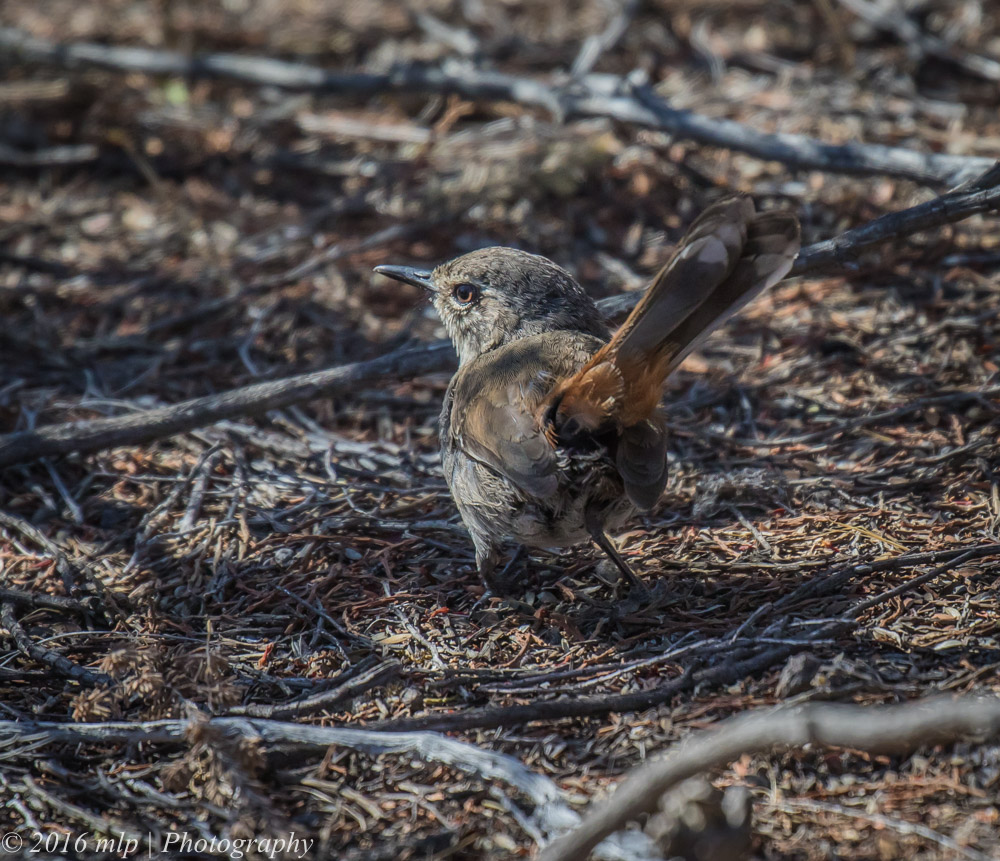
Over Summer I spent some time travelling and camping around Victoria. For a week I camped at Halls Gap which is a small tourist town surrounded by the Grampians, an ancient mountain range eroded over millions of years down to large forested hills. The Grampians form part of the Great Dividing Range that runs downs the east coast of Australia. While based at Halls Gap I explored the nearby regions looking for bushland reserves and national parks that I had not been to before. Nurcoung Bushland Reserve is a section of heathland and stunted Mallee scrub located to the west of the Grampians and near the Little Desert National Park. I was after a few target birds in this tough dry environment– The Southern Scrub-robin and the Shy Heathwren…

Southern Scrub-robin, Nurcoung Reserve, Victoria

Southern Scrub-robin, Nurcoung Reserve, Victoria

Southern Scrub-robin, Nurcoung Nature Reserve, Victoria

Morning song before the heat of the day…

Shy Heathwren, Nurcoung Nature Reserve, Victoria

Shy Heathwren, shy and well camouflaged…

Shy Heathwren, Nurcoung Nature Reserve, Victoria

Shy Heathwren, Nurcoung Nature Reserve, Victoria

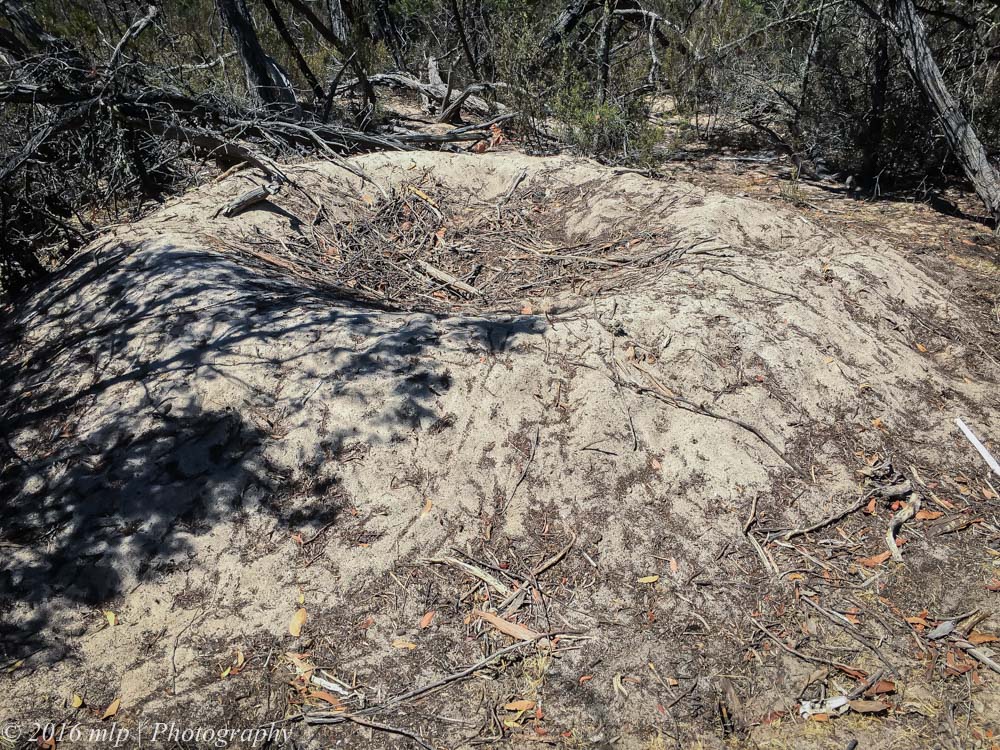
The reserve is surrounded by miles of dry farmland. The rough 4WD track I followed mostly worked its way along the boundaries of the park. I would stop and investigate at various points when I heard something interesting. On one of my stops I headed inland a bit following a small family group of busy White Browed Babblers, foraging quickly amongst the low scrub. When I returned to my car I found a local farmer checking out the car and looking around. Apparently he had been watching me from a distance and wanted to see what I was up to – they don’t get many visitors to the area. After explaining what I was doing and showing him a few photos of the Southern Scrub-robin he told me that  rare and endangered Mallee Fowl were in the reserve and that we were close to a nest that was used this year. I followed the farmer down a bush track and found the Mallee Fowl nest – a large mound of dirt and composting material, 2-3 meters at the base. No sign of the birds but hopefully it was a successful breeding season for them…

Mallee Fowl nest, Nurcoung Nature Reserve

Large Mallee Fowl nest, Nurcoung Reserve

Mallacoota colours

The last few days I stayed at Mallacoota I drove around to my favourite spots looking for a bit of natural local colour. Early summer is the best time to visit, you have the place to yourself as the holidays crowds don’t arrive until Xmas.

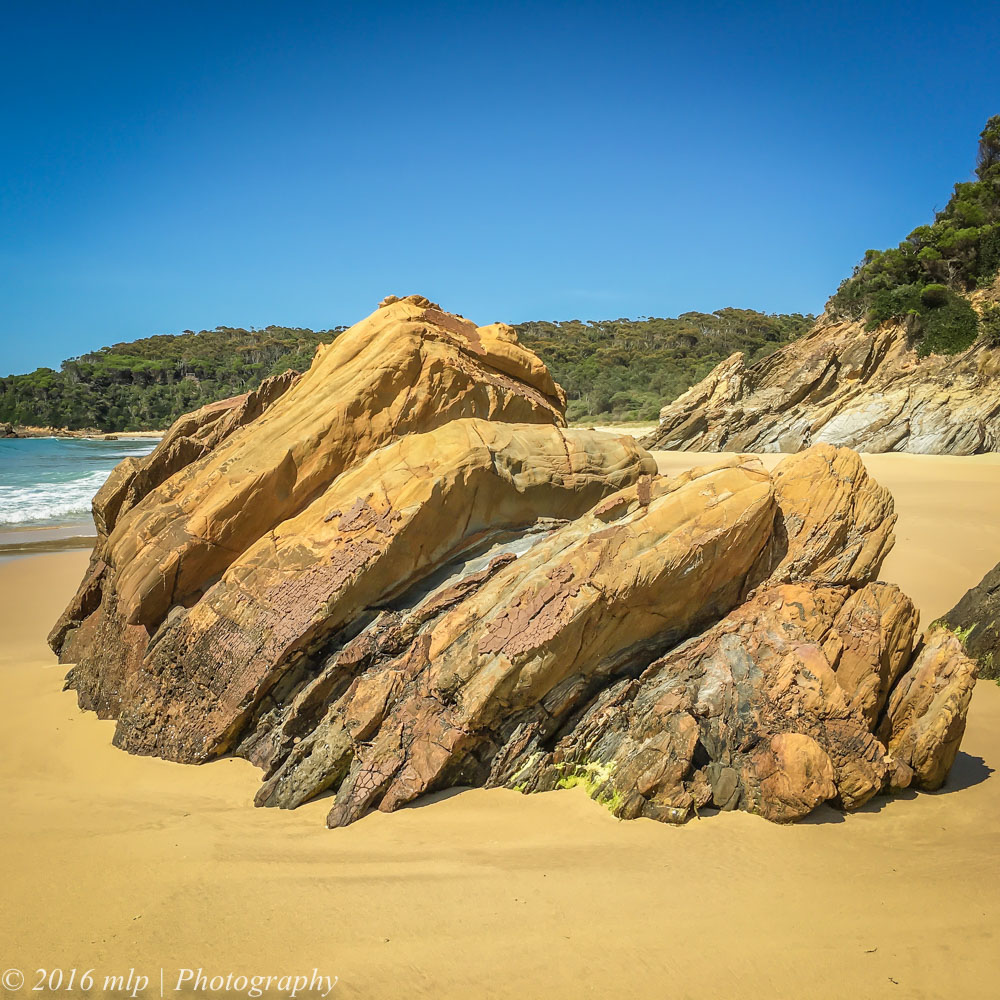
Secret Beach, Mallacoota, Victoria

Secret Beach, Mallacoota, Victoria

Bekta Point, Victoria

Bekta Point, Mallacoota, Victoria

wallagaraugh river, Victoria

Wallagaraugh River, Victoria

Mallacoota Inlet, Victoria

Mallacoota Inlet, Victoria

Mallacoota Inlet, Victoria

Mallacoota Inlet

Mallacoota Inlet, Victoria

Mallacoota Inlet from Captain Stevenson’s Point. 

Lessons in a Laneway

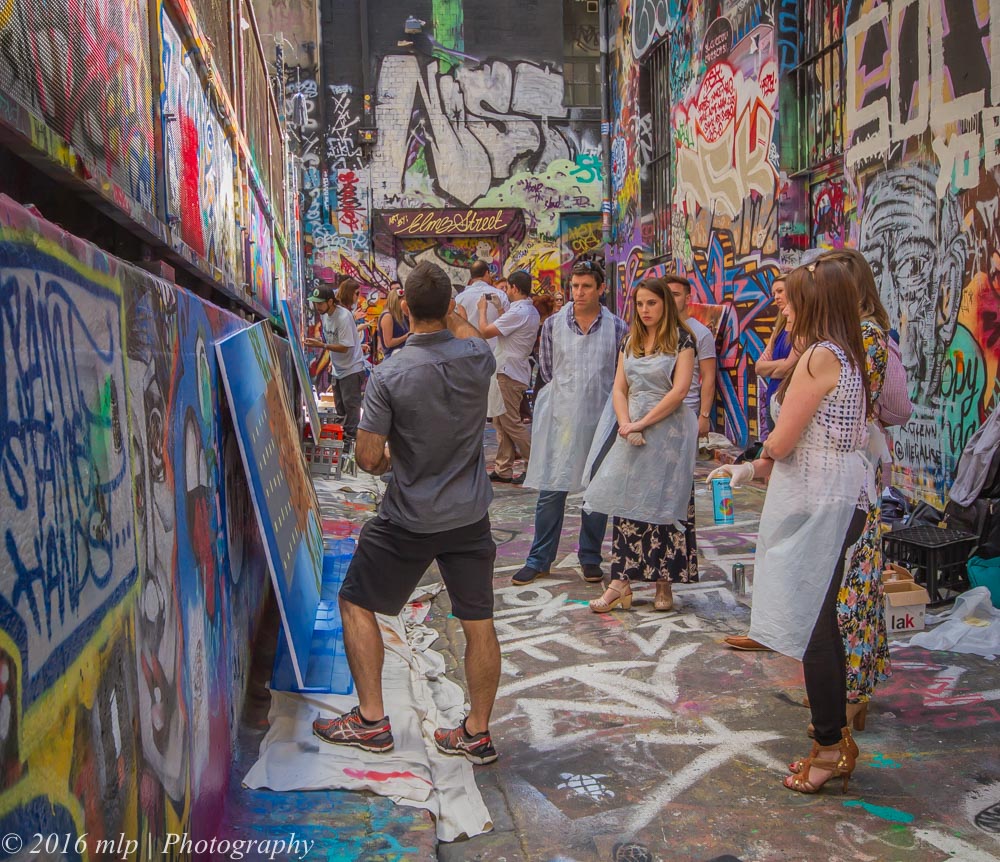
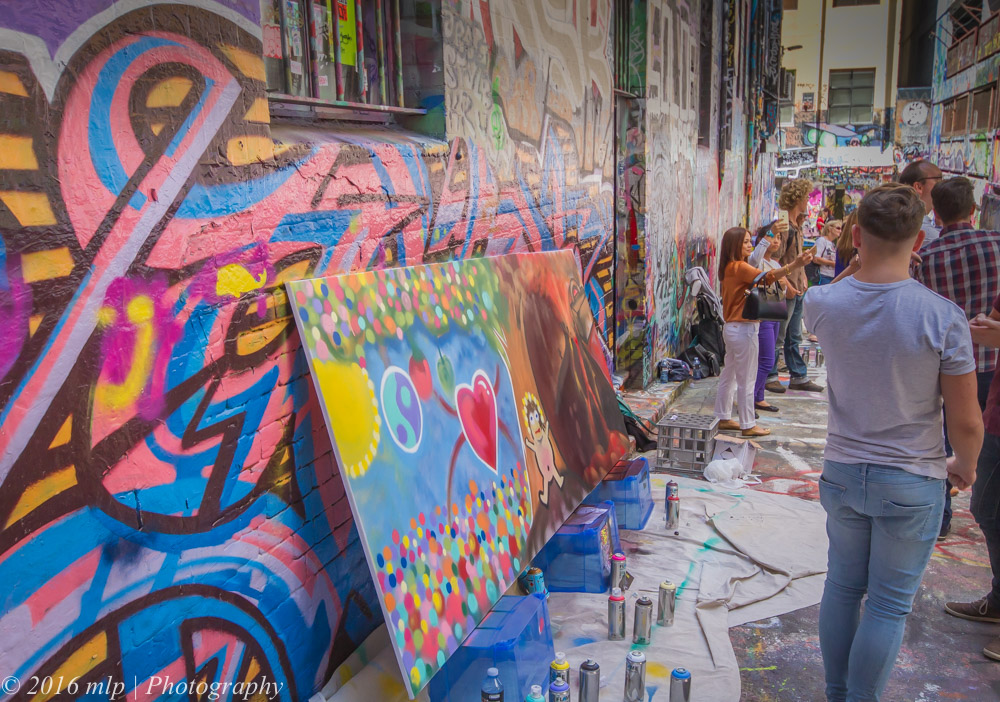
I passed through Hosier Lane in early Summer to photograph any new wall murals. I found a nice looking Snow Leopard and around the corner in the little lane that runs off Hosier – Rutledge Lane, I found a lesson in how to use spray cans to make simple pictures. I watched for a while as several artists showed a group of office workers, on a lunchtime team building exercise, how using simple effects they could create an impressive image. It was interesting to watch how many steps it can take to create some of the 3d effects that street artists use.

Hosier Lane Snow Leopard, Hosier Lane, Melbourne CBD

Hosier Lane Snow Leopard, Hosier Lane, Melbourne CBD

Hosier Lane art lessons, Hosier Lane, Melbourne CBD

Hosier Lane art lessons

Hosier Lane art lessons, Hosier Lane, Melbourne CBD

Hosier Lane art lessons II

Hosier Lane art lessons, Hosier Lane, Melbourne CBD

Hosier Lane art lessons III

Lifer 321

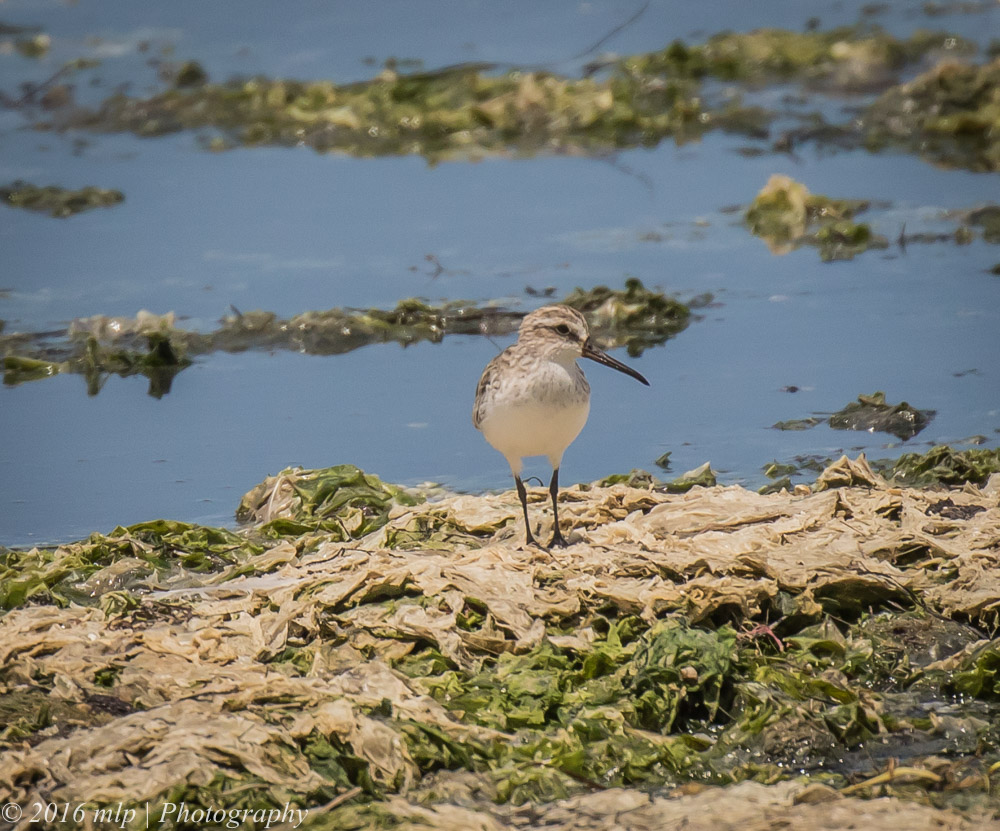
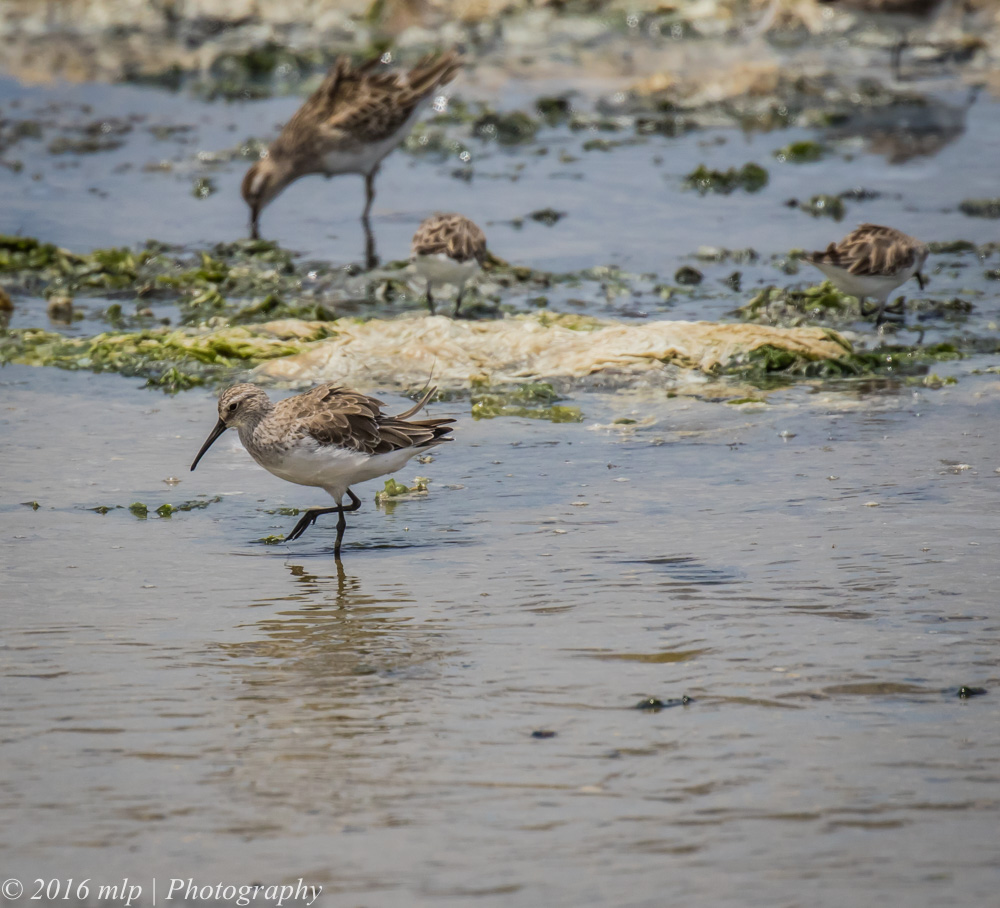
Over Summer the Western Treatment Plant, associated wetlands and conservation ponds are home to many thousands of migratory birds that spend the breeding season in the Northern Hemisphere: Northern China, the tundra of Arctic Siberia and along the eastern Eurasian Arctic. After the breeding season the shorebirds birds migrate down south of the equator and spread out over the Southern Hemisphere including Australia and New Zealand. The return to and introduce first year birds to their favourite feeding grounds. At the Pooh Farm there are thousands of Sharp-tailed Sandpipers and Red-necked Stints, and many Curlew Sandpipers, and a number of Common Greenshanks and Godwits .  Every now and again a rarer species turns up. This year we have had Pectoral Sandpipers, now becoming a regular in low numbers, a few Broad Billed Sandpipers and an exciting visit by a Red-necked Phalarope. A number of regular birders patrol the main shallow lagoons looking for a rare find. It can be difficult as many of the birds look the same, come in a variety of colours and plumage even within a species and may appear as a single slightly different bird amongst thousands.

This Summer I visited with a few neighbourhood birders including Dave, an experienced birder who has specialised in various shorebirds over the years. He managed to spot the Broad-billed Sandpiper, a stint sized species with a long flat bill. On two separate occasions,  amongst thousands of birds,  Dave has managed to find this little bird based on its features and its habit. The Broad-billed Sandpiper became my  321st Lifer and my 318th State Tick.

Broad Billed Sandpiper, Western Treatment Plant

Broad-billed Sandpiper, Western Treatment Plant

Curlew Sandpiper, Western Treatment Plant

Curlew Sandpiper, Western Treatment Plant

Mixed Sandpiper stint flock, Western Treatment Plant

Mixed flock of Sharp-tailed Sandpipers, Curlew Sandpipers and Red-necked Stints.  Western Treatment Plant

W marks the spot

A common sound heard on the edges of the Mallacoota township belong to a large solid bird called a Wonga Pigeon. It is a bird that prefers dense scrub and rainforest. It has distinctive markings – blue grey upper body, and spotted white belly. The markings on the chest help with camouflage, imitating shadows amongst the trees. To me it looks like a large W. It will try and stay still and hide when you walk to close but when it flushes it is a loud clatter of wings and a mad dash through the branches and away. When several flush at the same time it is loud and generally spooks everything else nearby. The one below I found on an early morning walk near my campsite. It was not overly concerned by my presence and for the first time I managed to get a few images of this species.

Wonga Pigeon, Shady Gully Reserve, Mallacotta

Wonga Pigeon, Shady Gully Reserve, Mallacoota

Wonga Pigeon, Shady Gully Reserve, Mallacotta

II

Wonga Pigeon, Shady Gully Reserve, Mallacotta

Looking for a bit of breakfast…

Wonga Pigeon, Shady Gully Reserve, Mallacotta

An early morning stretch – showing the white and spots under the wings and belly – help to blend into shadows and a bright sky when flying through the tops of trees

Off with the Fairies…

Over the summer I have visited the Werribee Treatment Plant (the pooh farm) numerous times. Every visit produces a comprehensive list of woodlands, wetlands and shorebird species, great aerial action, lots of raptors and during summer many juveniles. On this visit we drove around the Lake Borrie conservation lagoons and came upon large numbers of Fairy Martins including a good number of Juveniles. The young birds have not learnt to fear cars or humans yet so using the car as a mobile bird hide I was able to get some nice shots of the young Fairy Martins.

Juvenile Fairy Martins, Werribee Treatment Plant, Victoria

Juvenile Fairy Martins, Werribee Treatment Plant, Victoria

Juvenile Fairy Martins, Werribee Treatment Plant, Victoria

II

Juvenile Fairy Martins, Werribee Treatment Plant, Victoria

Juvenile Fairy Martins – a little older than the previous pair

Juvenile Fairy Martins, Werribee Treatment Plant, Victoria

II

I also managed to sneak a few pics of this little skulker – a Spotless Crake. These birds like a muddy bank and plenty of cover to dart back into protection. They are not often seen and hard to photograph.

Spotless Crake, Werribee Treatment Plant, Victoria

Spotless Crake, Werribee Treatment Plant, Victoria
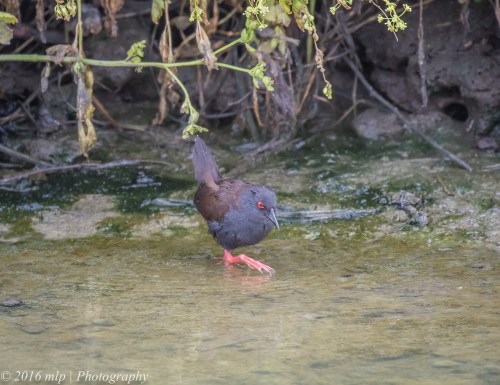
Spotless Crake, Werribee Treatment Plant, Victoria

II

Spotless Crake, Werribee Treatment Plant, Victoria
III

Sun baking at Double Creek

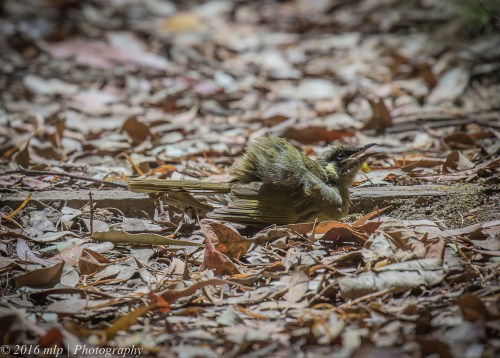
On an early morning walk around the Double Creek Nature Walk, near Mallacoota, I came across several birds having a dust bath and soaking in some sun. I watched Eastern Yellow Robins dust bathing followed by a spot of sun baking. It was a prime spot amongst the thick forest and the Robins were moved along by a pair of Lewin’s Honeyeater who spent a bit more time at the baking spot. Normally Lewin’s are a little hard to get near and photograph but as I was slow moving and crouched down they were happy to ignore me and just get on with soaking up the rays.

I have seen several bird species at different locations sun baking: magpies actually lying on their backs in sand on the edge of a golf sand bunker – I thought they were dead until I walked up to have a closer look….not sure who got the bigger fright. I have seen pigeons with a wing in the air lying on the ground and then the Robins and Lewin’s honeyeater at Double Creek. It is not fully understood why birds do this: part of feather maintenance, drying off after a bath (though I watched these birds have a dust bath and not use water), irritating feather mites to help find and remove them, just enjoying the sun on a cool morning. Whatever the reason it was interesting to watch and photograph.

Lewin's Honeyeater Sun-baking, Double Creek Nature Walk, Mallacoota

Lewin’s Honeyeater Sun-baking, Double Creek Nature Walk, Mallacoota

Lewin's Honeyeaters Sun-baking, Double Creek Nature Walk, Mallacoota

Lewin’s Honeyeaters sun-baking

Lewin's Honeyeaters Sun-baking, Double Creek Nature Walk, Mallacoota

III

Lewin's Honeyeaters Sun-baking, Double Creek Nature Walk, Mallacoota

IV

A favourite little friend

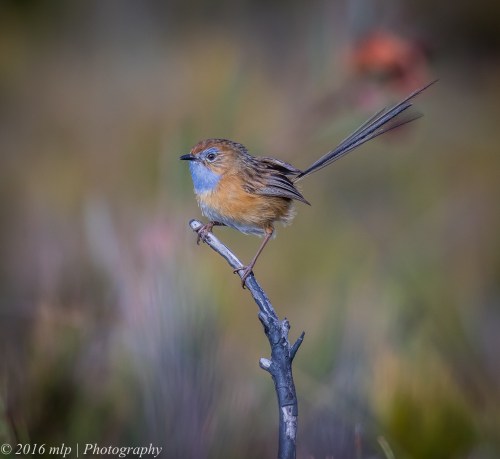
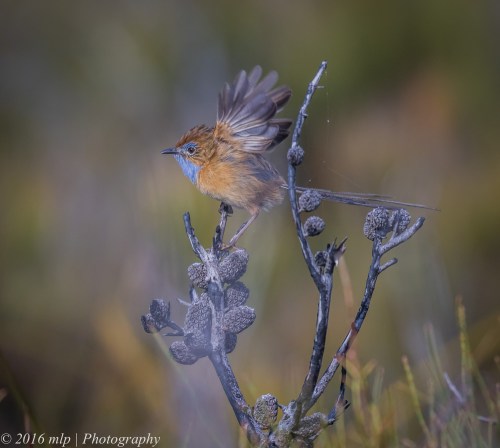
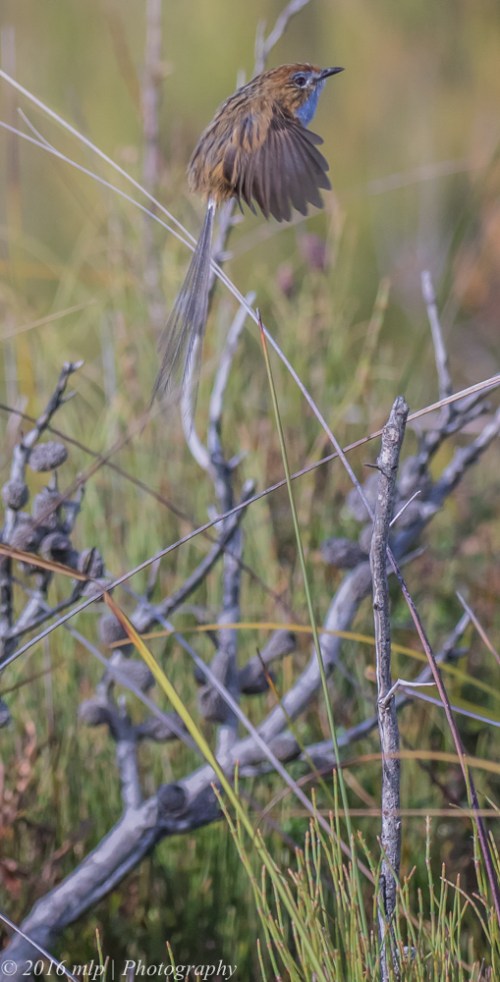
On my yearly trip to Mallacoota I always plan to drive down to Shipwreck Creek and walk the track to Seal Creek. Along the way I expect to see a good range of rare birds, including Southern Emu-wren and the very rare Ground Parrot. I actually did see a Ground Parrot but it flushed and took off in a wild zig zag flight that made it impossible to film: video or photos. I will try again next year. What I managed to photograph was one of my favourite little birds – the Southern Emu-wren: a feisty tiny bird the size of a fairy-wren but with a much longer tail and very small wings that allow for short hops of flight. The Emu-wren requires a good expanse of knee to thigh-high heathland clear of foxes and cats. Very few exist now close to urban areas. I have only seen them at Shipwreck Creek and Cape Howe Wilderness  Areas and at Anglesea Heath.

 I found these guys fairly early in the morning along the track to Seal Creek but on the way back they had all disappeared back into the heathland scrub. The males will fly up to a dead bit of scrub in the heath and look at the intruders coming into his patch.

Shipwreck Creek, Far East Gippsland

Shipwreck Creek, Far East Gippsland

Southern Emu-wren, Shipwreck Creek, Far East Gippsland,

Male Southern Emu-wren, Shipwreck Creek, Far East Gippsland,

Southern Emu-wren, Shipwreck Creek, Far East Gippsland,

II

Southern Emu-wren, Shipwreck Creek, Far East Gippsland,

Tiny wings and a long tail means that it is not a great flyer…

Southern Emu-wren, Shipwreck Creek, Far East Gippsland,

IV

Southern Emu-wren, Shipwreck Creek, Far East Gippsland,

Showing the delicate feathers of a very long tail

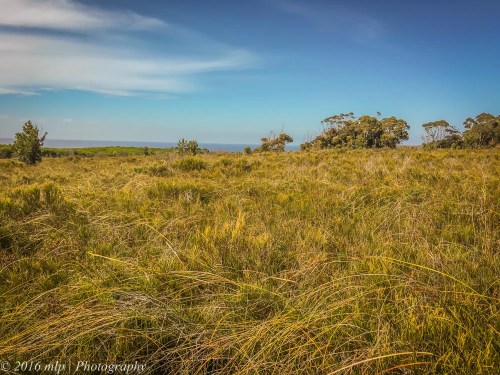
Heathland, Shipwreck Creek, Far East Gippsland

Heathland, Shipwreck Creek, Far East Gippsland

Heathland, Shipwreck Creek, Far East Gippsland

Along with birds it is also full of Tiger and Red Bellied Black Snakes…

Monochrome Melbourne

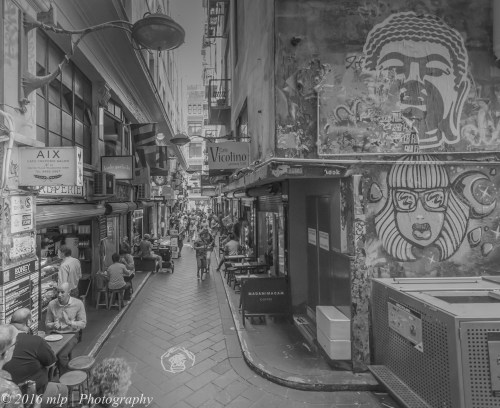
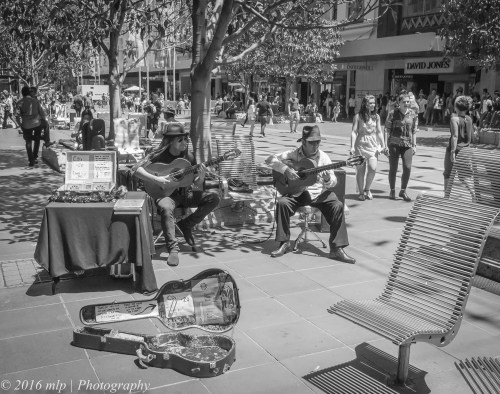
A walk around the city on a hot summer’s day, watching the lunch crowds and traders along the small laneways off Flinders Lane and finishing off the walk with a few songs from the buskers in the Bourke St Mall.

Lunchtime traders in Centre Place, Melbourne CBD, 4 Dec 2015

Lunchtime traders in Centre Place, Melbourne CBD – a fantastic spot for good food and a great price from a variety of small hole-in-the-wall shops – also has some interesting artwork and graffiti.

Buskers in Bourke St Mall, Melbourne CBD

Buskers in Bourke St Mall, Melbourne CBD – these guys were amazingly good, Spanish style guitar with a modern flair. They were feeling the heat of the mid-day sun – but the show must go on…

The Genoa River Sea Eagles (Part 2)

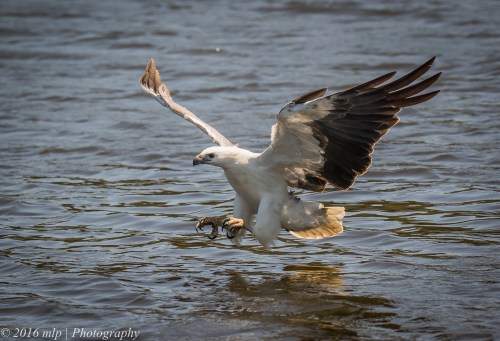
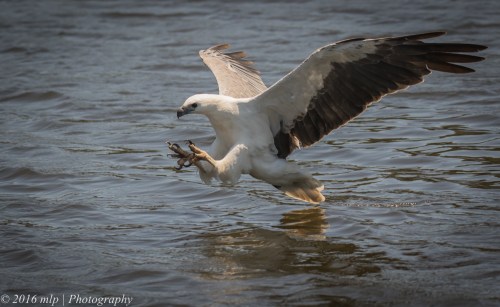
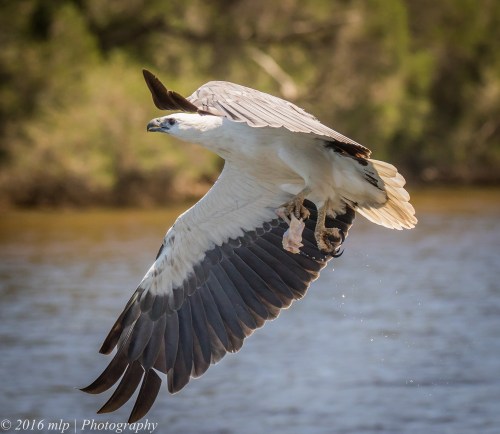
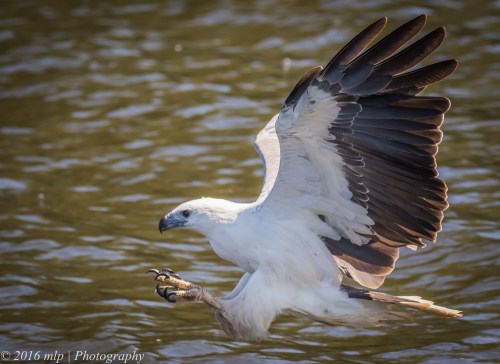
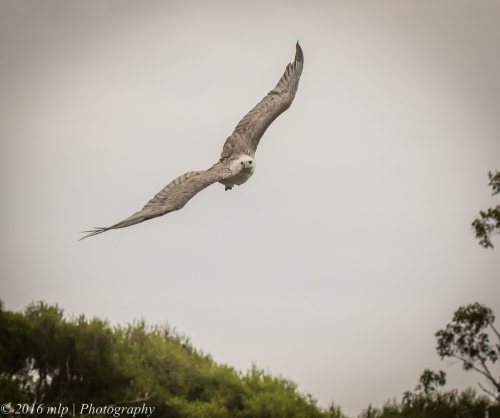
Trying to take photographs of Eagles in flight is a great challenge that can test your camera skills, fieldcraft, manners and reflexes.

The first trip up the Genoa River had resulted in some nice images of an Azure Kingfisher and a few nice images of the hunting and roosting White Bellied Sea Eagles. On my second trip up the Genoa River during my 2015 Dec trip to Mallacoota, I gave myself a better chance of taking a few good images of the diving Sea Eagles. I arrived early and claimed what I had learnt was the best spot to sit on the boat (front left corner), I knew that I had to pan the camera while the eagle made its approach and start shooting early, I had to remember to adjust or verify my settings constantly (sky shots vs shots against the dark water or forest) and I had to shoot rapidly and with a high shutter speed to make sure I got plenty of clear action shots. Generally it worked. Occasionally I forgot to adjust the exposure and IOS settings which resulted in over-exposed images.

I was much happier with the second trip and look forward to going again at the end of this year for more improvements

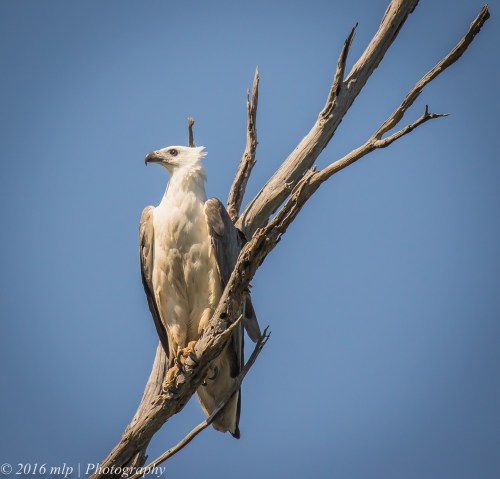
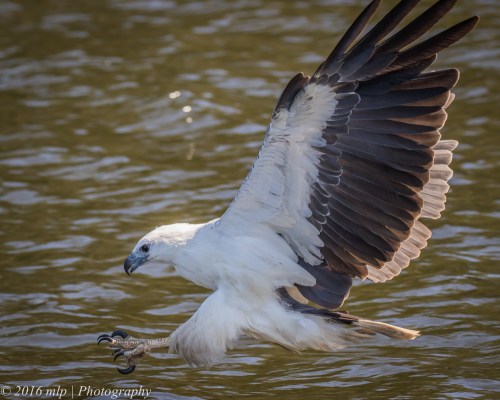
White Bellied Sea Eagle, Genoa River, Gypsy Pt

A majestic female White Bellied Sea Eagle, Genoa River, Gypsy Pt

White Bellied Sea Eagles, Genoa River, Gypsy Pt

Larger Female at right…

White Bellied Sea Eagle, Genoa River, Gypsy Pt

III

White Bellied Sea Eagle, Genoa River, Gypsy Pt

IV

White Bellied Sea Eagle, Genoa River, Gypsy Pt

V

White Bellied Sea Eagle, Genoa River, Gypsy Pt

VI

White Bellied Sea Eagle, Genoa River, Gypsy Pt

VII

White Bellied Sea Eagle, Genoa River, Gypsy Pt

VIII

White Bellied Sea Eagle, Genoa River, Gypsy Pt

IX


The Genoa River Sea-Eagles (Part 1)

On my yearly pilgrimage to Mallacoota, I look forward to the certainty of finding and watching White Bellied Sea-Eagles. Even across the other side of the Mallacoota Inlet they are easy to spot with their bright white body, large v-shaped wingspan and easy flight. One of the better places to observe these large Eagles up close, is along the Genoa River where several pairs have claimed feeding and breeding territories. The nests are reused and built upon year after year for decades until it becomes so heavy that it breaks the tree.  Access to the Genoa River is via Gypsy Point where a canoe can be hired (or launch your own) or can you join one of the regular boat cruises that head up the river for several kilometres. Each year I join one of the boat cruises and try and photograph these astounding birds of prey. The boat captain has got to know the local eagles and if they are in the area can call them in with a screech and a promise of raw chicken wings.
The photos below are from the first of two boat trips I took – I enjoyed the cruise so much that I booked myself onto another one a few days later. You can never have enough practice in shooting birds of prey in action.

White Bellied Sea Eagle, Genoa River, Gypsy Pt

White Bellied Sea Eagle, Genoa River, Gypsy Pt

White Bellied Sea Eagle, Genoa River, Gypsy Pt

The White Bellied Sea Eagle has spotted the food and starts its dive keeping its head aligned with the target…

White Bellied Sea Eagle, Genoa River, Gypsy Pt

Still watching the target…

White Bellied Sea Eagle, Genoa River, Gypsy Pt

Angling to keep facing into the wind for lift…

White Bellied Sea Eagle, Genoa River, Gypsy Pt

Lining up, talons starting to unfurl…

White Bellied Sea Eagle, Genoa River, Gypsy Pt

Extending legs and talons opening

White Bellied Sea Eagle, Genoa River, Gypsy Pt

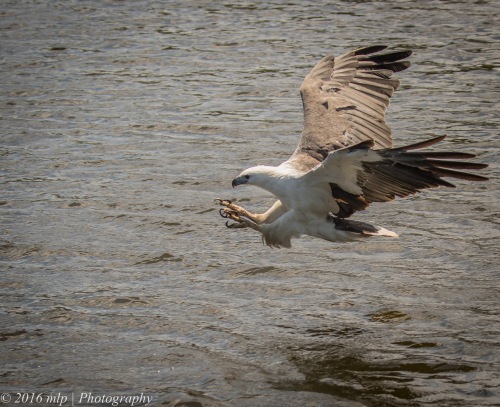
Legs extended, talons open, eyes fixed on the target…

White Bellied Sea Eagle, Genoa River, Gypsy Pt

Impact…