Category Archives: Bird Behaviour

Bathing in a puddle

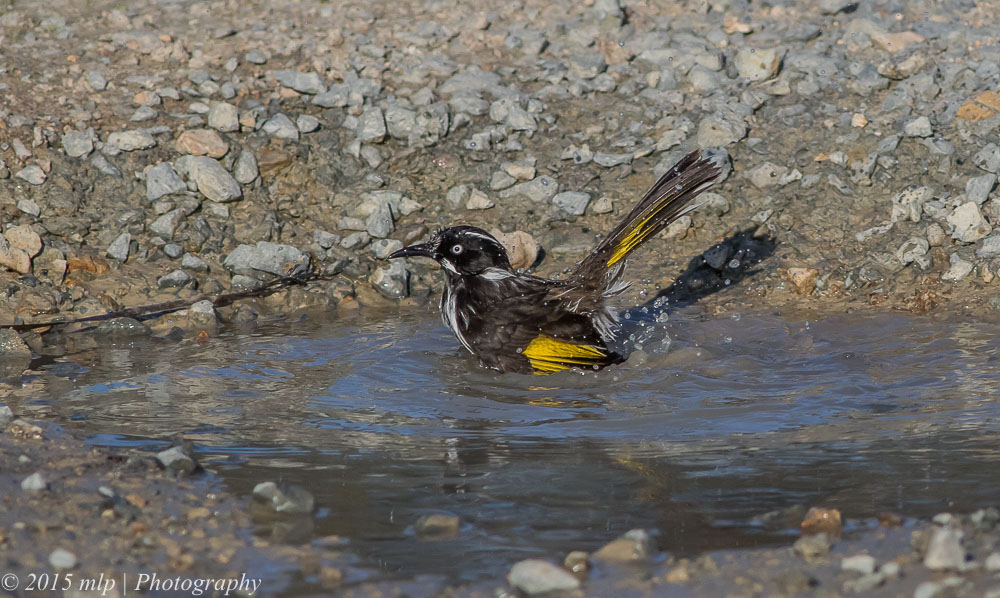
There is nothing like a nice afternoon bath in a small fresh puddle – perfect temperature, perfect depth. This New Holland Honeyeater was one of several birds that made quick flights into the water. After a quick dip and a splash around it would take off to a nearby branch to groom and then back into the water again. Bathing, grooming and keeping the feathers in good condition are extremely important to birds. It is fun and challenging to try and take decent images when the opportunity arises…

Bathing New Holland Honeyeater VI, Cranbourne Botanical Gardens,

Bathing New Holland Honeyeater, Cranbourne Botanical Gardens,

Bathing New Holland Honeyeater VI, Cranbourne Botanical Gardens,

II

Bathing New Holland Honeyeater VI, Cranbourne Botanical Gardens,

III

Bathing New Holland Honeyeater VI, Cranbourne Botanical Gardens,

IV

Bathing New Holland Honeyeater VI, Cranbourne Botanical Gardens,

V

Bathing New Holland Honeyeater VI, Cranbourne Botanical Gardens,

VII

Spotted a Pardalote or two

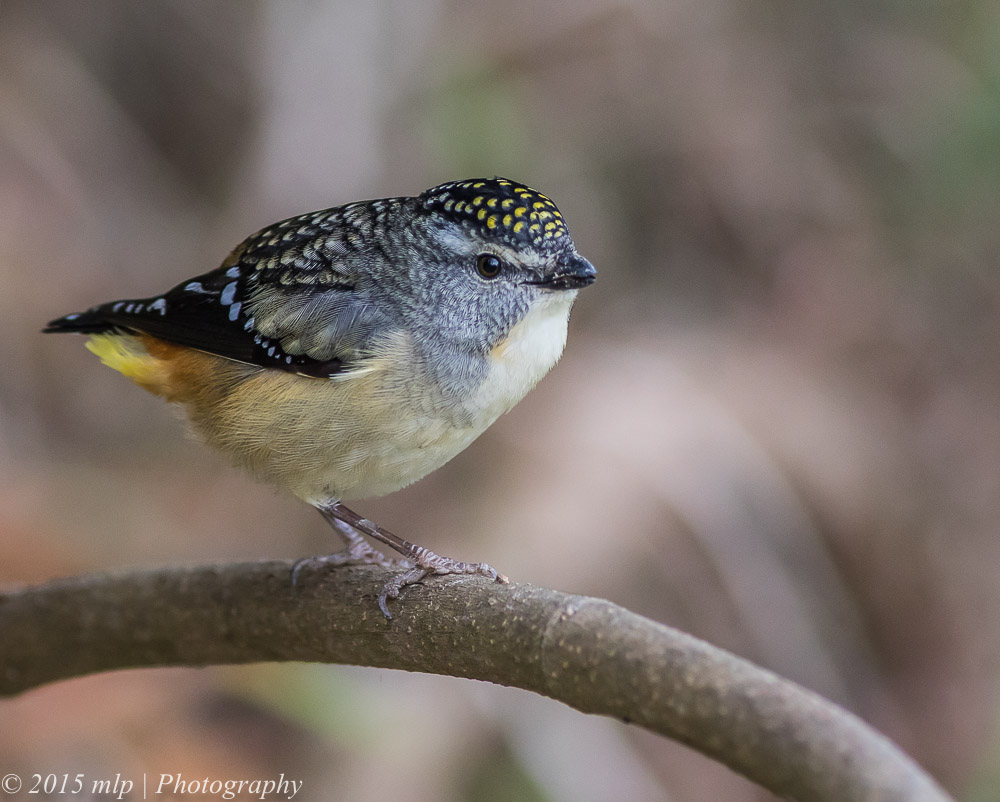
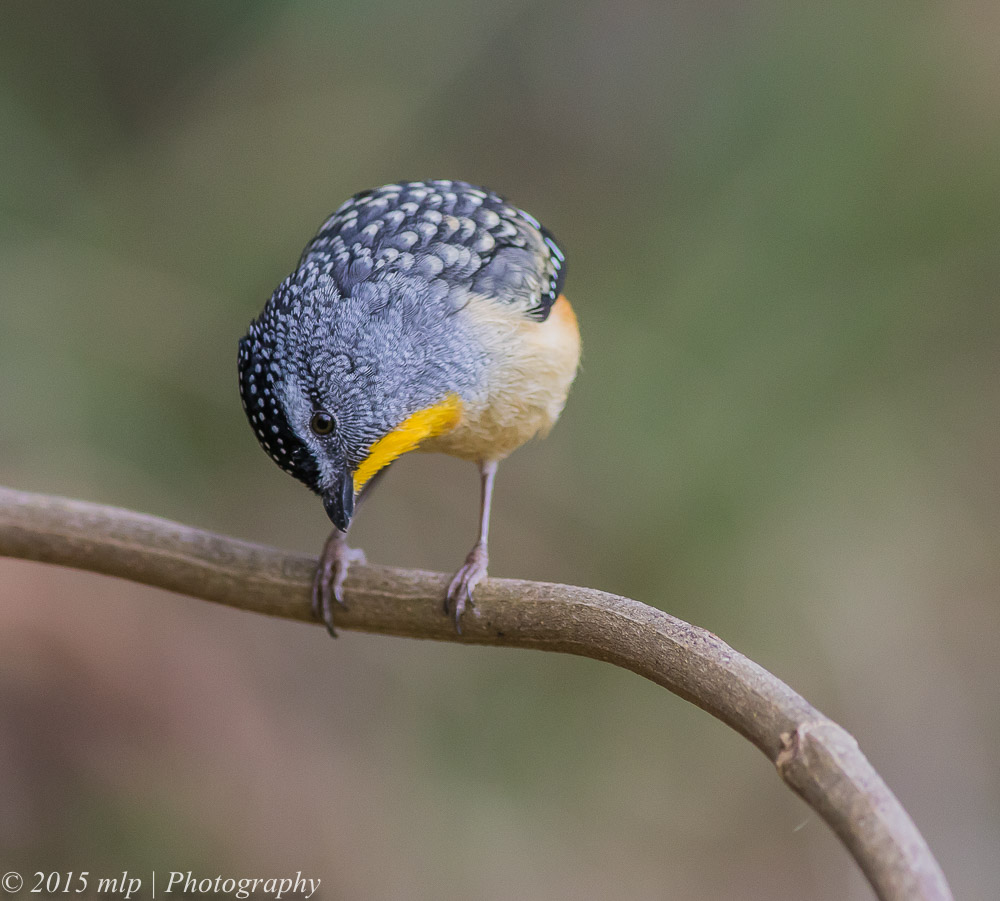
Spotted Pardalotes are tiny colourful birds that mostly feed in the tree canopy. They have quite a distinctive call but are not often seen. During the breeding season they come down from the trees and rather than build a nest in the branches they dig a small tunnel in a sandy bank – the tunnel has a small mouse sized opening but can be a metre long. I found this little family trying out a bank near where I happened to be photographing a family of nesting Yellow Robins. They had dug a few test holes and were looking at each others work. For such a shy bird they were very focussed on the potential nest holes and ignored my presence.

Female Pardalote, Moorooduc Quarry

Female Pardalote, Moorooduc Quarry

Female Pardalote, Moorooduc Quarry

II

Male Pardalote, Moorooduc Quarry

Male Pardalote, Moorooduc Quarry

Male Pardalote, Moorooduc Quarry

II

Male Pardalote, Moorooduc Quarry

III

Male Pardalote, Moorooduc Quarry

IV

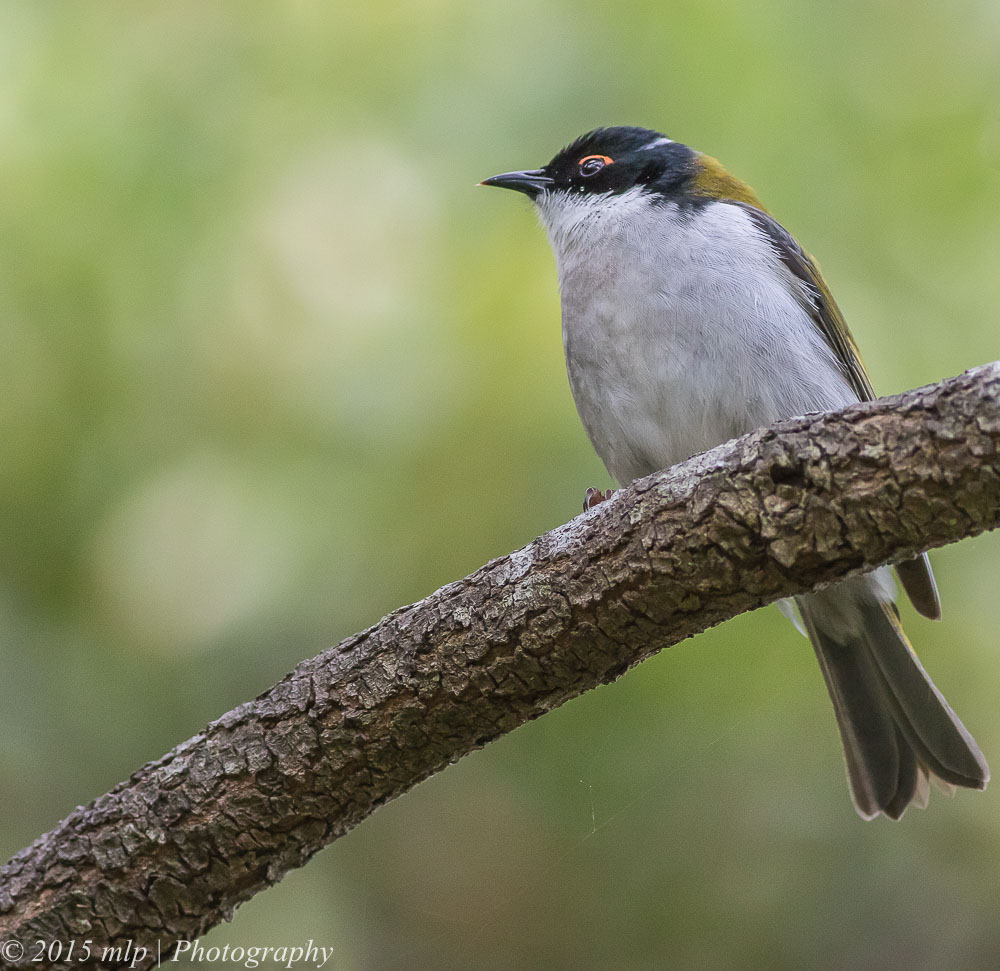
Above the Pardalotes were three White-naped Honeyeaters chasing each other. This one stopped and watched the Pardalotes for a while. The White-nape has a interesting call and bright Orange eye marking.

White Naped Honeyeater,  Moorooduc Quarry

White Naped Honeyeater, Moorooduc Quarry

More Moorooduc Magic

Moorooduc Quarry is fast becoming one of my favourite places to bird. It is a compact site with a variety of vegetation and landscapes and many bird species.

On the latest visit to check in on the Yellow Robin family I found the Robin now sitting on eggs in the nest.

Brooding Eastern Yellow Robin II, Moorooduc Quarry Flora and Fauna Reserve

Brooding Eastern Yellow Robin.

Brooding Eastern Yellow Robin II, Moorooduc Quarry Flora and Fauna Reserve

Keeping a careful eye on me – I kept my distance

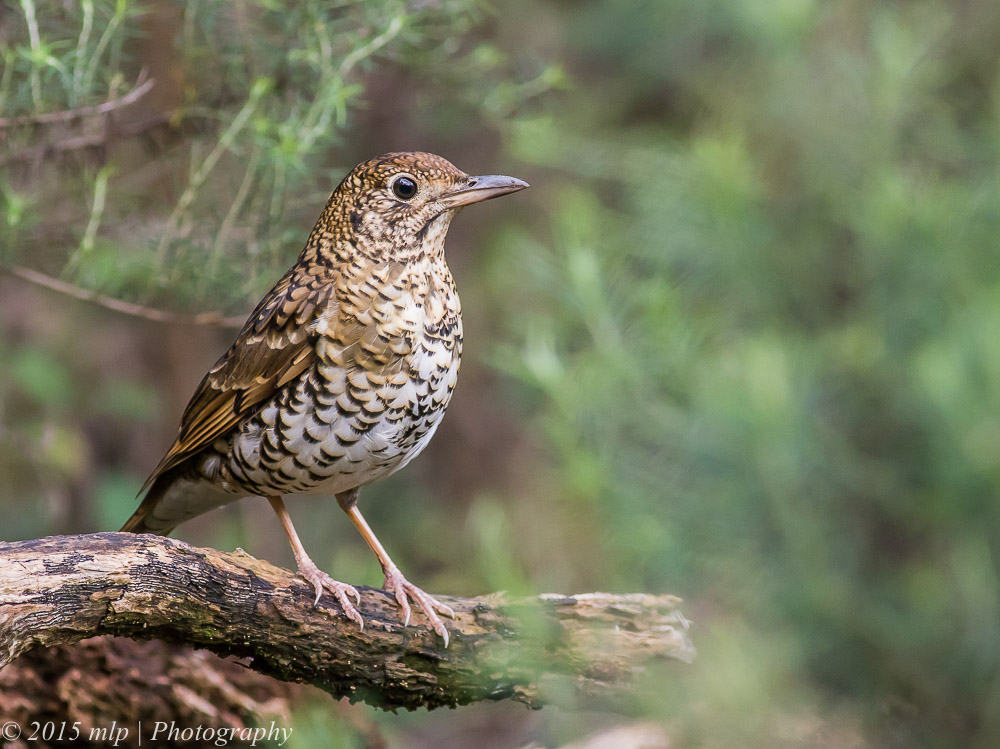
I also found a few regulars and a new one for my site records – a Bassian Thrush – a speckled bird a little larger than a blackbird that loves to forage in the understory of thick cooler forests. While I was trying to photograph the Yellow Robins it popped out to see what the fuss was – posed for a few moments and then dashed back into the thick scrub. I have rarely seen a Bassian Thrush and this is only the second time I have been fast enough to get a photo.

Bassian Thrush, Moorooduc Quarry

Bassian Thrush, Moorooduc Quarry

Bassian Thrush, Moorooduc Quarry

II

Grey Butcherbird, Moorooduc Quarry

Grey Butcherbird watching the antics of the Galahs

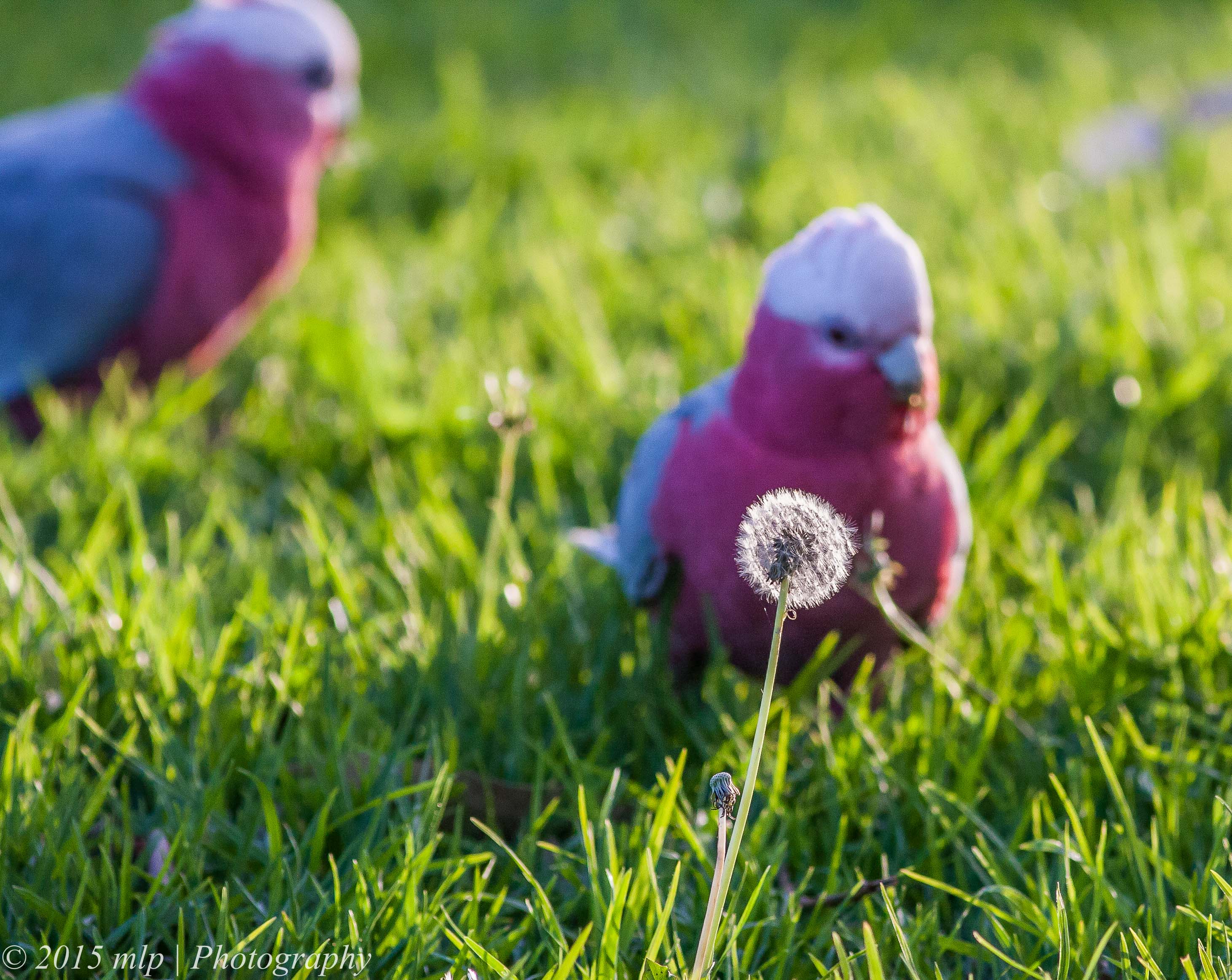
Galah, Moorooduc Quarry

Female Galah watching the nearby group of male Galahs, Moorooduc Quarry

Galah, Moorooduc Quarry

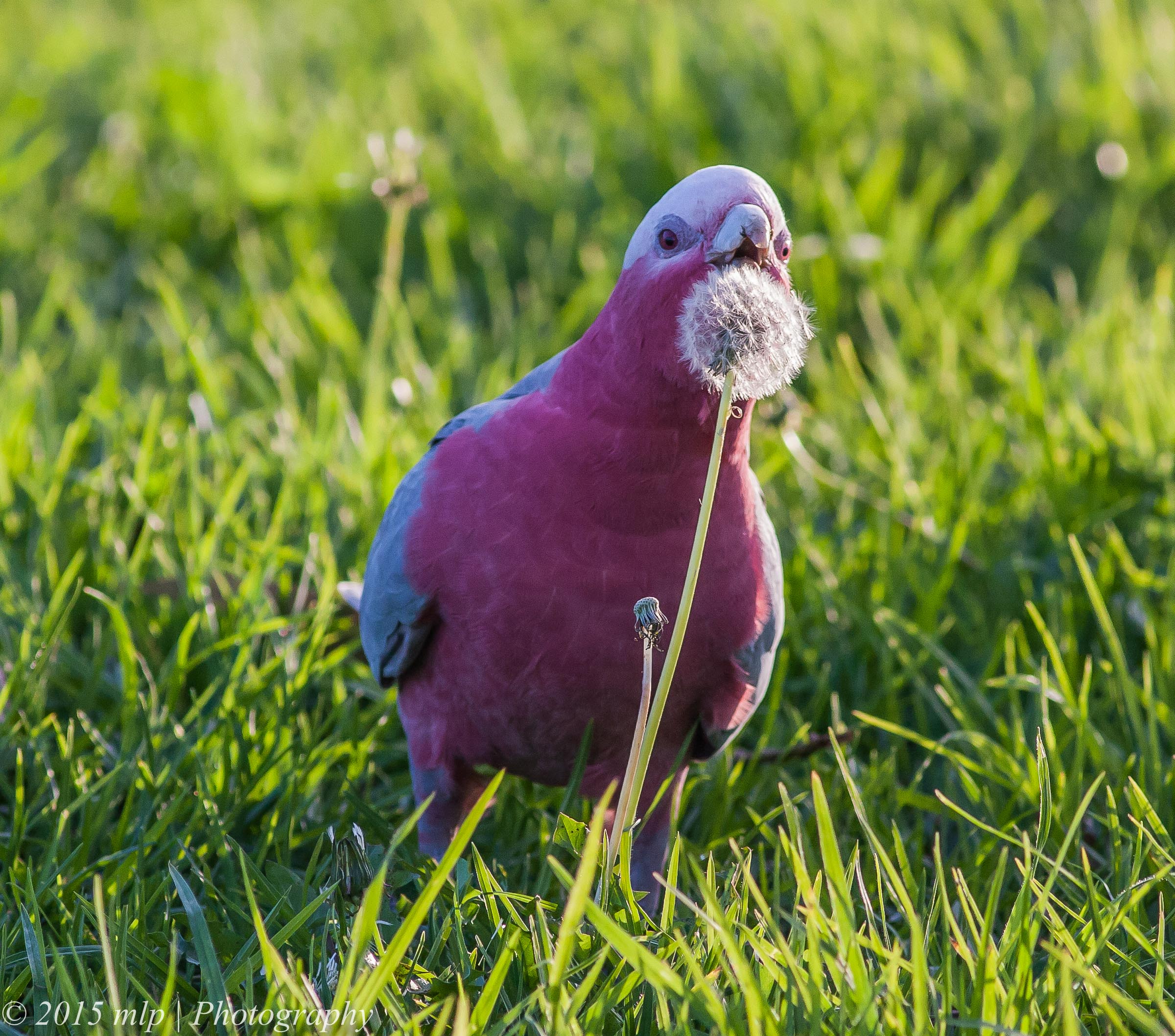
Male Galah enjoying some dandelion seed heads.

Honeyeaters hanging in the Gardens

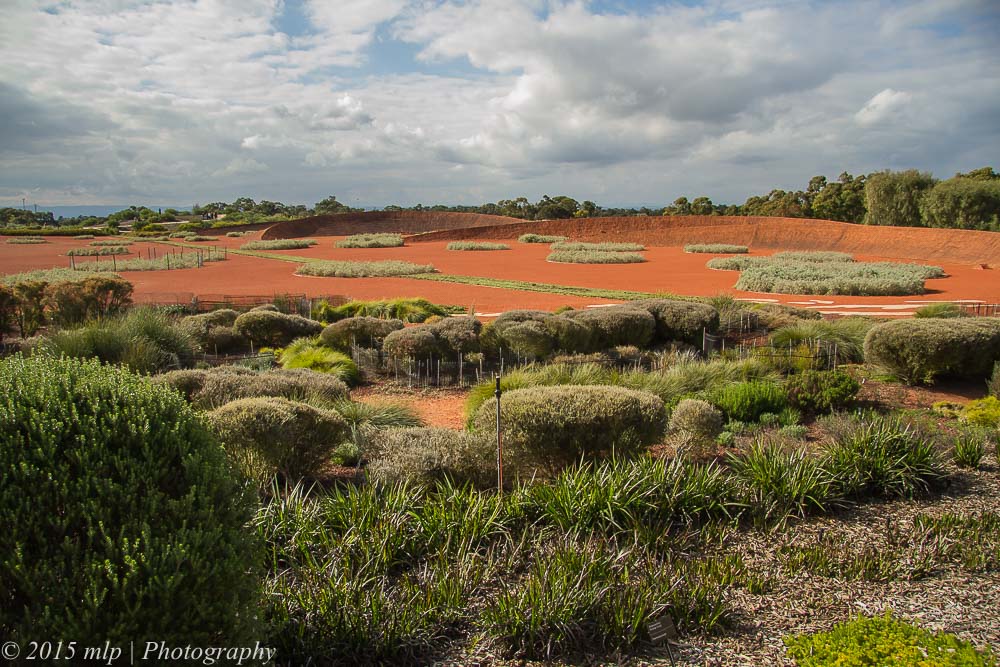
The Australian Garden is located at Cranbourne and is part of the Royal Botanic Gardens. It is dedicated to Australian plants and landscapes and displays the various regions of Australia and its native plants. A great place to take visitors. It has large formal created gardens and larger areas of open natural parkland, woodlands, heathlands and even wetlands. It has many species of birds and quite a few Black or Swamp Wallabies as well as Wombats and Echidnas. I have visited a few times in the last couple of weeks. The previous Post at this site was about the Bandicoots that I had photographed. [I have since found out that the Bandicoot without the tail and the healed scars is called Stumpy and is a regular at the Stringybark Picnic area.

Australian Gardens, Cranbourne Botanical Gardens,

Australian Garden, Royal Botanical Gardens, Cranbourne – red centre section

Black Fronted Dotterel

Black Fronted Dotterel – a pair were working the waters edge along one of the ponds

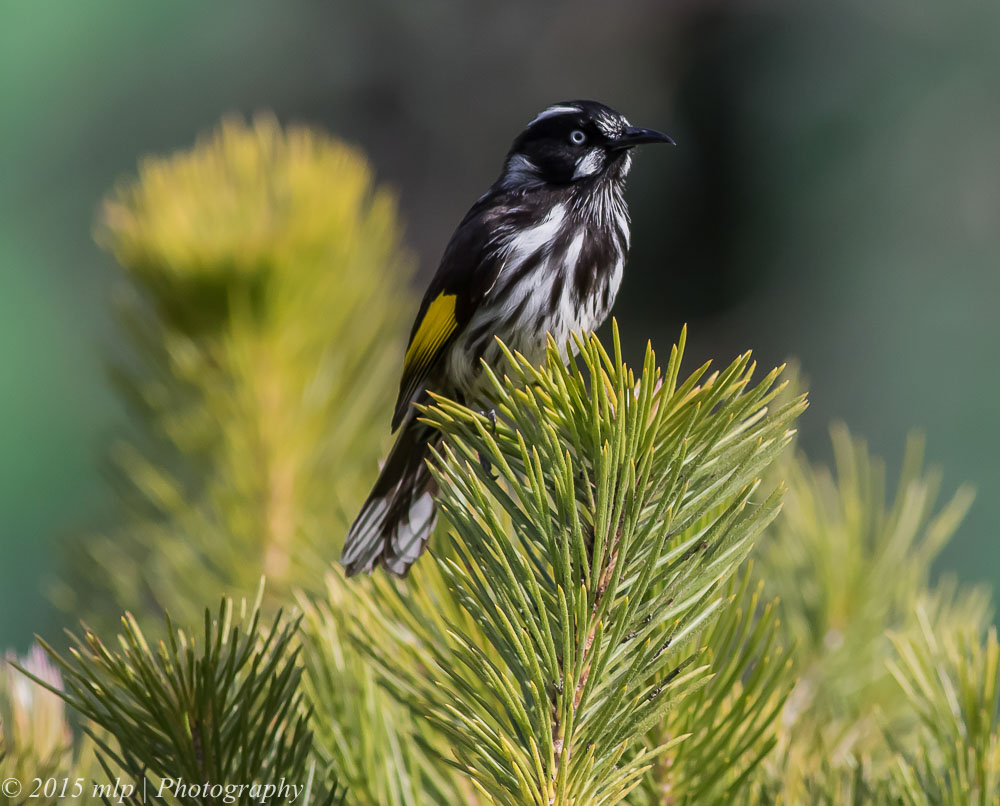
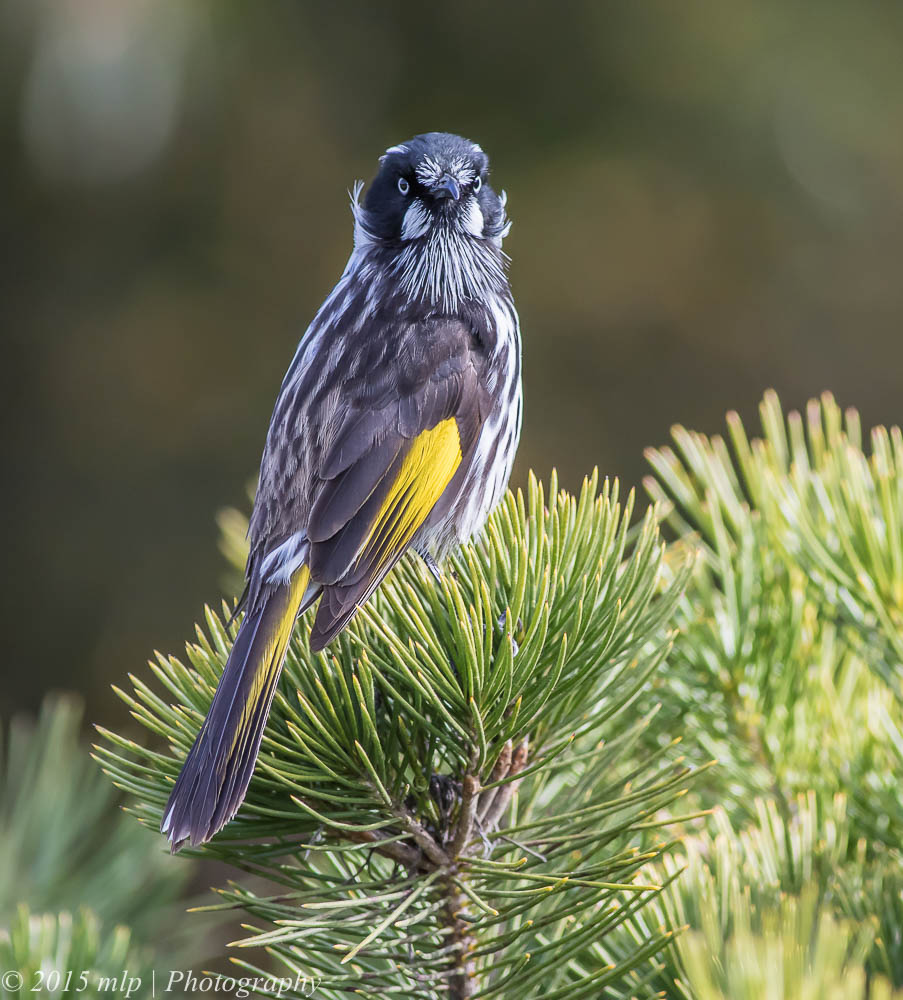
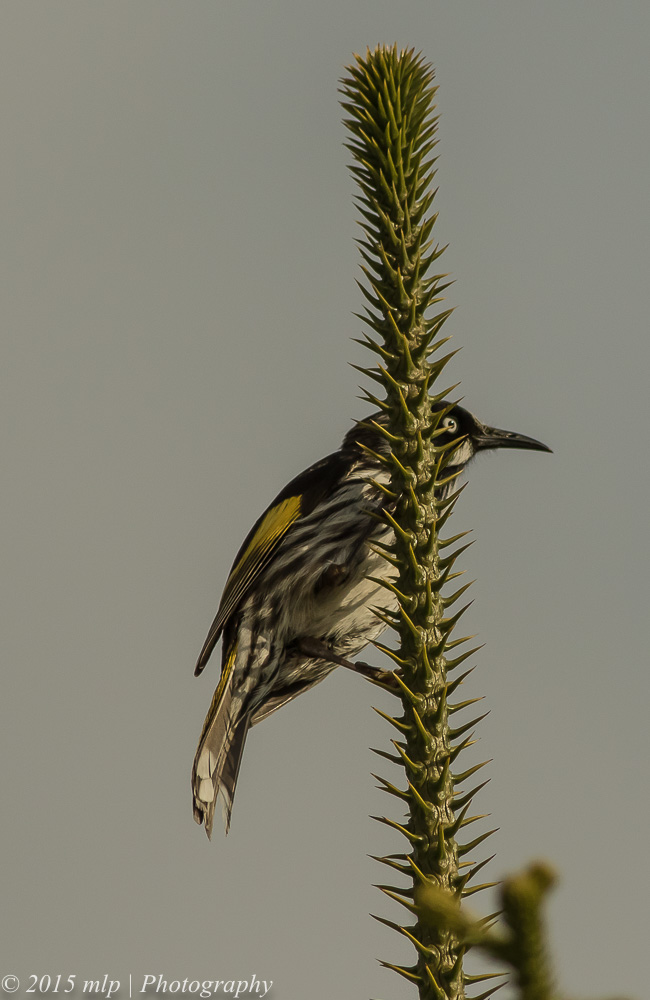
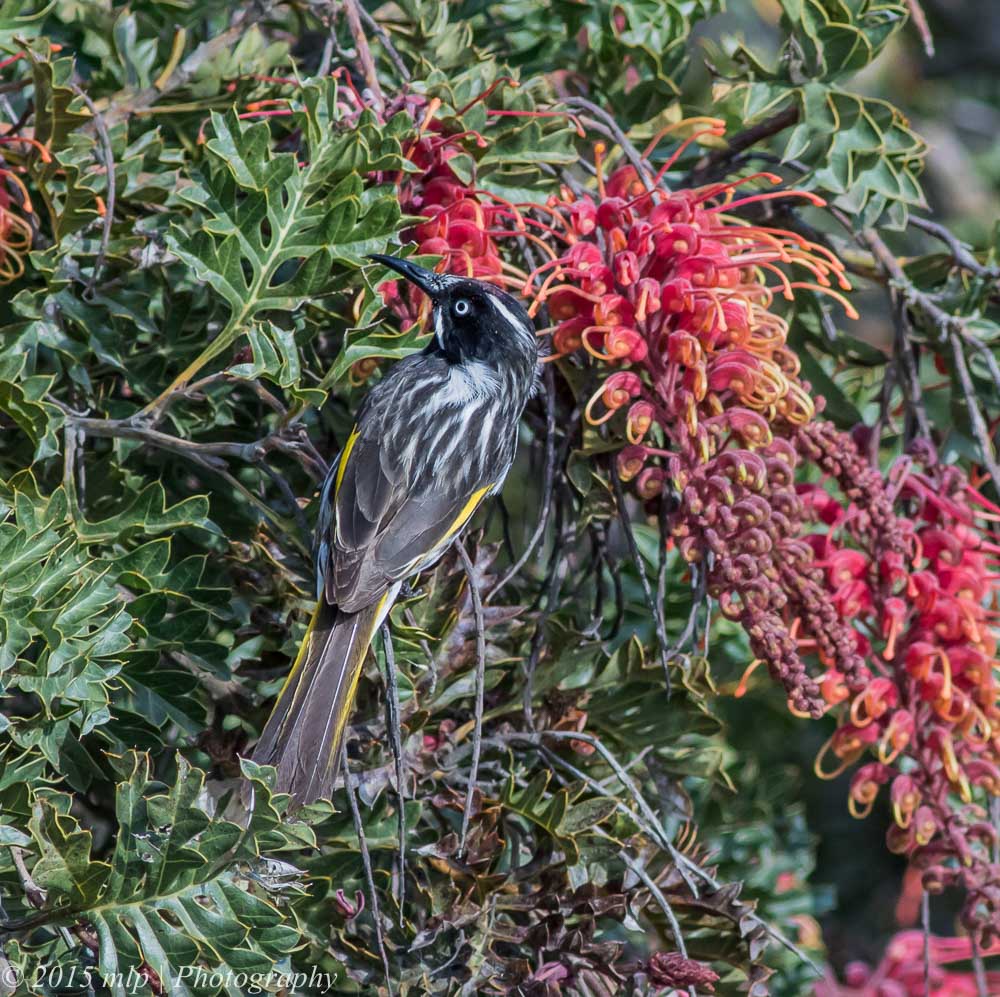
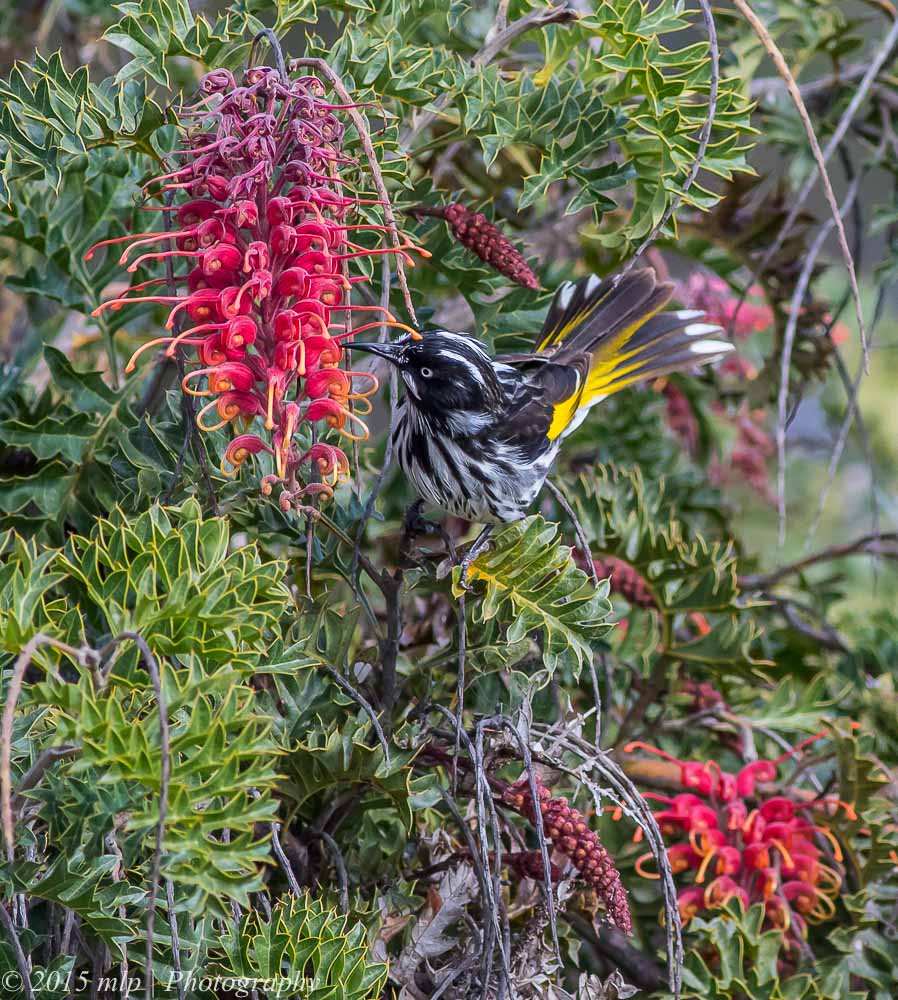
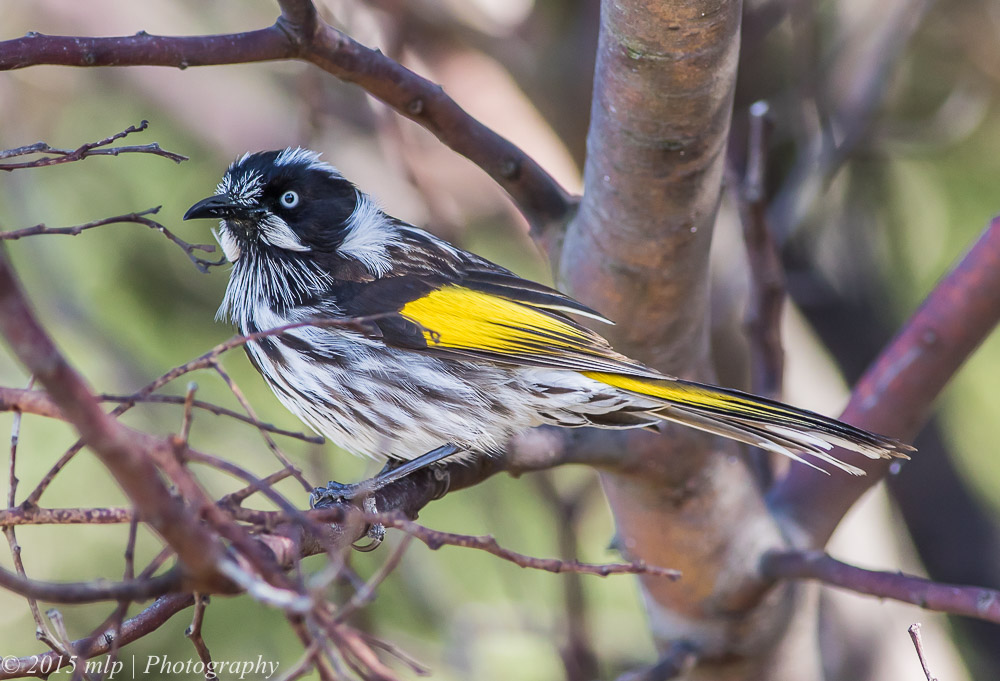
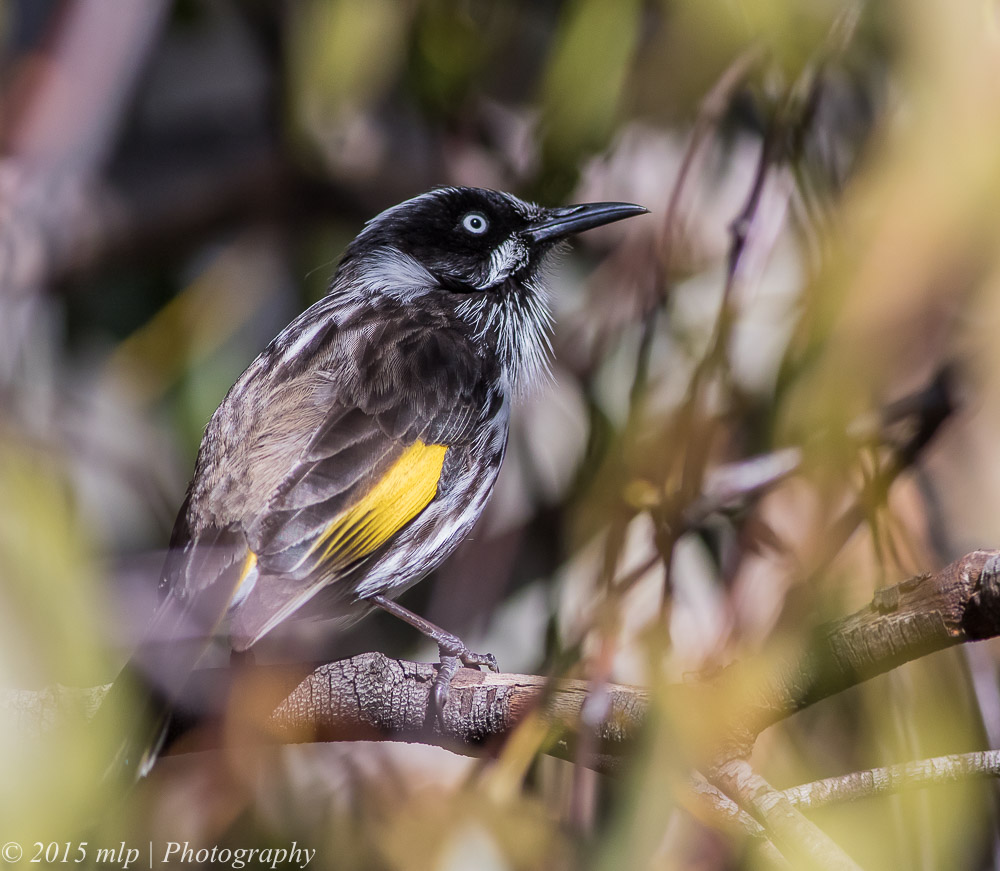
By far the most abundant bird in the formal part of the Garden is the New Holland Honeyeater. Due to their numbers and ready food source available with the flowering Australian natives they are a great target for taking photos.

New Holland Honeyeater

New Holland Honeyeater

New Holland Honeyeater

New Holland Honeyeater

New Holland Honeyeater

New Holland Honeyeater

New Holland Honeyeater

New Holland Honeyeater on a standard weeping Grevillea.

New Holland Honeyeater

II

New Holland Honeyeater

III

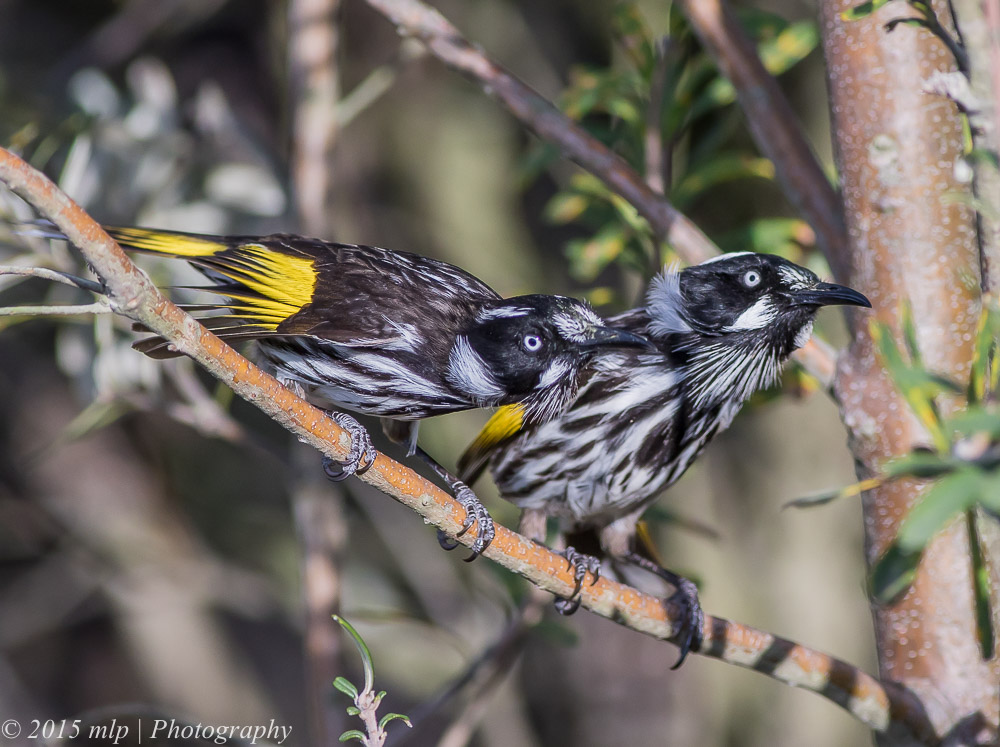
New Holland Honeyeaters

A pair of New Holland Honeyeaters – spring was definitely in the air…

Sunbaking at Williamstown’s Jawbone

A recent  Port Phillip Birders day trip to several south western birding sites started with a morning stop at Williamstown and the Jawbone Flora and Fauna Reserve. It is a favourite spot of mine with many  resident bird species with quite a few drop-ins and seasonal visitors. The wetland lagoons are narrow and accessible. It makes for good photographic opportunities. It is a very handy location for beginner birders as the birds are generally used to people passing nearby and don’t panic and fly away. It is where I started to learn more about the waders and coastal shorebirds. On this occasion it was cool and quite windy but we still managed to clock up over 50 species and take a few nice pics. The highlight was a group of 16 or so Brown Quail sunning and grooming themselves along one of the main paths. I have often seen Brown Quail here but not close and not so many. The images below show just how well camouflaged they can be – they just blend into the dry brown grass. When spooked a bit they jump up and scurry off into deeper cover. I have still yet to see one fly.
Brown Quail, Jawbone Flora and Fauna Reserve

Brown Quail, Jawbone Flora and Fauna Reserve

Brown Quail, Jawbone Flora and Fauna Reserve

Well camouflaged amongst the dry grass

Brown Quail, Jawbone Flora and Fauna Reserve

III

Another highlight was a New Holland Honeyeater that seemed happy to ignore us and allow a close approach for photos. It spent 20 minutes hunting for insects from a few perches close to the path.

New Holland Honeyeater, Jawbone Flora and Fauna Reserve

New Holland Honeyeater

New Holland Honeyeater, Jawbone Flora and Fauna Reserve

II

New Holland Honeyeater, Jawbone Flora and Fauna Reserve

III

A little cup with loads of Spring hope…

It has been a long cold Winter here in Southern Victoria. Lately the weekends have been good enough to get out,  explore and photograph birds and other wildlife.
Our small crew of intrepid birders decided on a big day of birding down the southern coast, exploring a mix of favourite locations and a few spots that others have not been to before. We started off at Rickett’s Point for Terns and a good start with one of the crew picking up a lifer – a lone tiny Double banded Plover. We stopped briefly at Mordialloc Creek mouth for more tern spotting, and then onto Moorooduc Quarry for Peregrine Falcons, woodland birds and the bonus of a rare and endangered Growling Grass Frog. Tootgarook Swamp was the main target for the day for a general bird survey to help provide evidence to stop yet another real estate development draining the remaining wetlands. We finished with an early evening bushwalk around the Baldry Circuit at Green’s Bush.
There are signs in the bush that the weather will soon be changing. Mates, territories and food sources are being defended and nests are being built. Birds are looking for good locations and appropriate material to build their nests.
At Moorooduc Quarry we came across a pair of Eastern Yellow Robins  building a new nest. It was being made out of paperbark strips for framing and held together with spider-web, packed down and then stuffed with moss and lichen. A lovely piece of engineering. I will have to go back and see the finished product and see how long until the chicks are hatched. They picked a good spot amongst a small dense grove of saplings that would make it difficult to find the nest and hard for larger birds to swoop in and attack the nest.
Eastern Yellow Robin nest

Eastern Yellow Robin nest

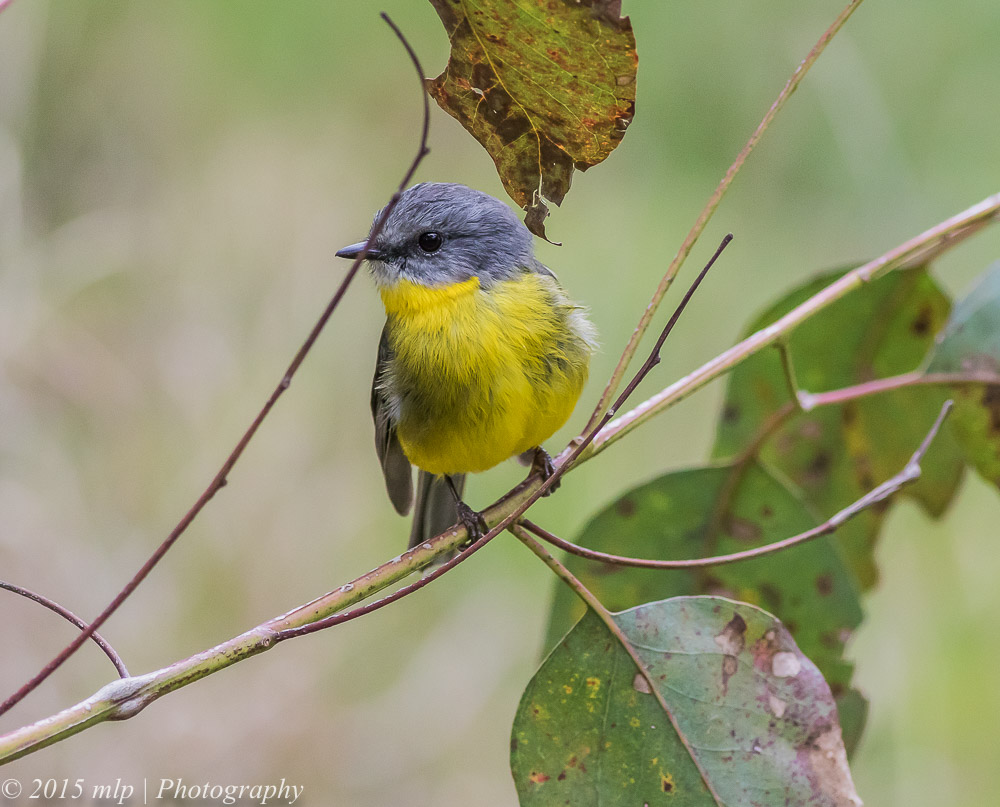
Eastern Yellow Robin

Eastern Yellow Robin

Eastern Yellow Robin building a nest

Eastern Yellow Robin building a nest – The robin circled around the rim and using its wings and chest to press the lichen into the top of the rim

Eastern Yellow Robin building a nest

Applying a bit more spider web and using its bill to push in the lichen and moss

Eastern Yellow Robin nest

Eastern Yellow Robin nest – under construction

Eastern Yellow Robin building a nest

Eastern Yellow Robin trying its nest on for size…

A winter’s feast at the You Yangs

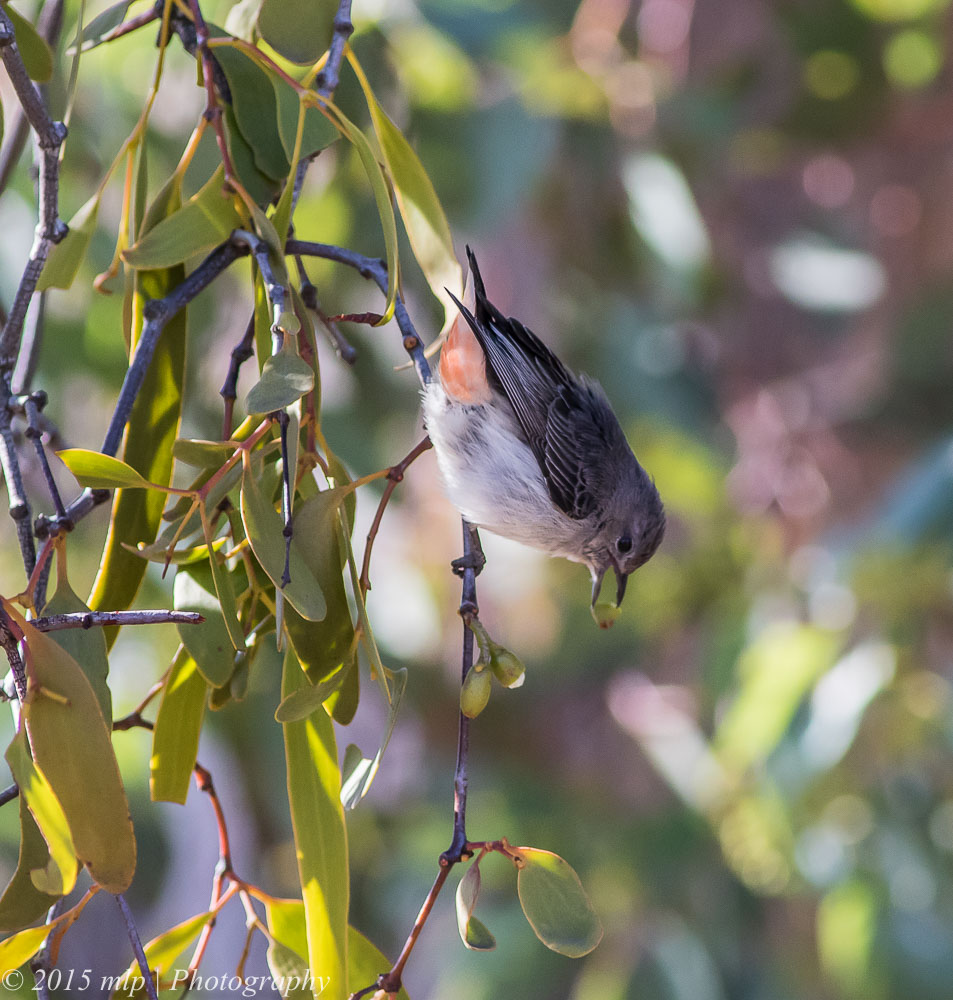
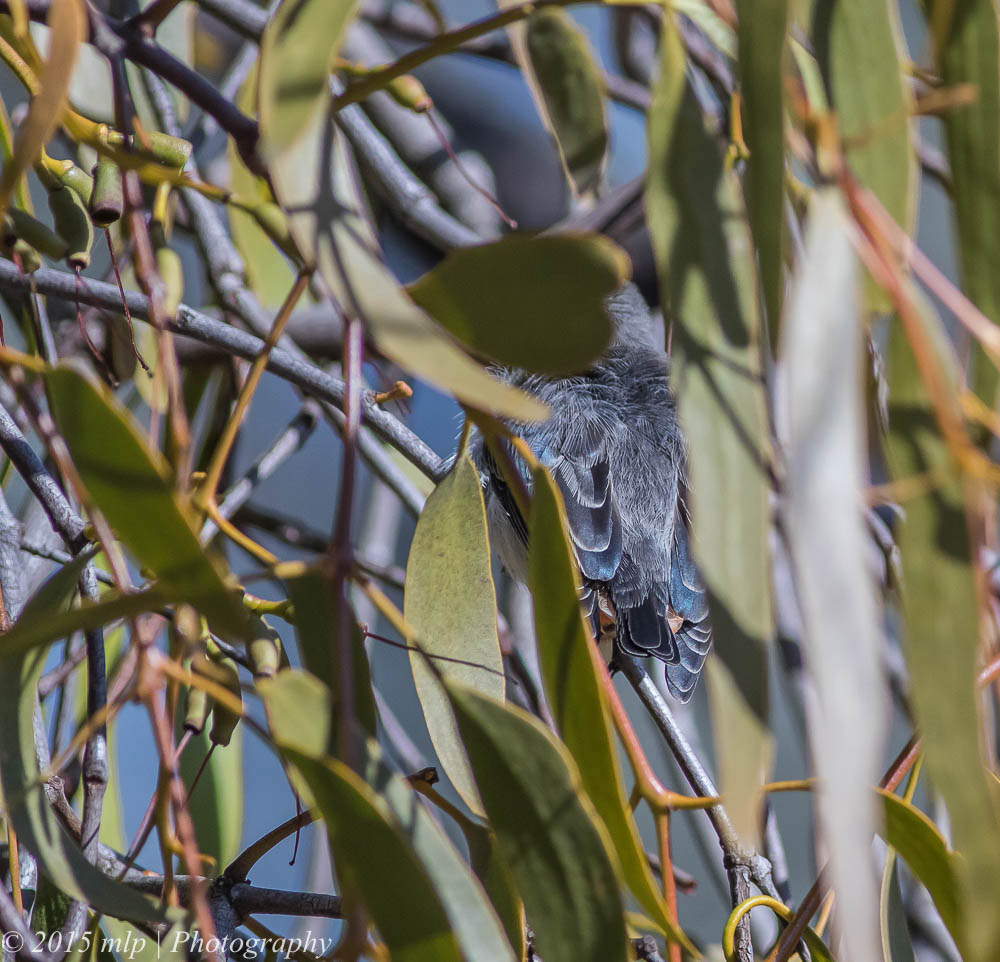
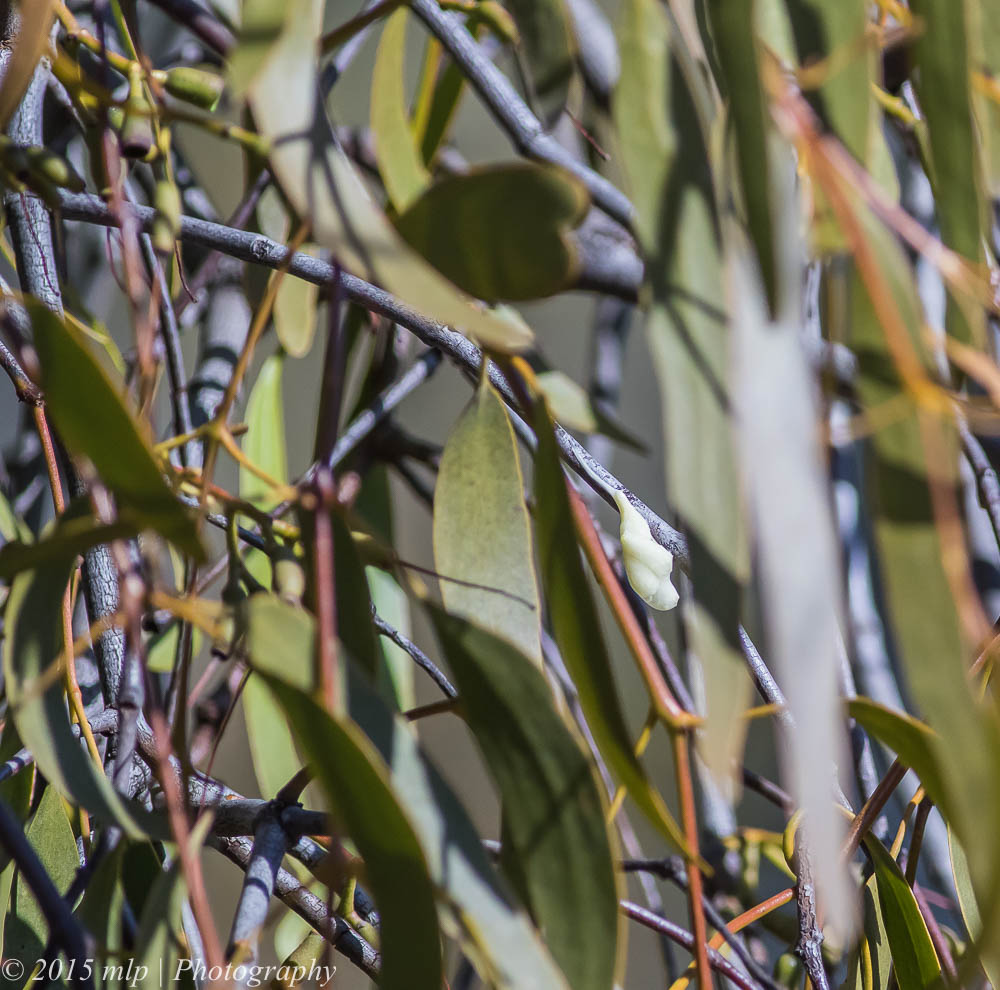
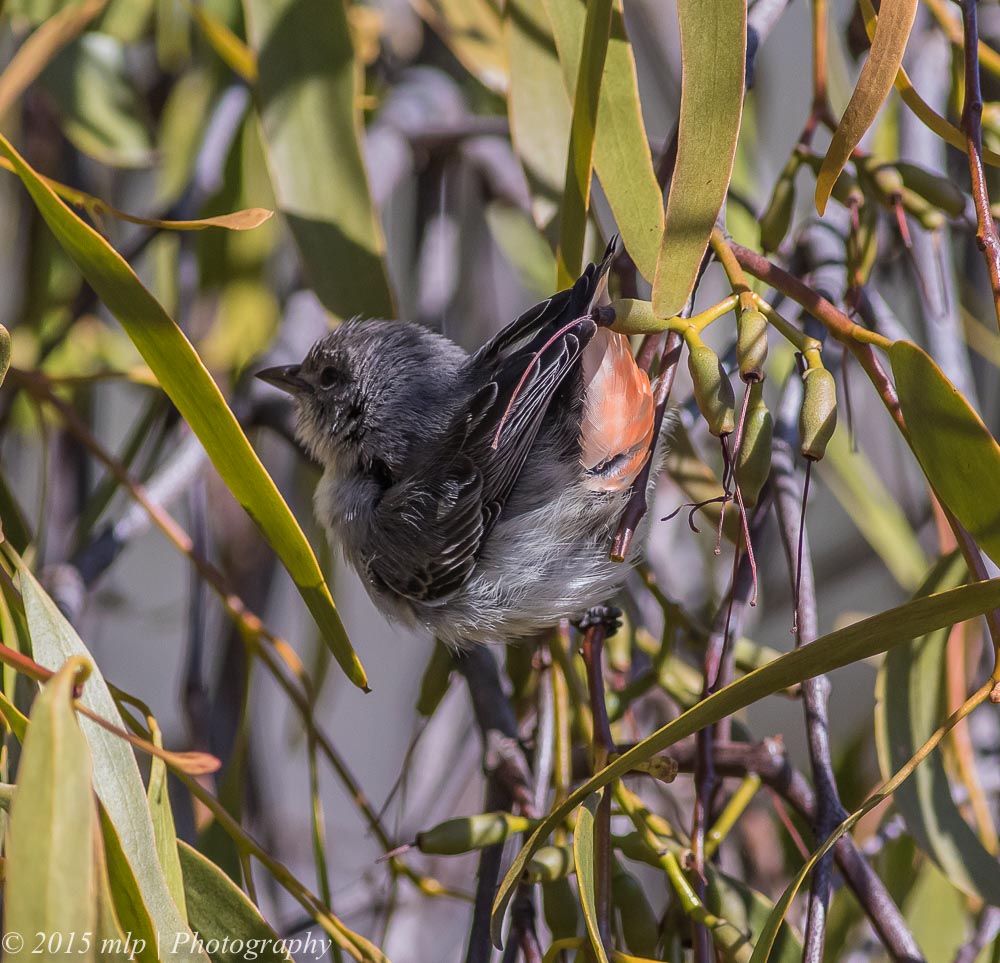
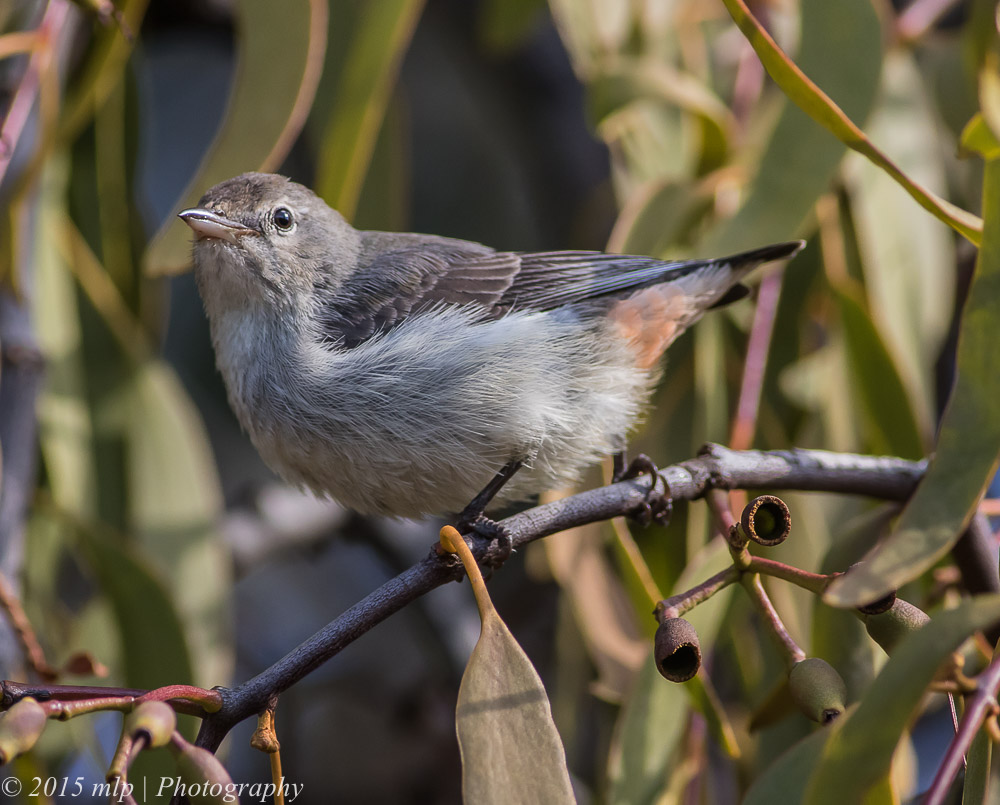
Following on from yesterday’s You Yangs post – The parasitic Mistletoe is also fruiting and the tiny Mistletoebirds are having a feast on the new fruit. One of the highlights of our photography expedition was watching the behaviour and skills of a few Mistletoebirds as they worked the Mistletoe bushes on the various gum trees. They would select an attached fruit bud and carefully remove its cap and pull out the fruit. It would not just eat the bullet shaped fruit, it would squeeze and twist several times and then when the fruit had released its sticky white secretion, the birds would then swallow it. The Mistletobird has a fast digestion and processes the fruit in an amazing time (4min to 25min). We watched as one did excrete a seed and did so slowly and seemingly with purpose. In doing a bit of research on mistletoe I found a picture where a Painted Honeyeater actually has to pull out the fruit seed from its vent as the white liquid is very sticky. This made sense as our Mistletoebird spent a bit of time on the branch wiggling about and when it moved away there was a little mound of white secretion and the seed pods stuck to the branch. This is how the mistletoe attaches to the host branch. In this case the seed wont germinate successfully as it was still located on the Mistletoe bush. The birds we photographed were very focussed and did not seem to mind 4 blokes only a few metres away clicking away with cameras. They kept an eye on us but were not at all nervous and one spent a few minutes sunning itself. We took hundreds of shots of the little birds.

At one point a New Holland Honeyeater flew into the mistletoe bush and started to chase off the female Mistletoebird. After a flurry of wings and loud calls, each bird flew off in different directions but our little friend came back for an encore and after a few more pics we left her in peace.

Mistletoebird, You Yangs

Mistletoebird, You Yangs

Mistletoebird, You Yangs

Squeezing the seed pod/fruit

Mistletoebird, You Yangs

Spending a few moments and using the branch to remove the stick seed pod excretion.

Mistletoebird, You Yangs

Mistletoe bird excretion with a few visible seeds stuck to the branch.

Mistletoebird, You Yangs

Mistletoebird

Mistletoebird, You Yangs

II

New Holland Honeyeater

New Holland Honeyeater

New Holland Honeyeater

II

Mistletoebird, You Yangs

Mistletoe bird back again

Mistletoebird, You Yangs

II

Flight

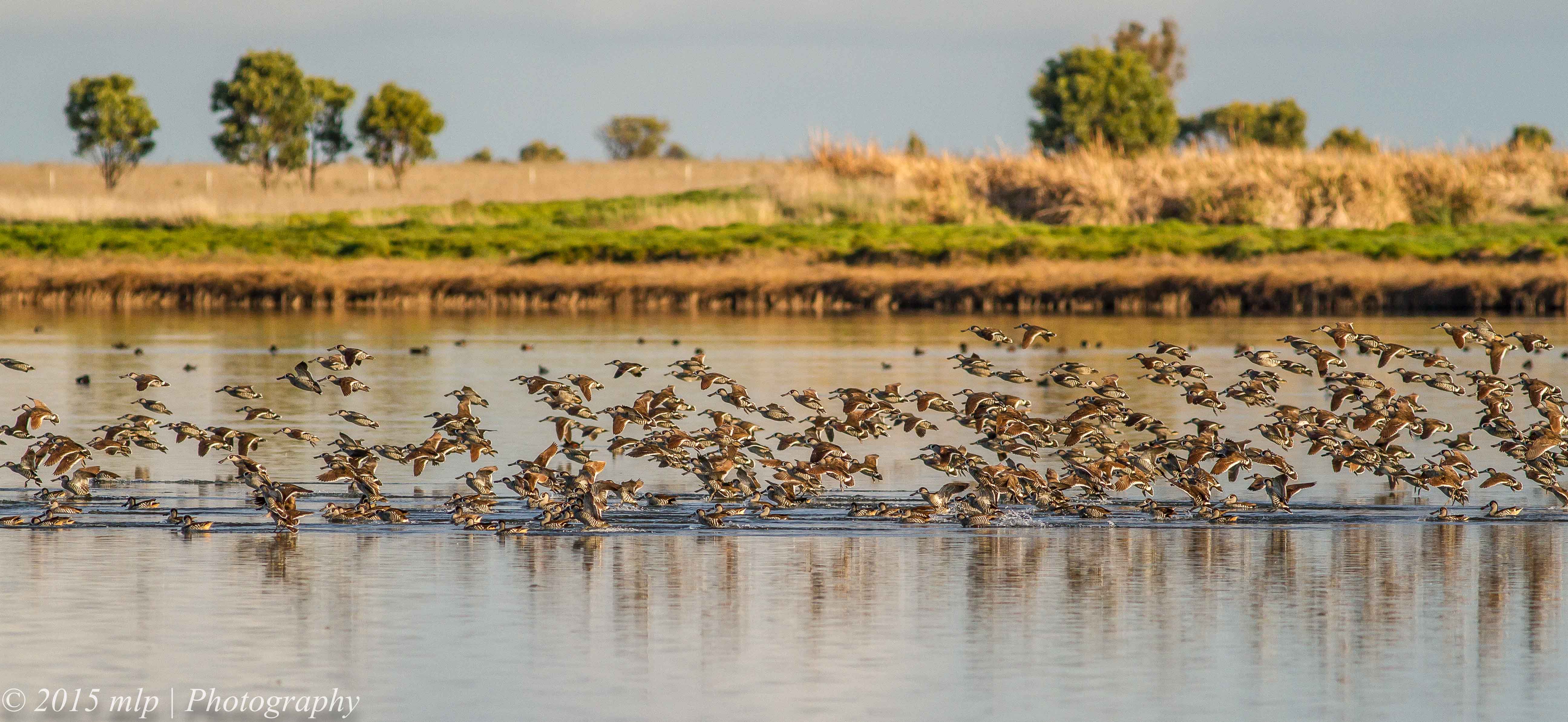
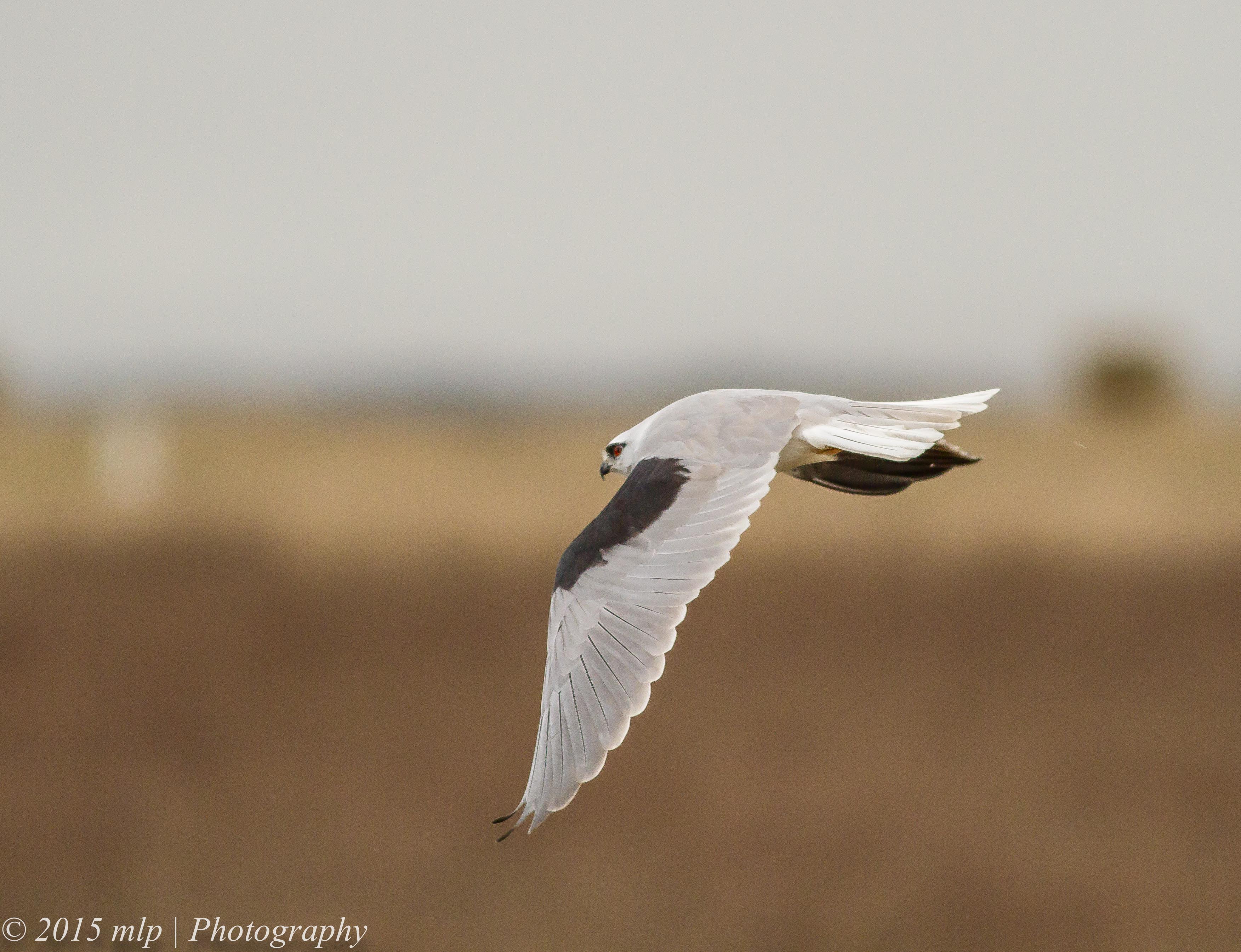
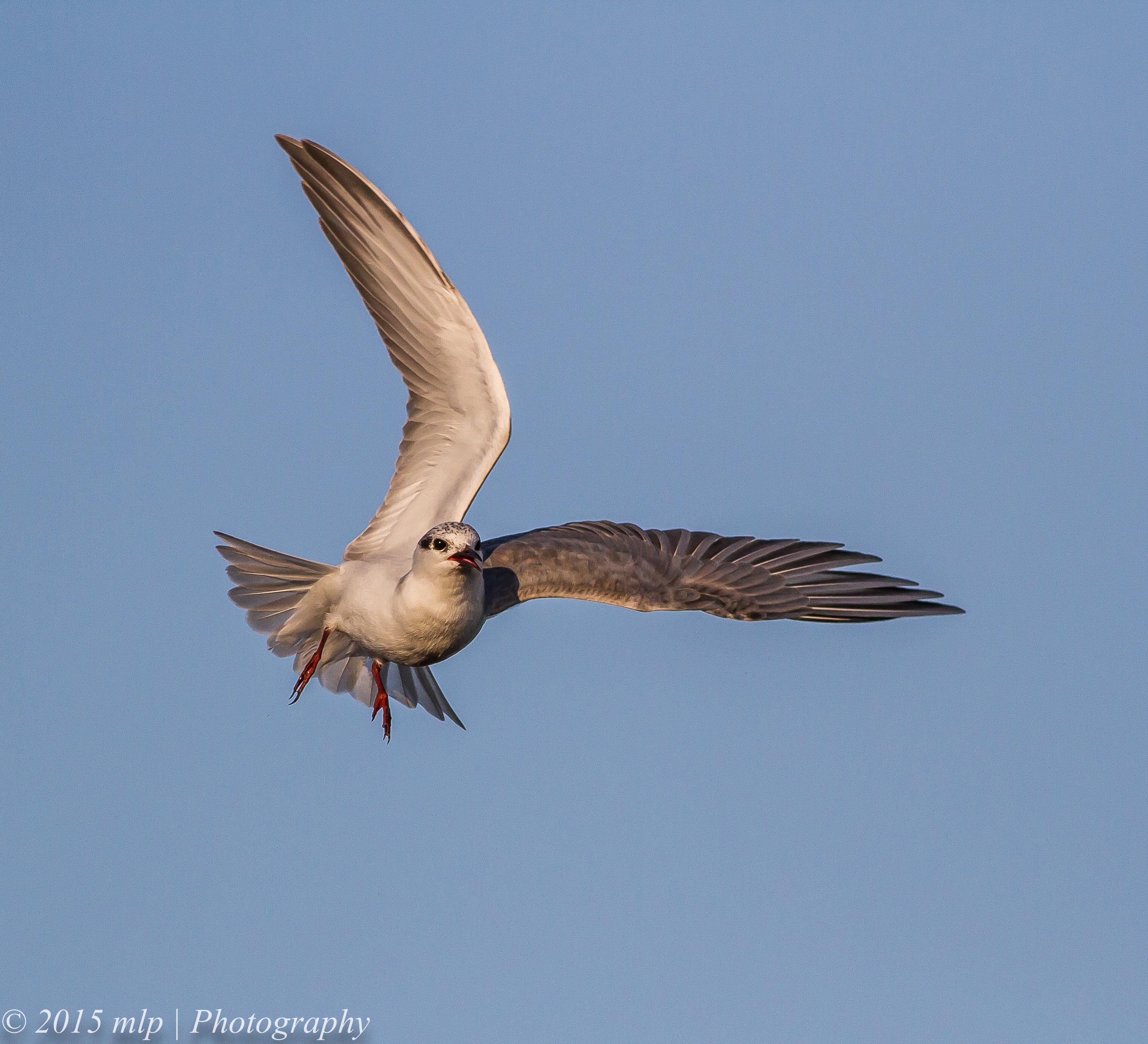
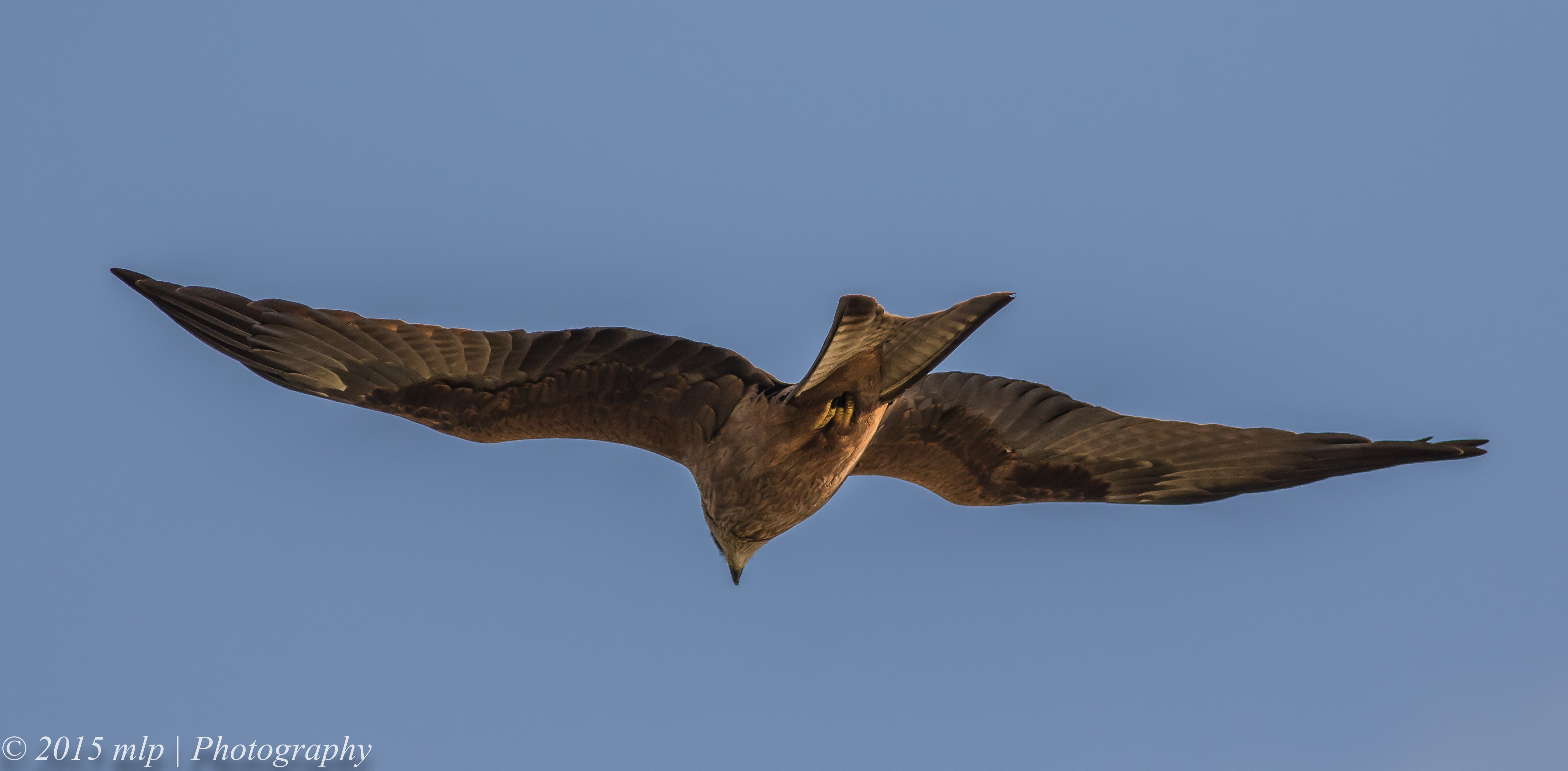
A few images from one of the recent visits I have made to the Western Treatment Plant in the last month. It is a great place to photograph birds in flight – always a tough subject. There are many raptors always on the prowl that are constantly spooking the flocks on the water giving you opportunities to practice. The reaction of the flocks tell you that something good is above and you have to quickly spin around and look for the raptor that is causing the fuss. Some are ignored like the Black Shouldered Kite and others are taken very seriously – like the large mature Whistling Kites.

Click image to enlarge.

Pink Eared Ducks,  Western Treatment Plant

Large flock of Pink Eared Ducks (aka Zebra Duck), Western Treatment Plant – one of my favourite ducks  – very photogenic and quite strange looking, and no other Aussie duck sounds like it.

Black Shouldered Kite, Western Treatment Plant

Black Shouldered Kite on the hunt – beautiful wing structure and displaying its black shoulder.

Whiskered Tern,  Western Treatment Plant,

Whiskered Tern – two were flying and hunting along the lagoons and one would keep dive-bombing the other. This pic is of the lower tern avoiding its hunting partner that had just dived past it.

Black Kite, Western Treatment Plant

Black Kite – a different angle

Whistling Kite,  Western Treatment Plant,

Whistling Kite prowling the lagoons.

Galah vs Dandelion

Recently on a beautiful sunny Winter’s day, moving around the golf course and trying to avoid the wayward shots of beginner golfers, I came across a pair of galahs feeding on grass seeds along one of the fairway edges. They let me get fairly close and did not move off until a Magpie barged into the pair to investigate their food source – a defenceless dandelion seed head.

Galahs, Elster Creek,

Galahs, Elster Creek,

Galah, Elster Creek

Yum Yum

Galah, Elster Creek

II

Galah, Elster Creek

A miffed Galah after a Magpie crashed the dinner table…

Lethal Weapons?

I noticed 5 Masked Lapwings along Elster Creek recently that seemed to be in a constant state of agitation with each other. Several would stood tall and thrust out the wing spurs when another pair flew over or around them. Spur-winged Plover is an alternate name for Masked Lapwings. I knew about the spurs but had not  seem them closely until I had developed these shots. The male tends to have larger spurs.

Lapwings use these spurs against potential predators or anyone coming too close to nest sites and chicks. While the attacks can seem quite aggressive,  the birds rarely strike their ‘victims’, preferring a close approach to scare them away. The species is fearless and I have seen them go after much bigger birds like Kites and Eagles.

The birds I saw below did not attack each other but did make quite a bit of noise and displayed much posturing.

Masked Lapwing

Masked Lapwing (aka Spur Winged Plover)

Masked Lapwing

Masked Lapwing strutting his stuff

Masked Lapwing

Spurs on display


The little show-off…

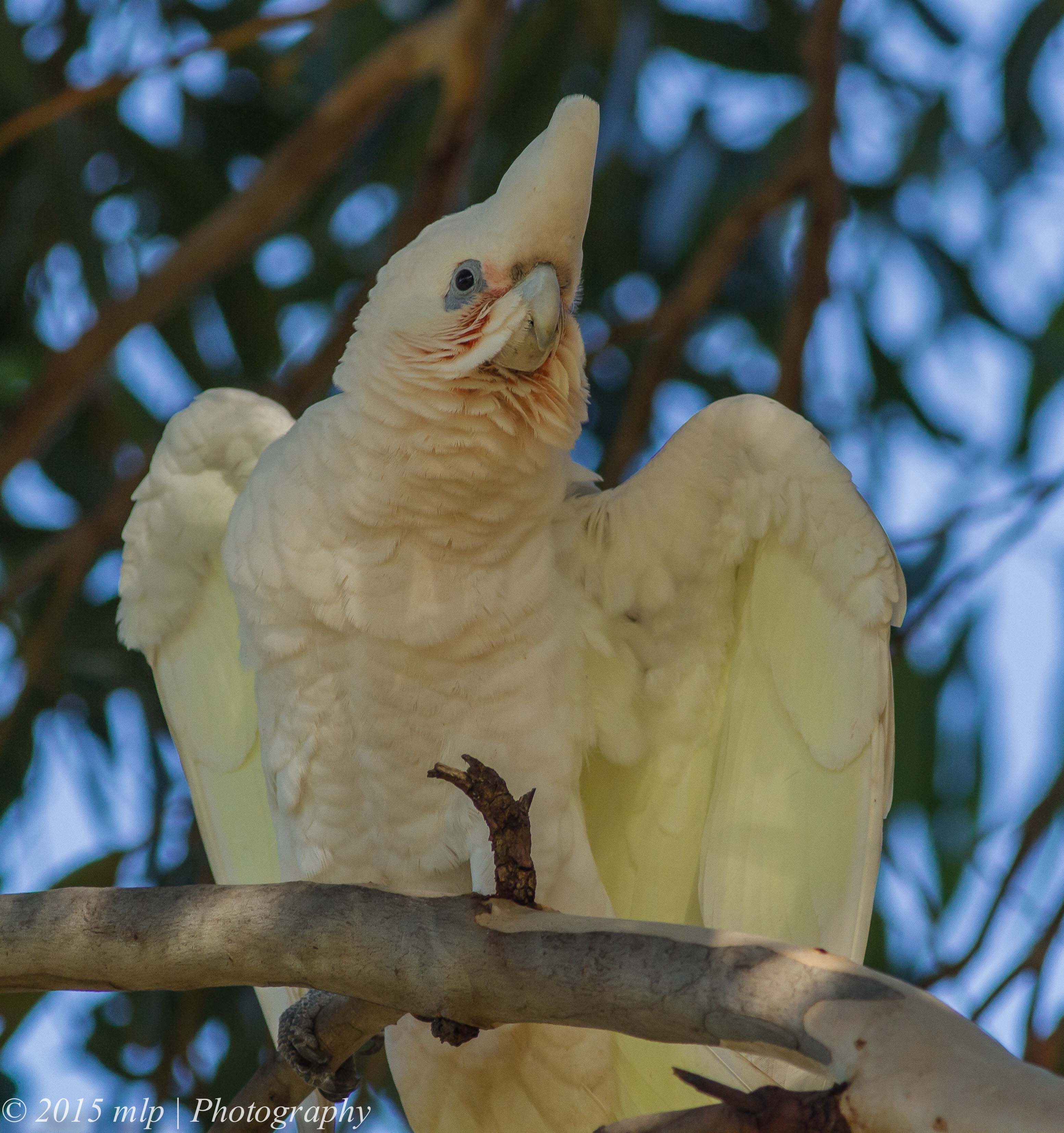
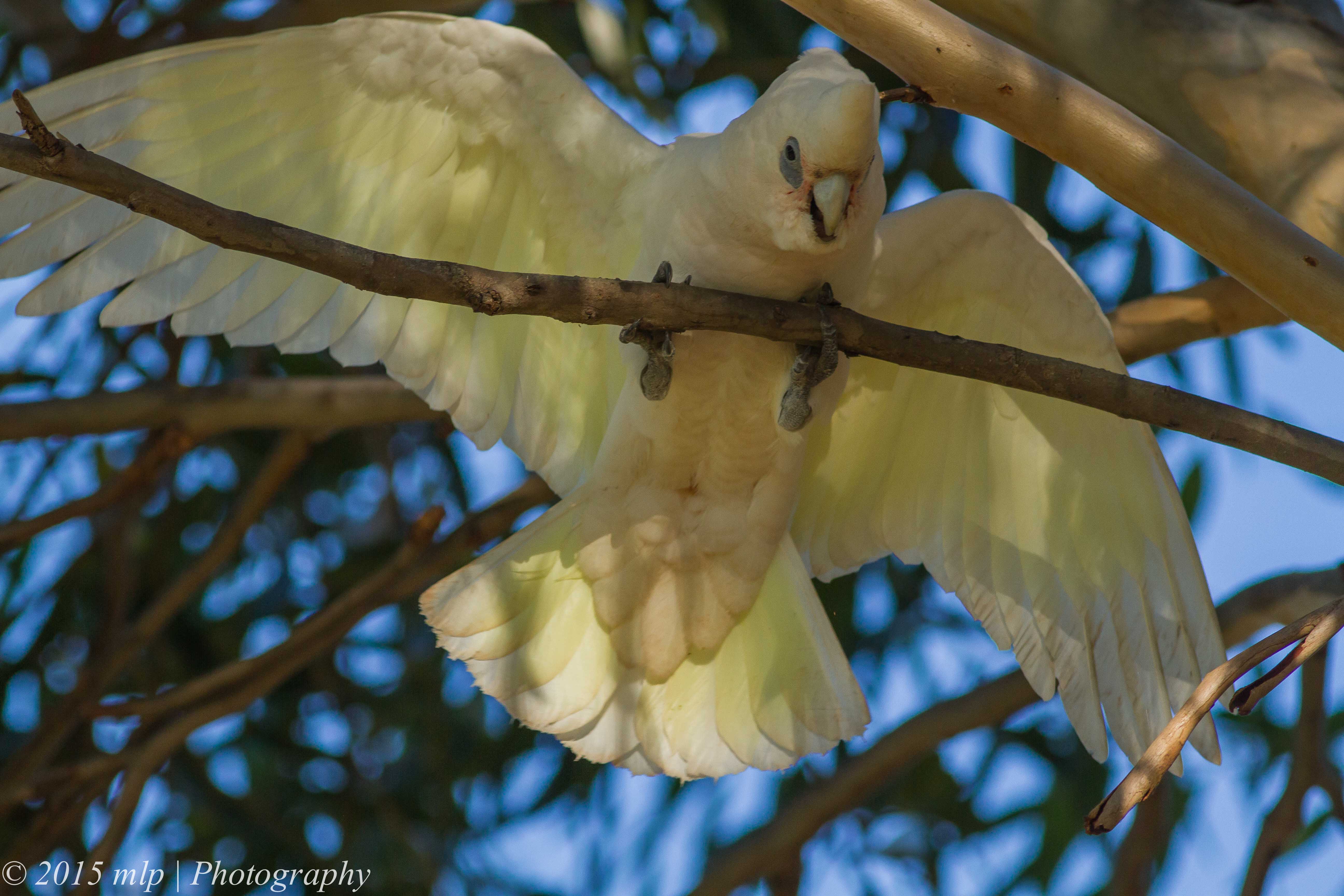
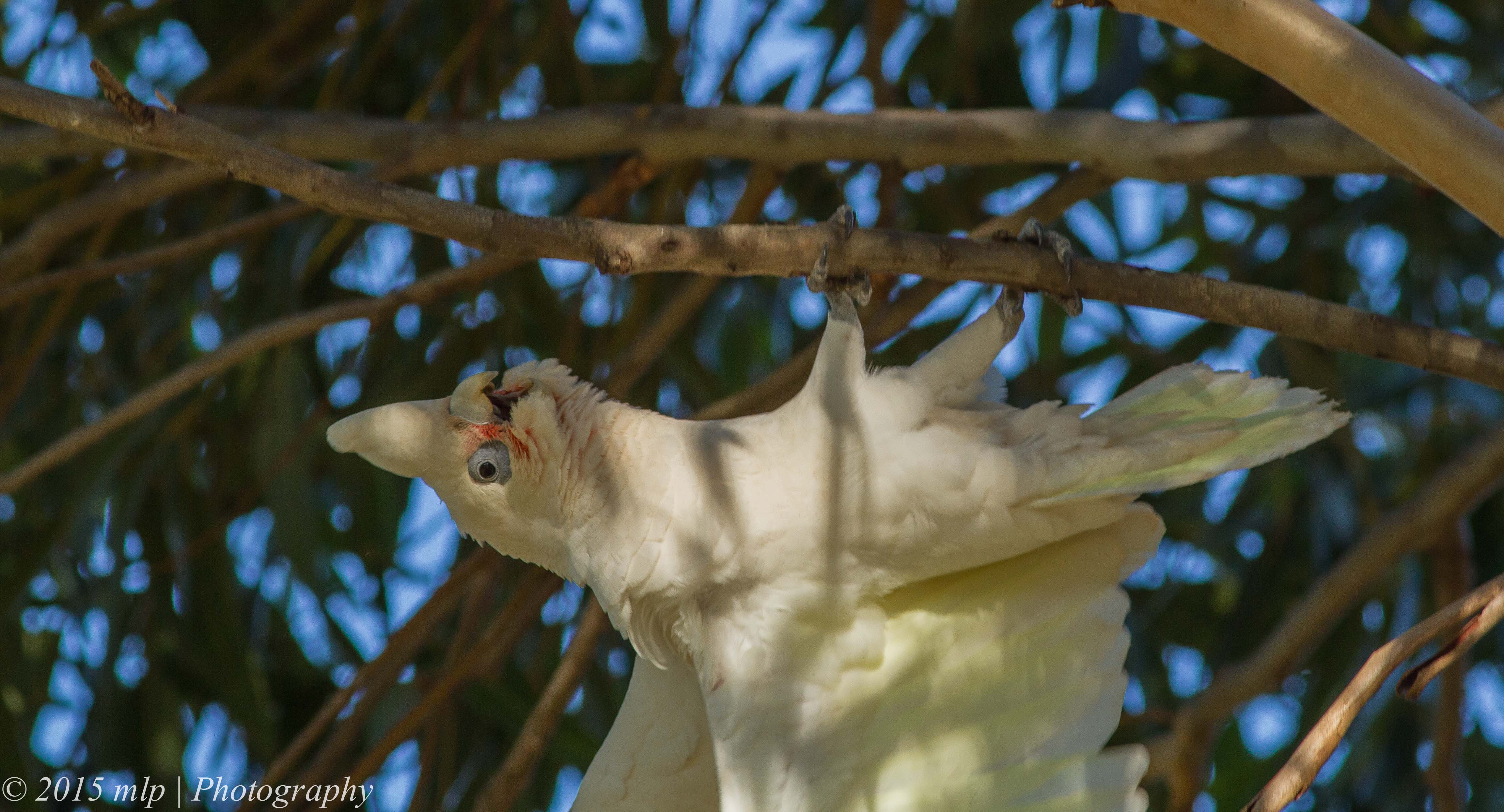
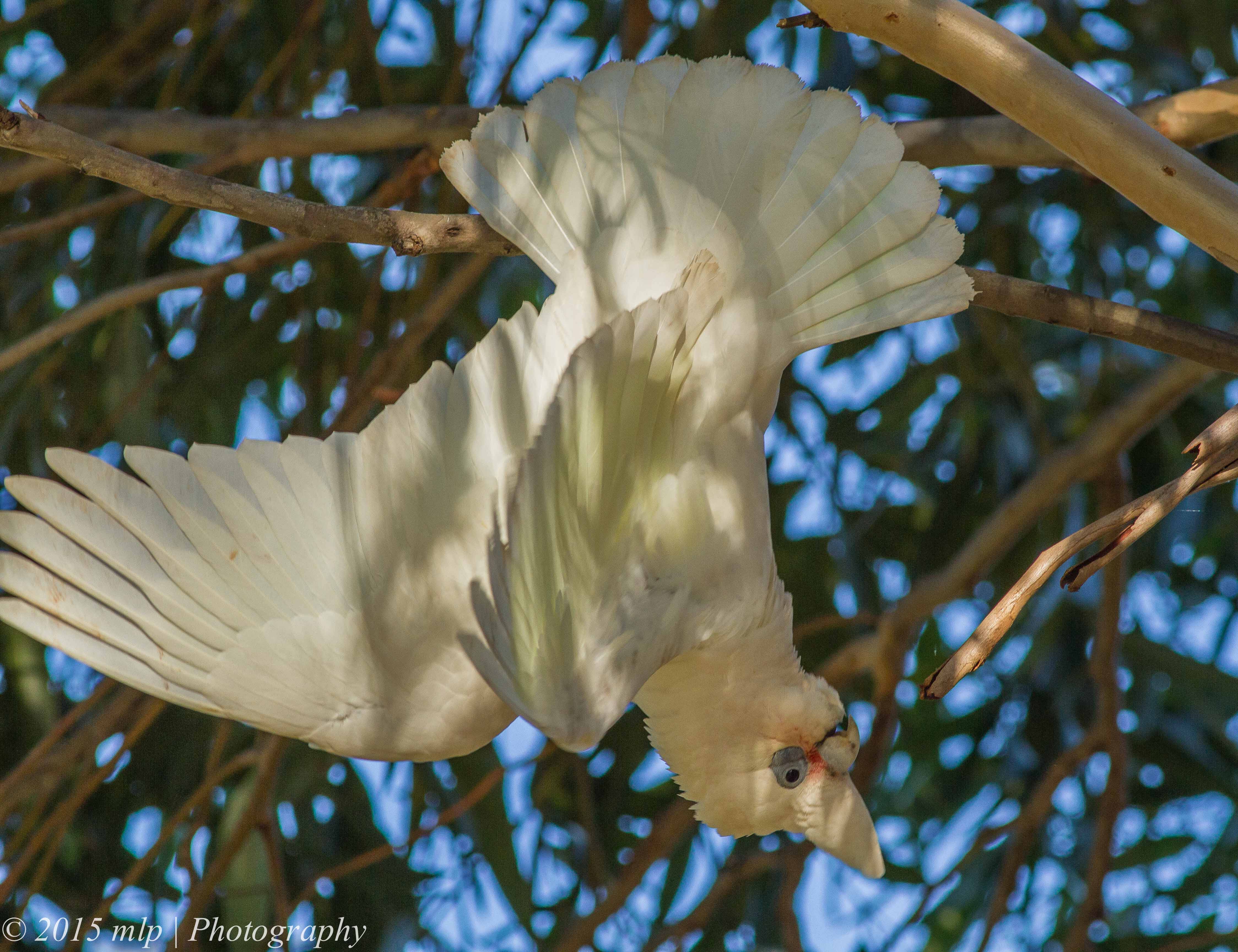
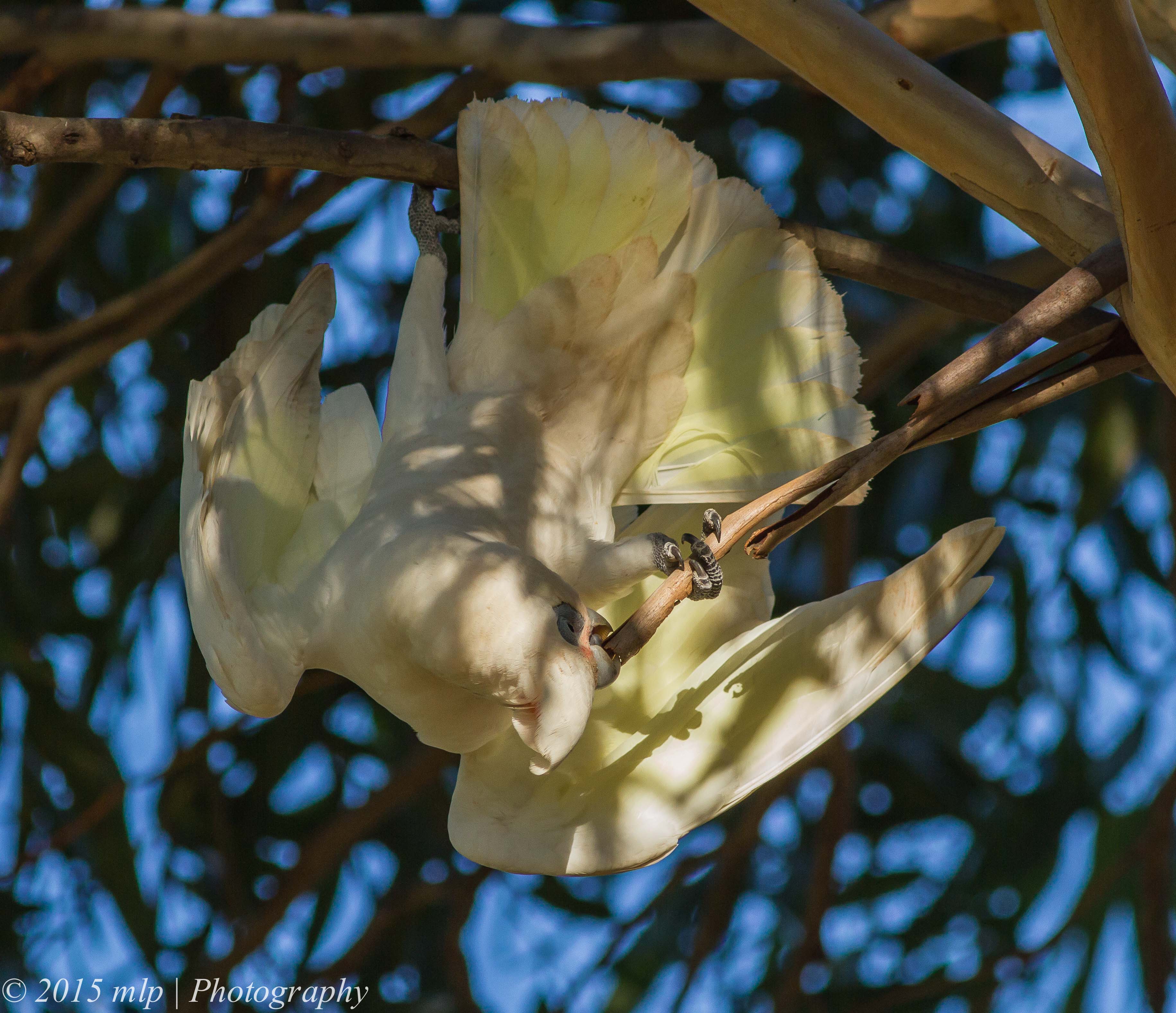
It was the screeching that attracted me over to the tree near Elster Creek a few weeks ago. I found a lone Little Corella, on a branch in a gum tree. I moved in closer trying not to spook it and starting taking pictures. It screeched when I took a few rapid shots – it could hear the camera shutter sound. I watched it and it watched me. After just moving around the branch a bit it fell backward and just hung by its feet and looked at me again…I kept shooting as it started to play with branches and bark.  Cockatoos are long lived birds and this must mean a certain amount of intelligence has developed and with it a sense of humour. This bird was playing and seemingly including me in its antics.

Little Corella, Elster Creek, Victoria 3 May 2015

Little Corella, Elster Creek

Little Corella, Elster Creek, Victoria 3 May 2015

II

Little Corella, Elster Creek, Victoria 3 May 2015

III

Little Corella, Elster Creek, Victoria 3 May 2015

IV

Little Corella, Elster Creek, Victoria 3 May 2015

the Corella started to swing under the branch

Little Corella, Elster Creek, Victoria 3 May 2015

VI

Little Corella, Elster Creek, Victoria 3 May 2015

VII

Little Corella, Elster Creek, Victoria 3 May 2015

Hanging by a leg, and watching me

Little Corella, Elster Creek, Victoria 3 May 2015

the moment before the end of the show

The next thing it did was let go the branch and try to grab the bark with both feet but it was far too heavy and it dropped from the tree. Luckily it had enough height to right itself and fly back up to a branch on the next tree. The show was over.

The Intense gaze…

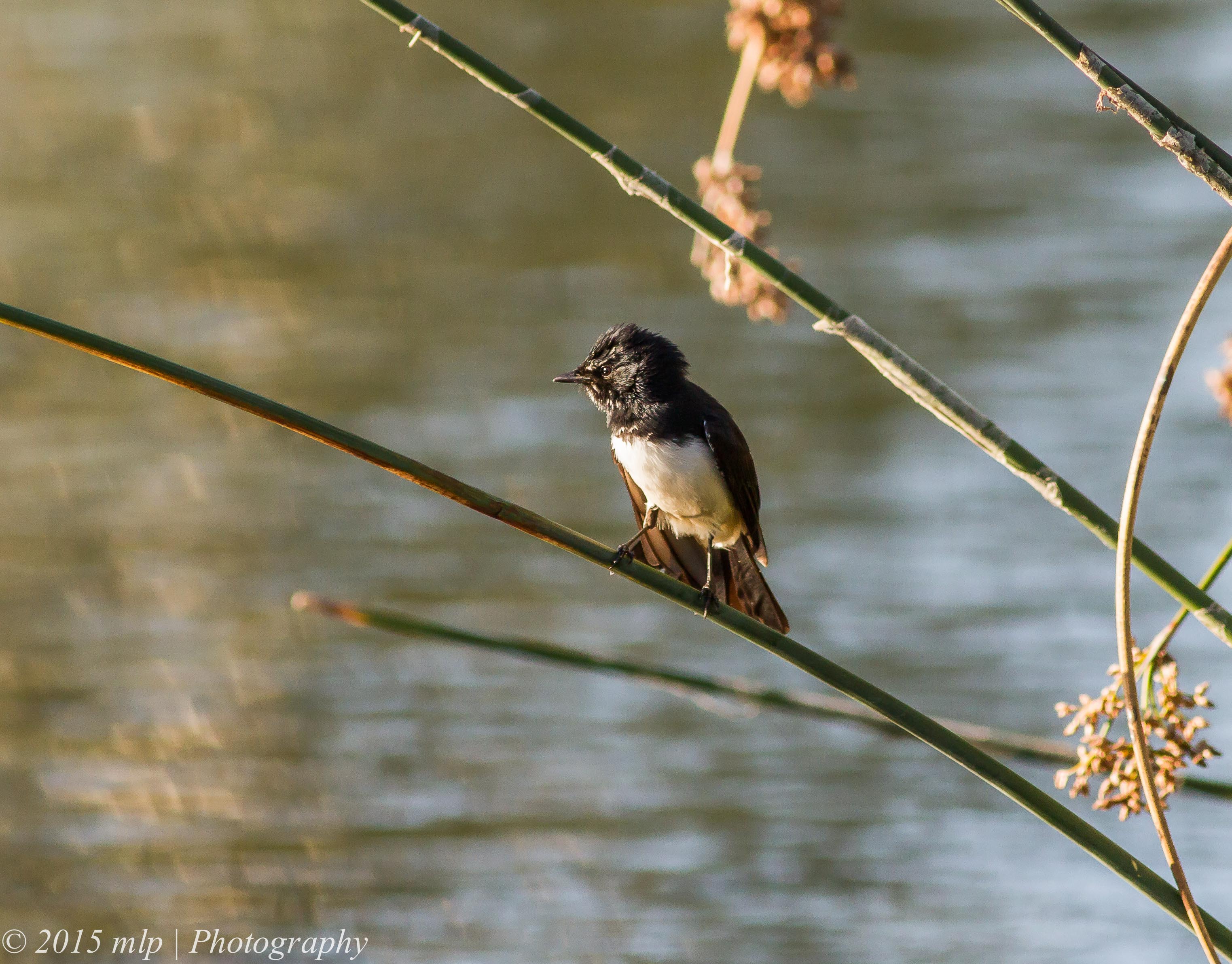
On  a recent walk across to the lakes in my area I took several photos of the usual birds in the late afternoon light. On processing I noticed that a few seemed to have an intense gaze.

The Willie Wagtail had just finished a dip into the water and grooming and after this shot took off to catch insects above the lake’s surface.

Willie Wagtail, Elsternwick Park, Victoria, 3 May 2015

Willie Wagtail, Elsternwick Park

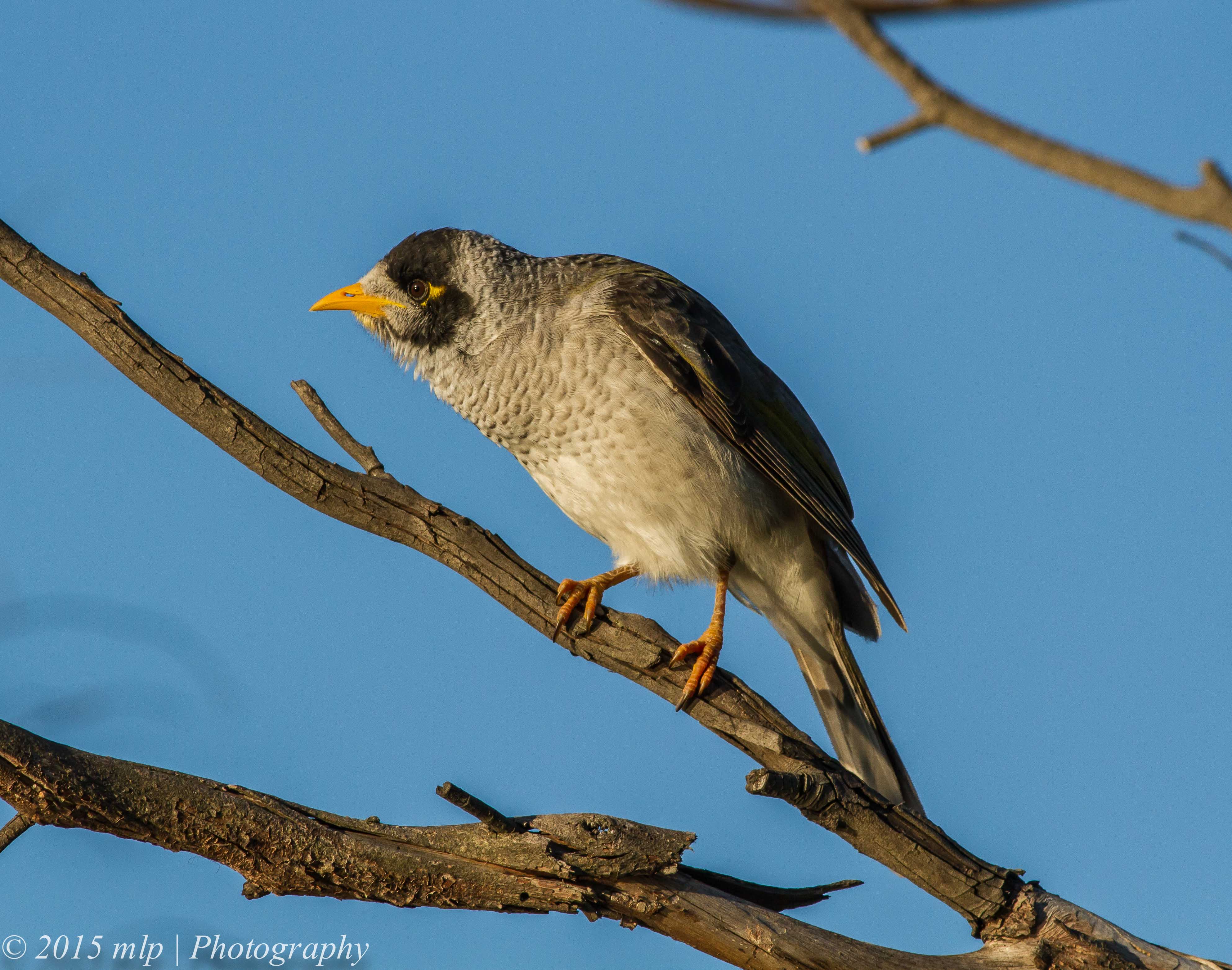
The Noisy Miner had just gate crashed into a large group of Swallows grooming on the dead tree at the lake. He was staring intensely at a swallow that seemed to be ignoring him.

Noisy Miner, Elsternwick Park, Victoria, 3 May 2015

Noisy Miner, Elsternwick Park

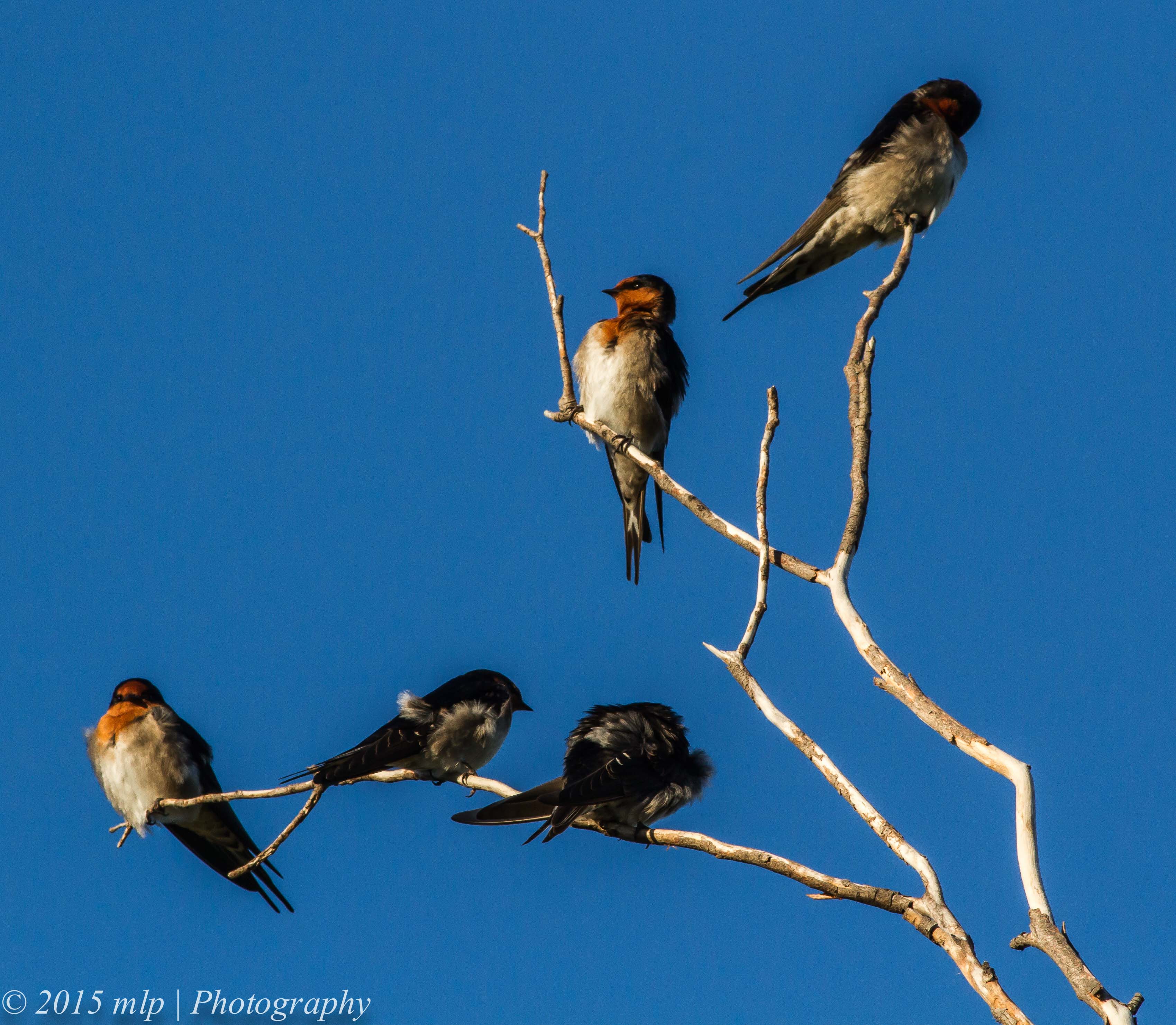
The Swallows soon came back to the tree and continued their grooming with one keeping a keen lookout and watching the miner which had flown to another nearby tree.

Welcome Swallows, Elsternwick Park, Victoria, 3 May 2015

Welcome Swallows, Elsternwick Park

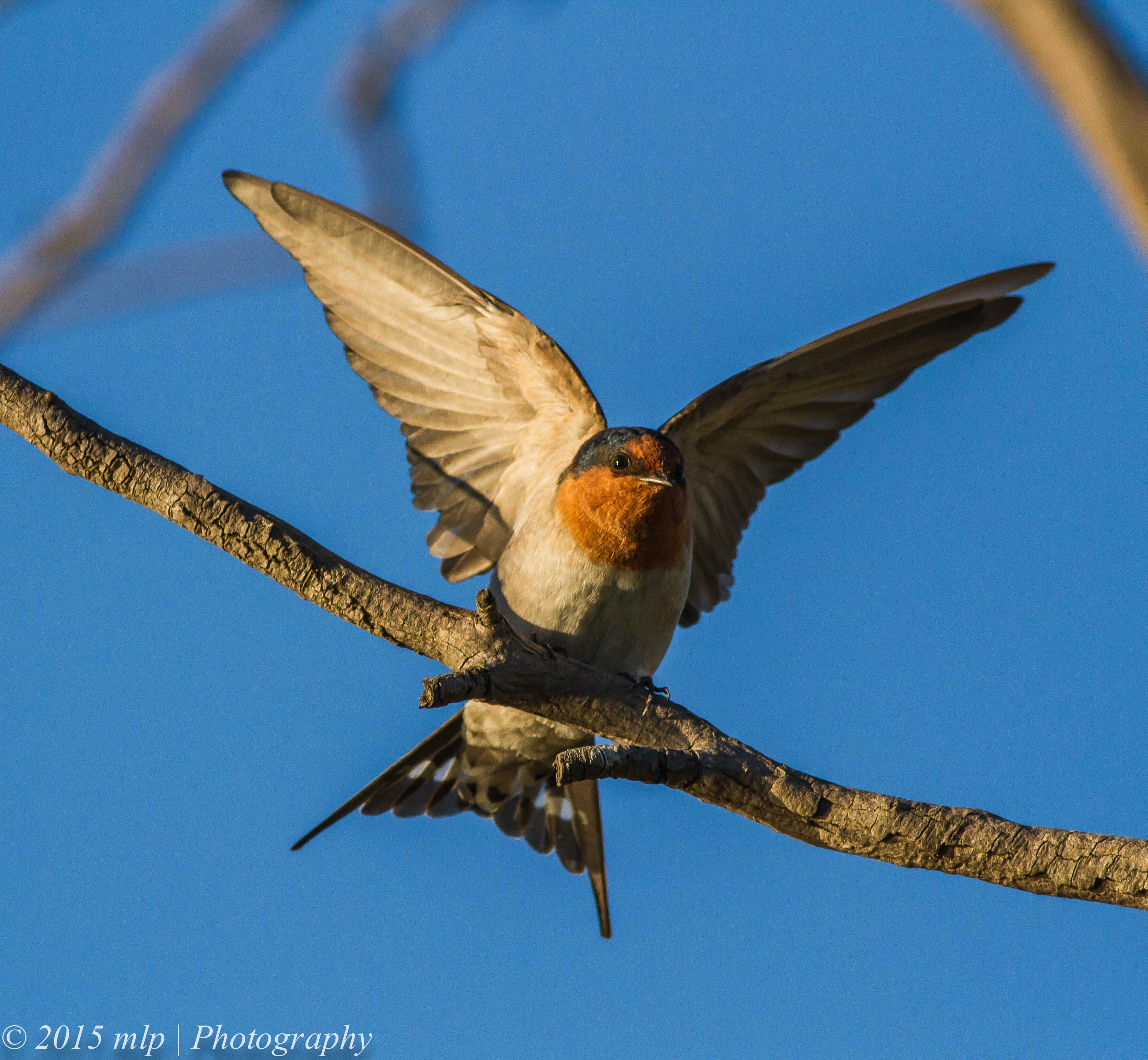
Welcome Swallow, Elsternwick Park, Victoria, 3 May 2015

Welcome Swallow landing back onto the tree branch after being chased off by the Noisy Miner.

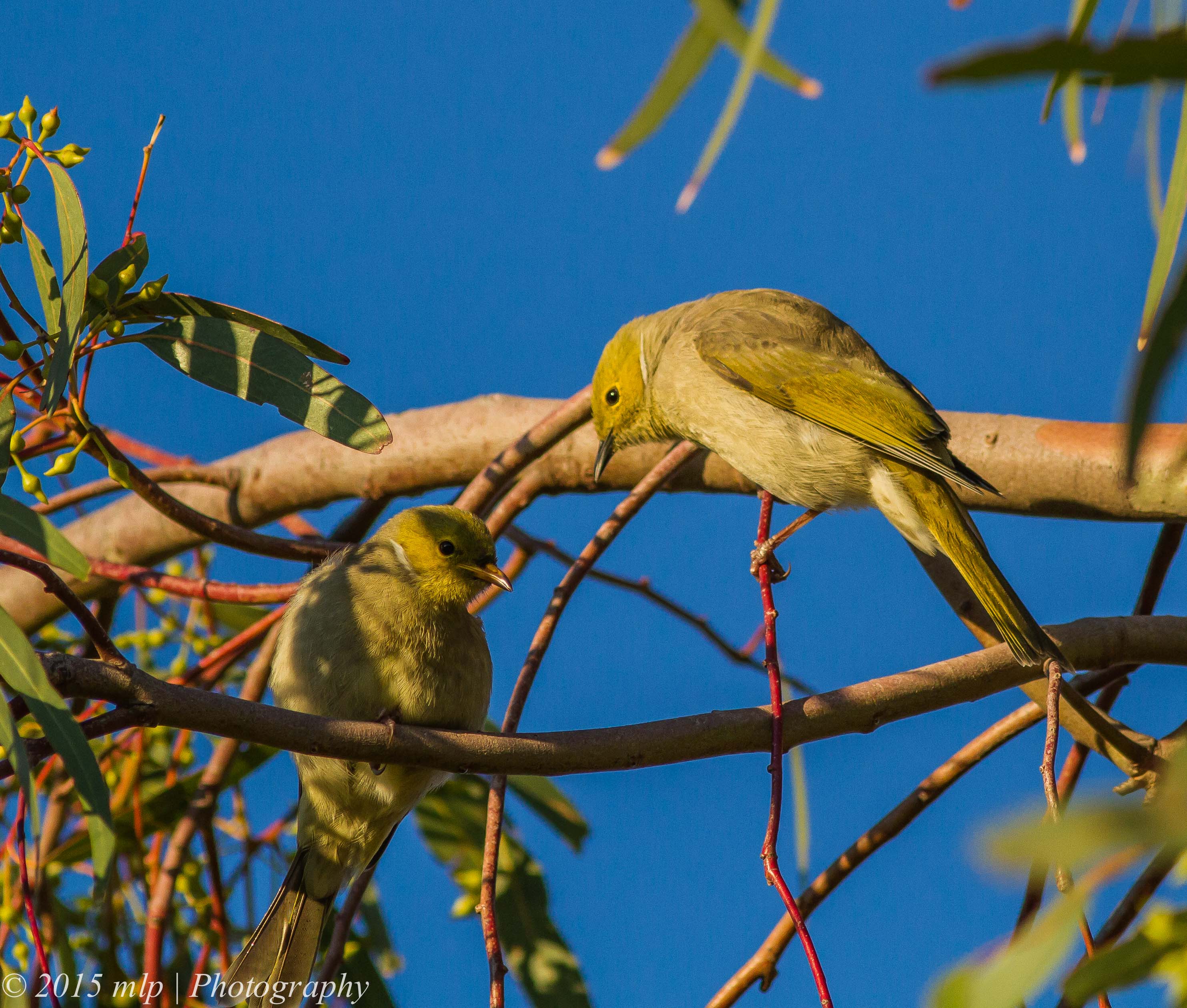
White Plumed Honeyeaters, Elsternwick Park, Victoria, 3 May 2015

A pair of White Plumed Honeyeaters grooming after a dip in the lake.


A Hunter’s Gaze

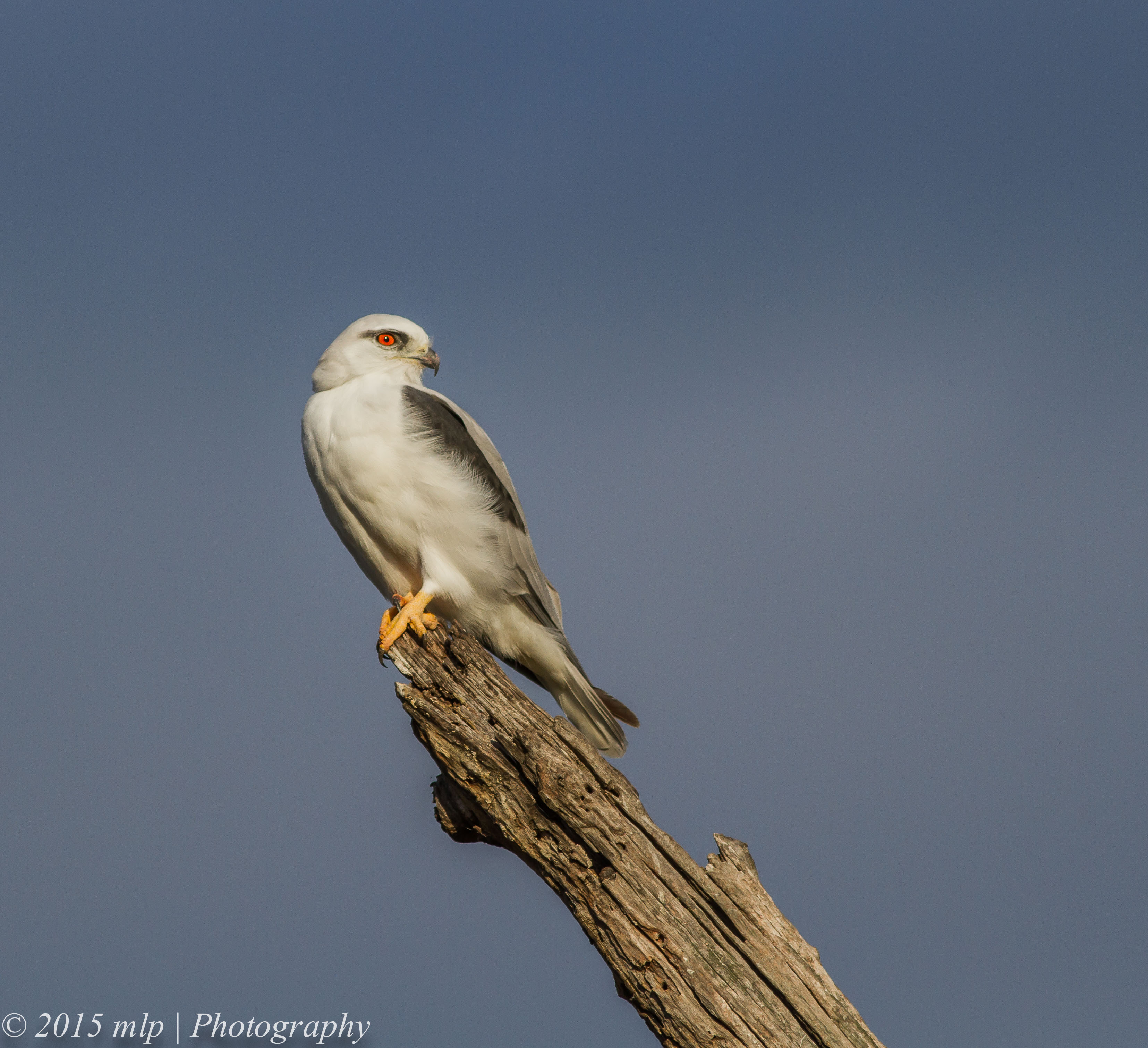
While looking for Tawny Frogmouths at Braeside Park recently, I spotted a Black Shouldered Kite at the top of a dead tree in one of the dried out lagoons. The Kite of course saw me immediately moving from the scrub out into the waist high grass and thistles towards the tree. I did not make eye contact as I moved slowly and just stopped a few times to take a few photos. In the end I was quite surprised at how close close I managed to get. I had to back up a bit so I could use my 400mm Lens. Every now and again he would look at me and then go back to gazing down, around and up. He never did spook and after I took my shots I turned around and went back through the thorns and thistles to the lakeside path. The Kite is a stunning bird and a very successful hunter of mice and other smaller birds and animals. Another of my top 10 birds.

Black Shouldered Kite

Black Shouldered Kite keeping an eye on me

Black Shouldered Kite

II

Black Shouldered Kite

One of the smaller Raptors in Australia. It still has the large talons, sharp eyes and the hooked beak

Black Shouldered Kite

IV

Black Shouldered Kite

V

Black Shouldered Kite

Black Shouldered Kite – his glance up told me that something was flying above me…

When I turned around and looked up I saw a half dozen large Australian Pelicans flying in a wingtip formation.

Pelicans

Australian Pelicans

The Wise old Bird of Braeside

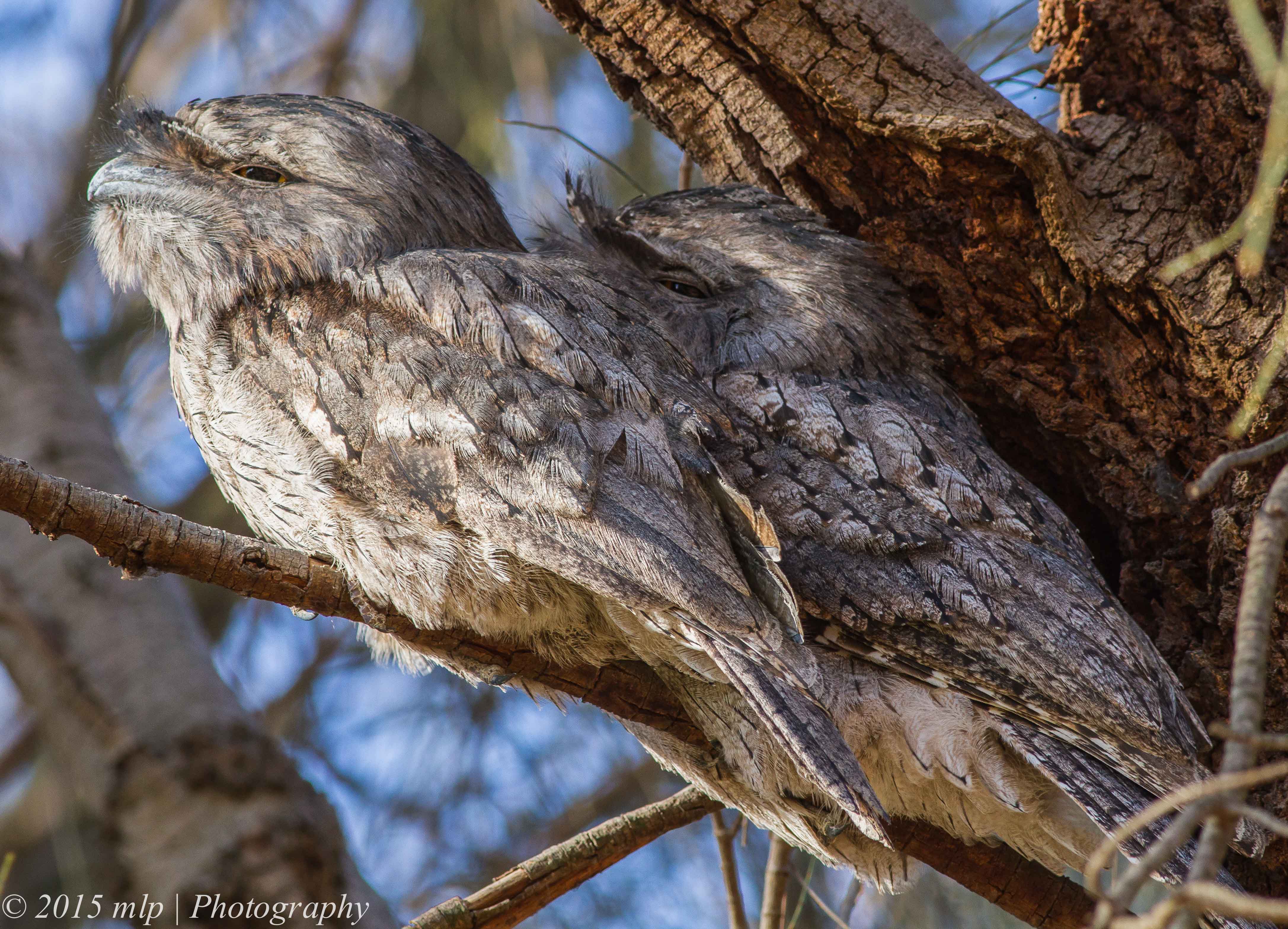
On a recent visit to Braeside Park, I looked out for the resident Tawny Frogmouths. There are many Frogmouths in the park but they are well camouflaged and while they do stick to their territories they move to different trees and roosts every few days.  I found 5 on this particular day. (My best day was 14 Frogmouths). To find them you need to look for a suitable area and then look for the right sort of tree, height, and position. Once you find a suitable area you need to look for something that does not quite fit in, a colour variation or round lump that does not quite belong.

The Frogmouth is in my top 10 favourites due to its calm nature, its camouflage skills and the serene look it gives you when it acknowledges your presence. When agitated, some will pretend to be a branch stump while others will ignore you with just a yellow eye watching you now and again.

Tawny Frogmouth

A large Tawny Frogmouth, Braeside Park in May
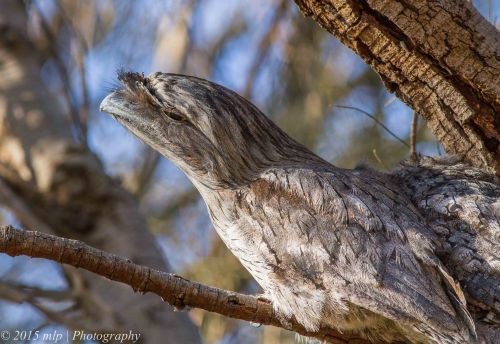
Tawny Frogmouth

Tawny Frogmouth, with mate tucked down behind – he was a little nervous as I made my way around the tree for a clearer shot

Tawny Frogmouth

A pair of Tawny Frogmouths, keeping an eye on me, much more relaxed
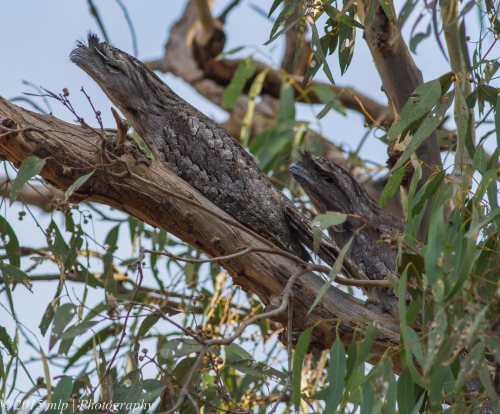
Tawny Frogmouth

This pair were quite wary of me even though they are quite high in the tree. They relaxed from their camouflage pose after a few minutes…

When you spend some time looking for Frogmouths your eyes start tune into objects that seem to stand out from the norm. I could not quite figure out what this furry lump was from a distance but when I got closer it turned out to be a Brush Tailed Possum with its bum hanging out of its daytime hollow getting a bit sun while it still slept.

Possum

Brush Tailed Possum, soaking up some warmth

Possum

II

The Braeside Vandals

A few weeks ago when we finally had a warm sunny day (and we have not seen much since), I dropped in at Braeside Park to get some exercise and see what birds were around. It was the quietest I had ever seen it and the driest. The remaining lagoon has dropped considerably and except for the specialist mud feeders the rest seem to have moved on to deeper waters at other sites. I did get a nice series of shots of a few local birds that are generally resident all year round.

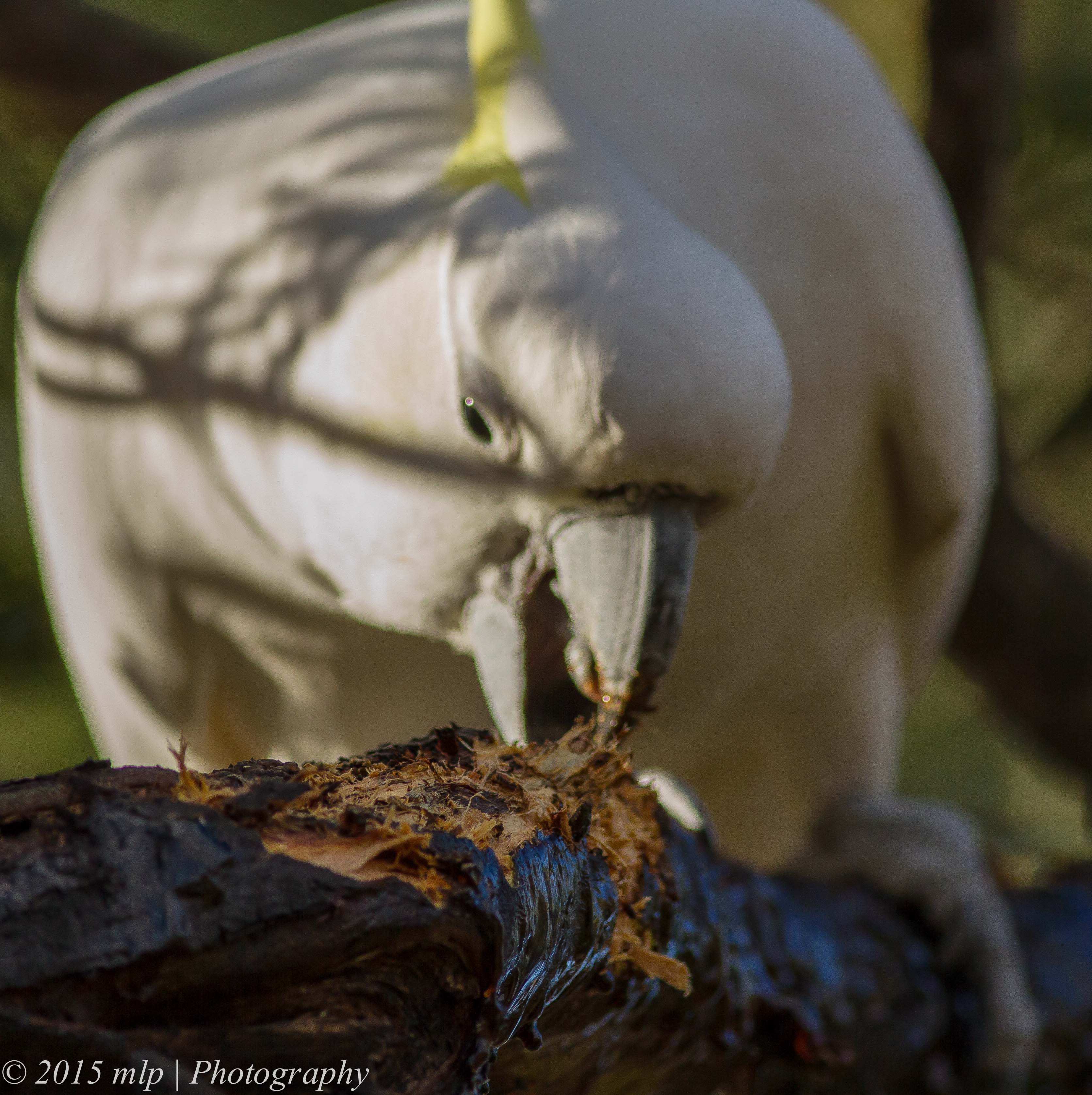
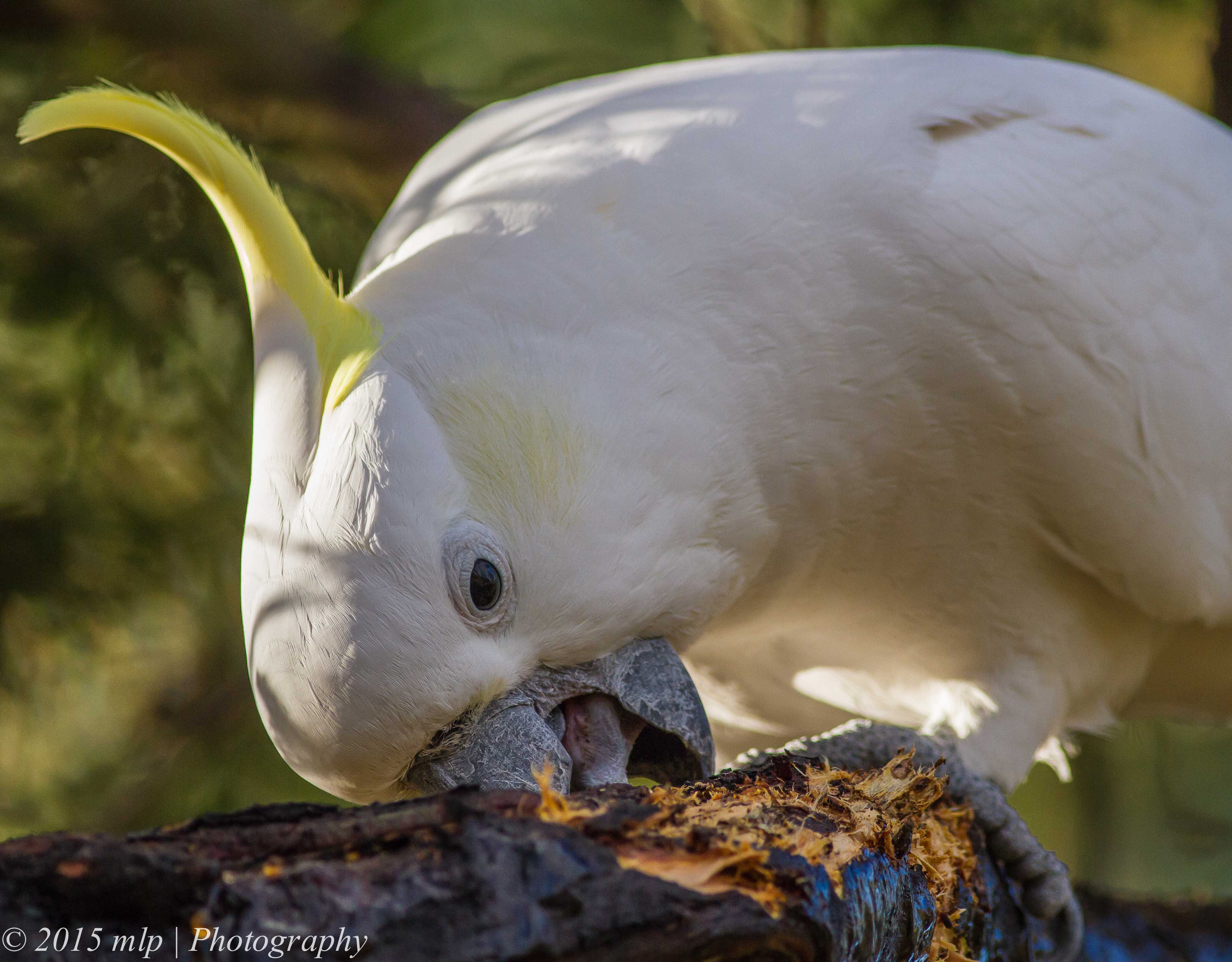
The first in the series was a pair of Sulphur Crested Cockatoos. I only saw these two from a distance due to their very white feathers. You would usually hear cockatoos from quite a way off – one of their defence mechanisms is a very loud 100db+ screech. (I have walked underneath a pair of nesting cockatoos and the noise was deafening. ). These two were very quiet, on low branches and quite unafraid of me as I walked up slowly and carefully to see what they were up to. Even when higher in the trees wild cockatoos are quite wary of people and usually fly off. I took a few shots and watched for a while.

Sulphur Crested Cockatoo

Sulphur Crested Cockatoo

Sulphur Crested Cockatoo

II

Sulphur Crested Cockatoo

Stripping and chewing on the sap covered bark of a Wattle Tree

Sulphur Crested Cockatoo

Ripping the bark off the wattle

Sulphur Crested Cockatoo

going deep into the wood of the branch

Sulphur Crested Cockatoo

coming away with sappy chunks

Sulphur Crested Cockatoo

chewing and just casually keeping an eye on me…

I have seen cockatoos and other similar species chew on dead branches (and peoples houses and wooden verandahs) to keep their beaks trimmed and from growing too big, and I have seen a few dead wattle trees around the park with the bark peeled right down – I had thought that the cockatoos had striped the bark after the tree was dead to do some beak maintenance but maybe they are the ones that are killing the tree with a bit of ring barking while getting high on the sap and wood pulp…