Front View, Rear View

For a small bird that is brightly coloured during breeding season, the male Superb fairy-wren is a noisy bird that likes to alert everything nearby that a stranger has come close or into its territory. It is a curious bird that will pop up onto a branch, have a look at the potential danger and then disappear quickly back into low foliage. Over winter, spring and early summer, I have been paying extra attention to these little birds, participating in the study to gauge the male’s transition to full breeding plumage each year. We are supposed to track what plumage stage each bird is in that we find as we walk our favourite areas. The species has a defined territory making the little tribe (2 to 6 birds) easier to find each time. The study has made it more interesting finding this quite common bird. Usually I just record it as a day or site tick on my list and then ignore it. Having to study the individual family groups for a 15-20 minutes session, identifying the sexes, plumage phase types, general activity and any interaction between groups makes it much more interesting. A by-product of this stationary watch means I see others birds as they fly by or pop out of the nearby scrub.
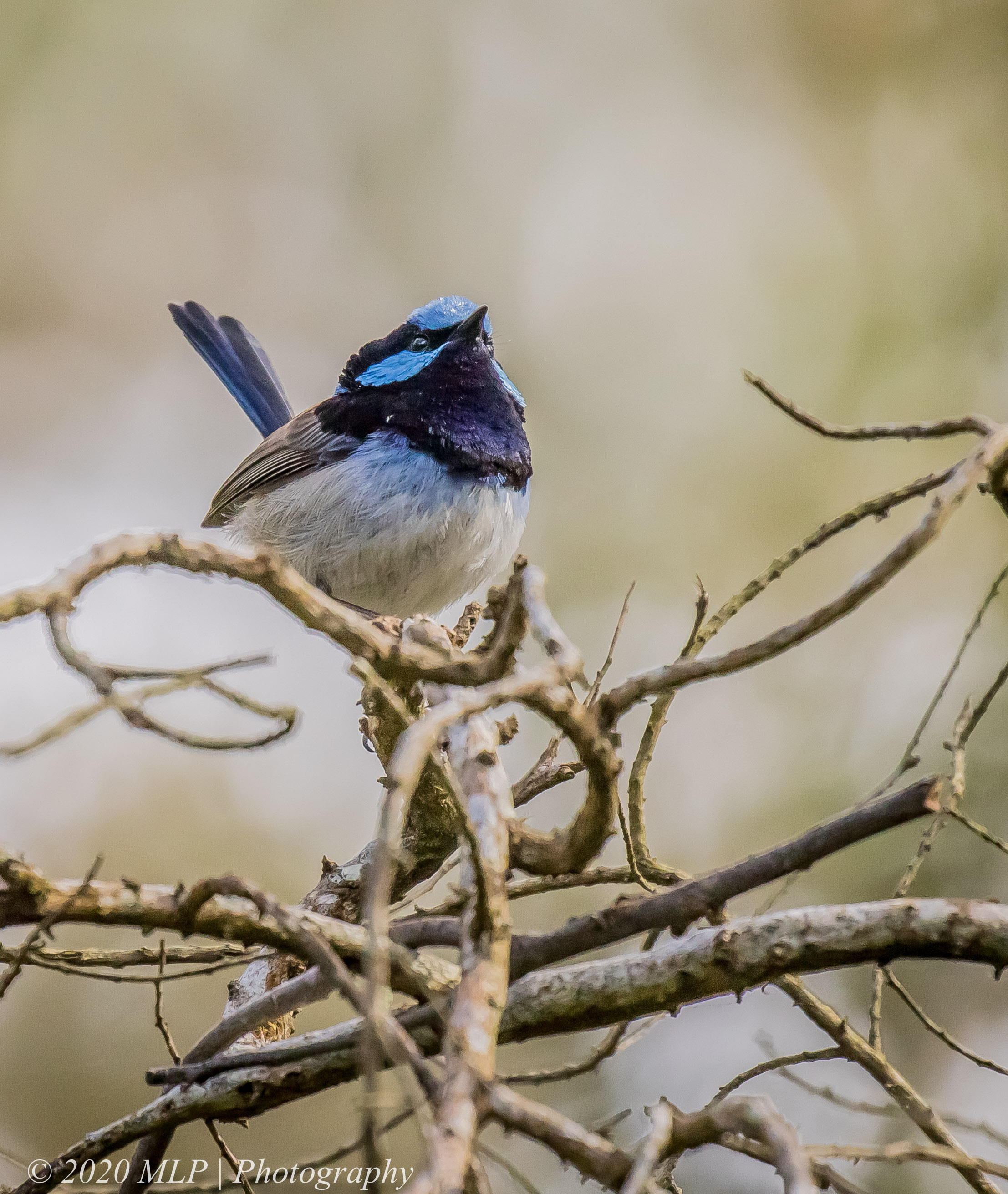
Superb Fairy-wren, Greens Bush, Mornington Peninsula National Park, Vic

Superb Fairy-wren, Greens Bush, Mornington Peninsula National Park, Vic

Superb Fairy-wren II, Greens Bush, Mornington Peninsula National Park, Vic

II


A yellow-tailed Vandal

As I sorted out my camera gear out for my weekly walk around Green’s Bush I heard a crunching in the trees above my car. Several Yellow-tailed black cockatoos were tearing into the branches of a Blackwood tree. Cockatoos will often attack tree branches (and houses) to keep their every growing bills trim and to find insect larvae boring into the wood.

Yellow-tailed Black Cockatoo, Greens Bush, Mornington Peninsula National Park, Vic

Yellow-tailed Black Cockatoo, Greens Bush, Mornington Peninsula National Park, Vic

Yellow-tailed Black Cockatoo, Greens Bush, Mornington Peninsula National Park, Vic

Male YTBC with pink eye ring

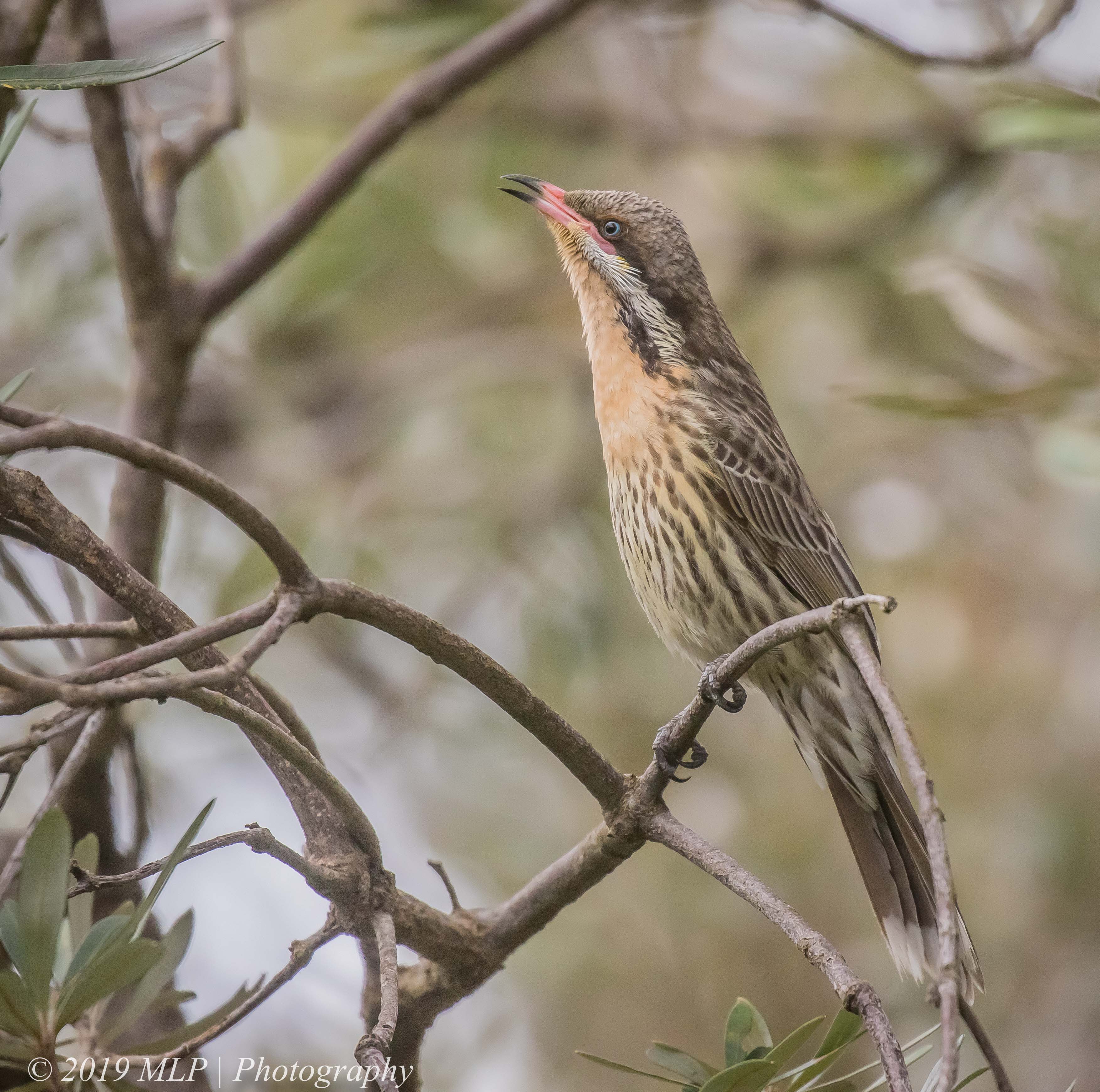
Spiny-cheeked Honeyeater

One of my favourite birds is the Spiny-cheeked Honeyeater, a colourful, gregarious bird with a very distinctive call.  It has a confiding nature and the juveniles can be quite curious. When I made a phishing noise the young one photographed below came in closer for a look at me and then started to call. The Birdlife Australia site describes the call as jerky, musical “liquid and guttural gurgling jumble”. Looking at the bristles below the ear I noticed that there are a few yellow ones – the sign of a young bird. Now that I am often carrying recording gear. I hope to record the species quite soon. I have found an area of the southern section of  Green’s Bush where I occasionally hear  the species.

Juvenile Spiny-cheeked Honeyeater, Greens Bush, Mornington Peninsula National Park, Vic,

Young Spiny-cheeked Honeyeater, Greens Bush, Mornington Peninsula National Park, Vic,

Spiny-cheeked Honeyeater, Greens Bush, Mornington Peninsula National Park, Vic,

II

Spiny-cheeked Honeyeater, Greens Bush, Mornington Peninsula National Park, Vic,

III

Spiny-cheeked Honeyeater, Greens Bush, Mornington Peninsula National Park, Vic,

IV

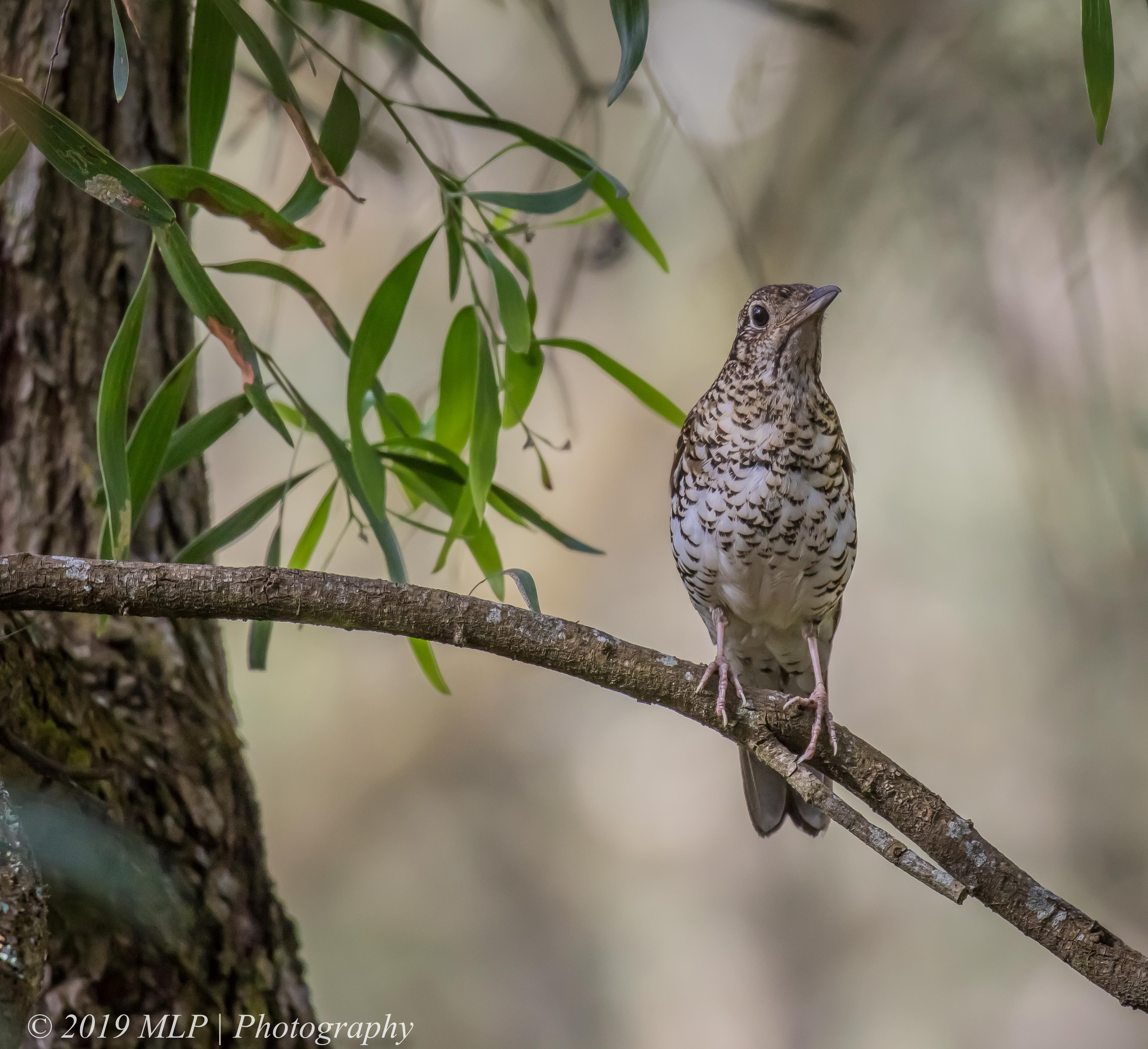
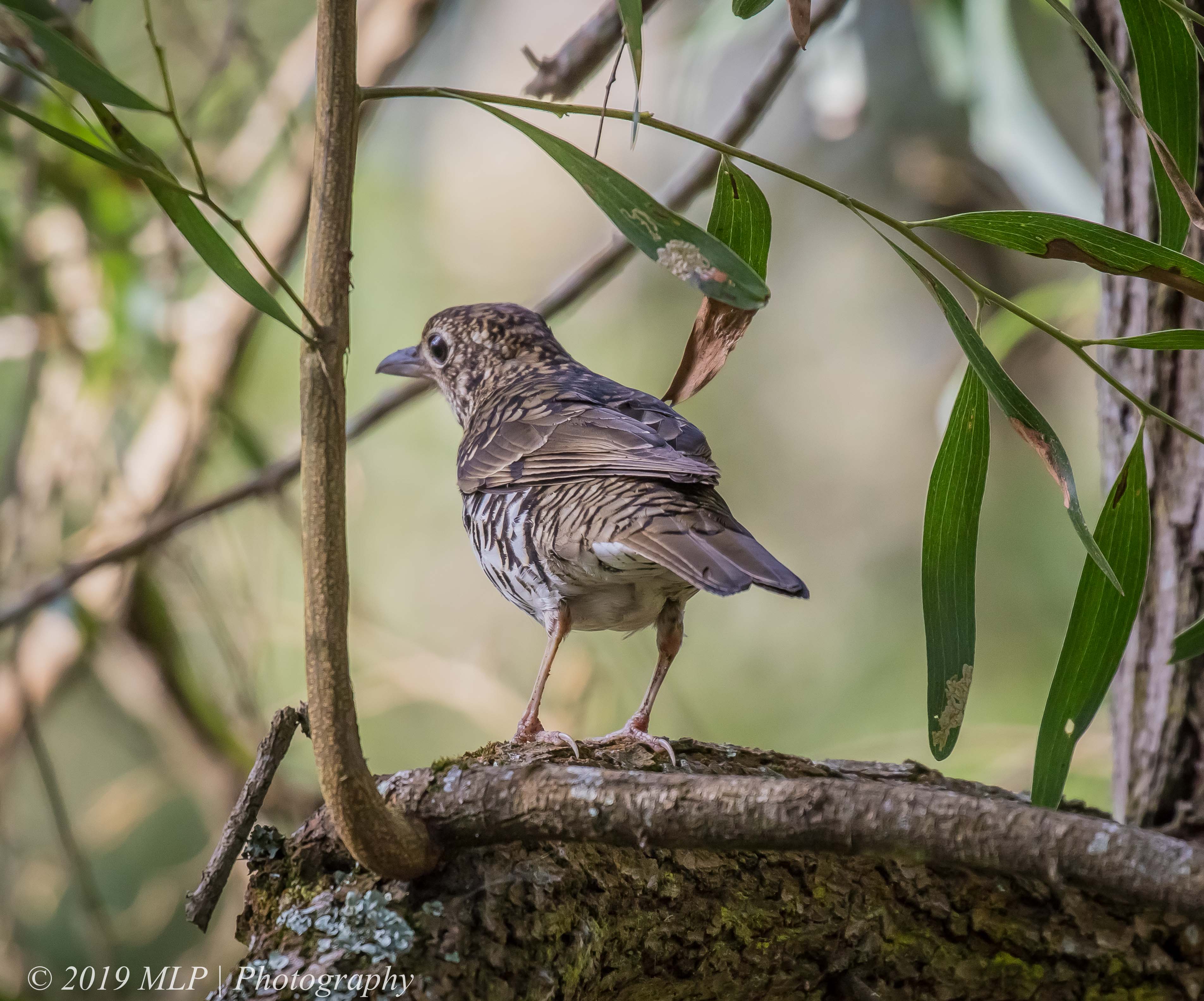
Using the Bassian Thrush flush zone

While an early start at Green’s Bush means a good chance of finding Bassian Thrush it also means a lot less light available for the photo. The long lens needs a good amount of light for a nice clear photo.  While taking the series of the thrush collecting nesting material I crouched as low as possible to the ground and slowly pushed the bassian using its own flush distance zone to move it into better light. This is the distance that it will allow me to approach (about 5-7 metres) without flying off or moving up the path. If the Bassian does not feel threatened it will just walk up the path away from me and continue to feed to collect material. I move a few metres forward and it moves forward. Crouching down I found I could get inside the usual zone but it was hard on the knees.

Bassian Thrush, Greens Bush, Mornington Peninsula National Park, Vic

Bassian Thrush, Greens Bush, Mornington Peninsula National Park, Vic

Bassian Thrush, Greens Bush, Mornington Peninsula National Park, Vic

II

Bassian Thrush, Greens Bush, Mornington Peninsula National Park, Vic

Bassian Thrush collecting nesting material

Bassian Thrush, Greens Bush, Mornington Peninsula National Park, Vic

II

Bassian Thrush, Greens Bush, Mornington Peninsula National Park, Vic

III

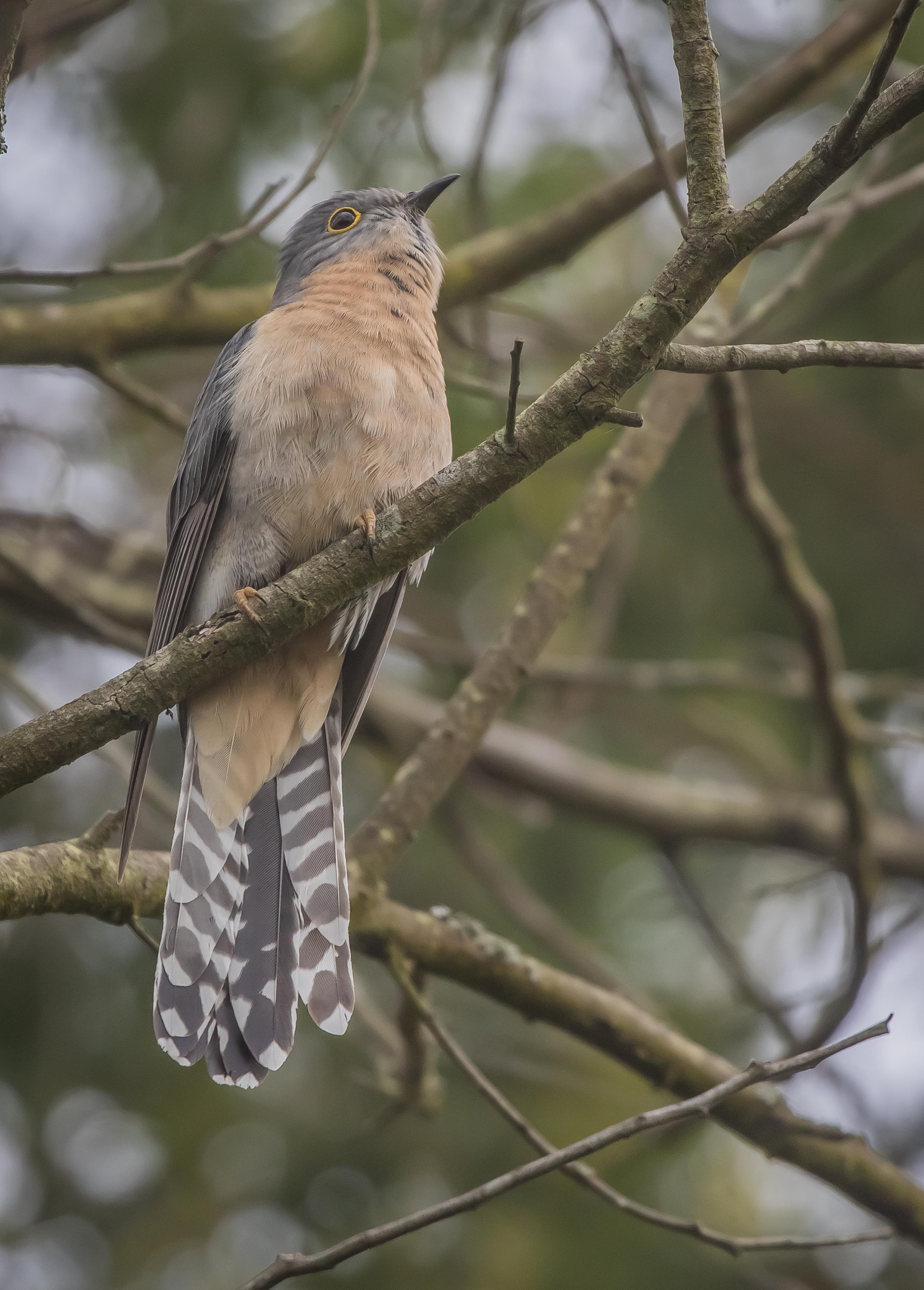
Fan-tailed Cuckoo calling

Through spring and summer I regularly hear Fan-tailed Cuckoos calling: described as a mournful descending trill. Along one of the paths to the Moorooduc quarry a pair flew down to lower branches and started calling.

In the background you can also hear a Striated Pardalote, a Grey Fantail and a Grey Shrikethrush.

I dont often get a chance to photograph these shy birds as they move through the upper and mid tree canopy looking for hairy caterpillars and other insects.

Fan-tailed cuckoo, Moorooduc Quarry

Fan-tailed cuckoo, Moorooduc Quarry, Victoria

Fan-tailed cuckoo, Moorooduc Quarry

II

Fan-tailed cuckoo, Moorooduc Quarry

III

A Mistletoebird intrudes

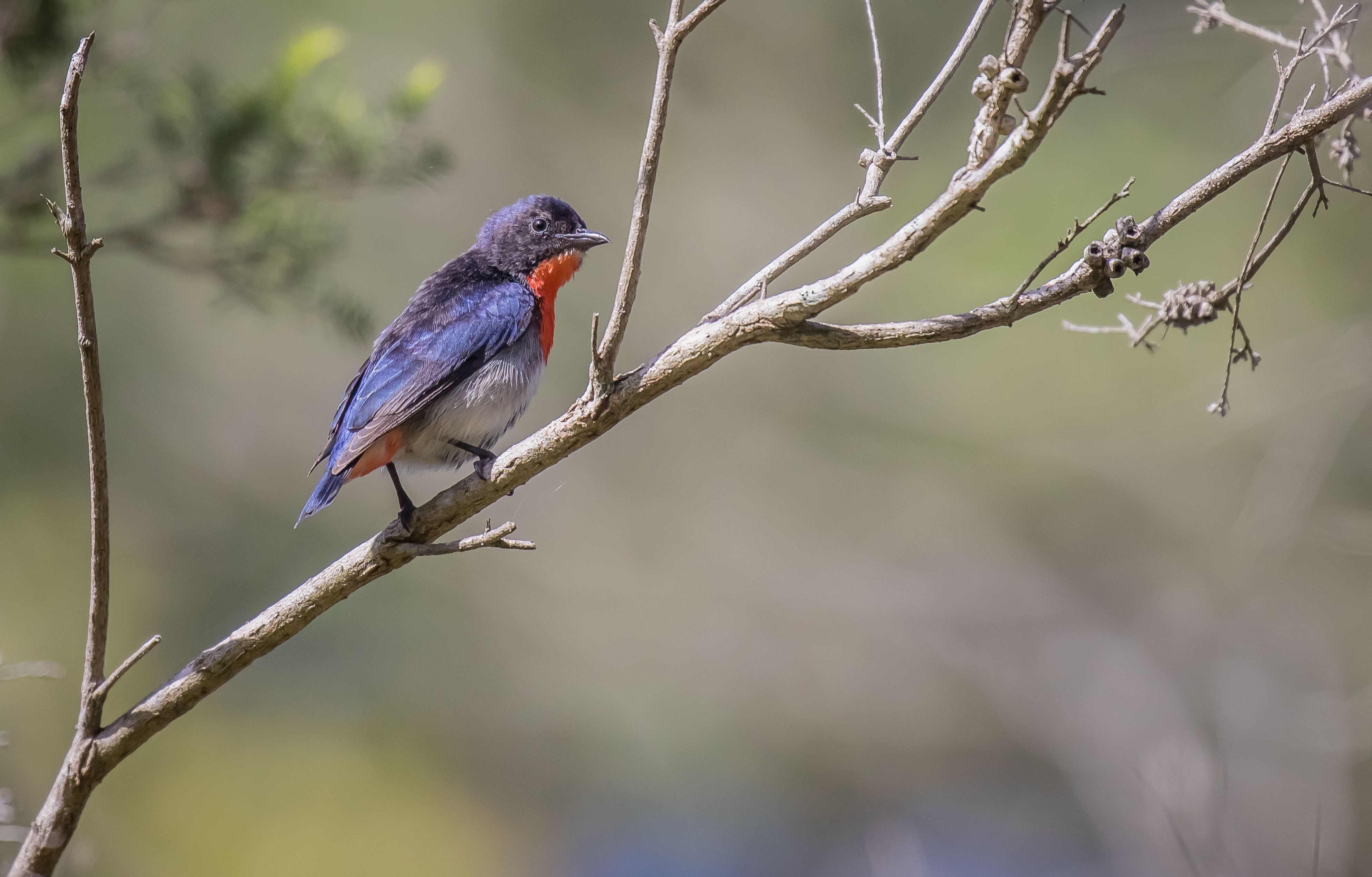
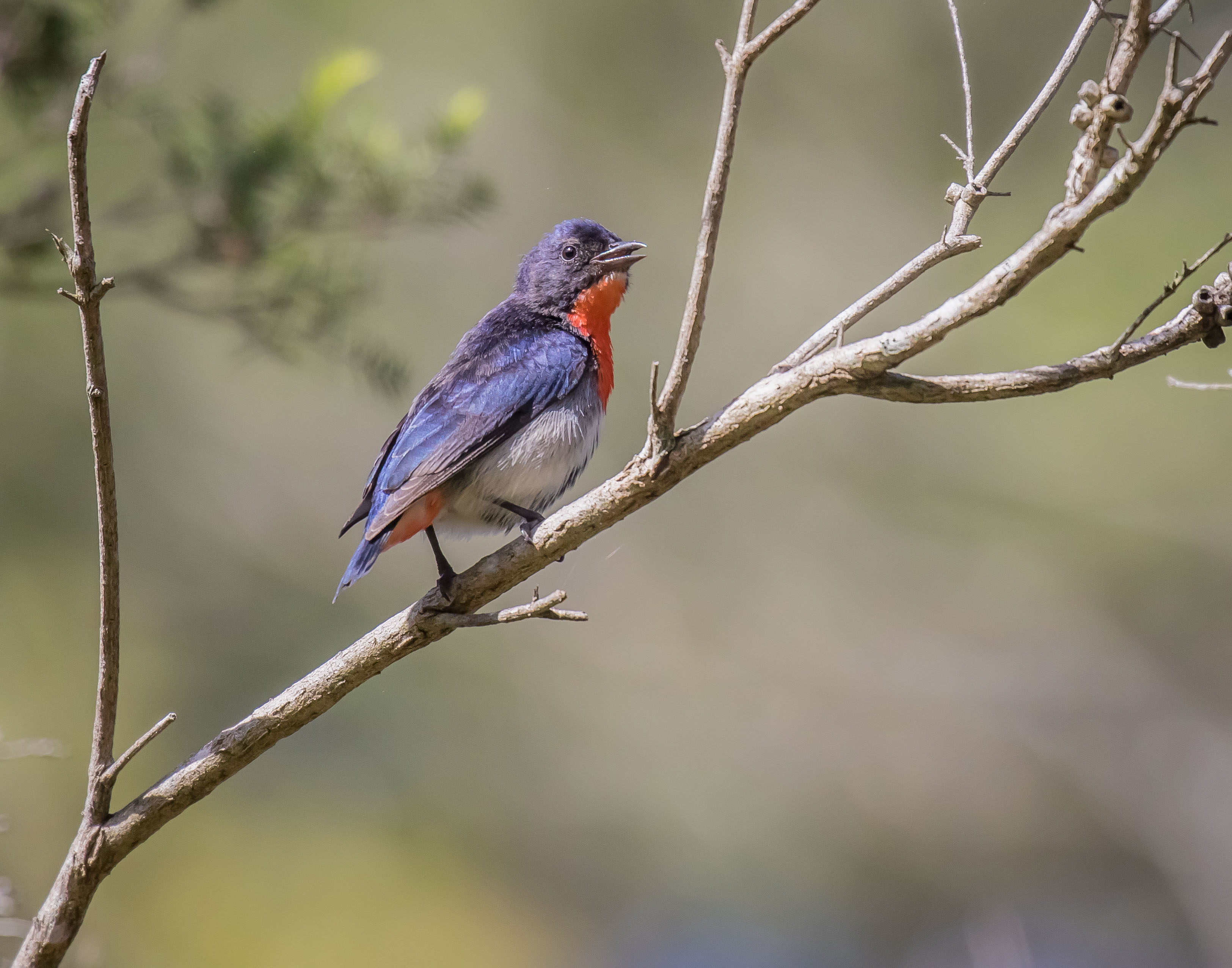
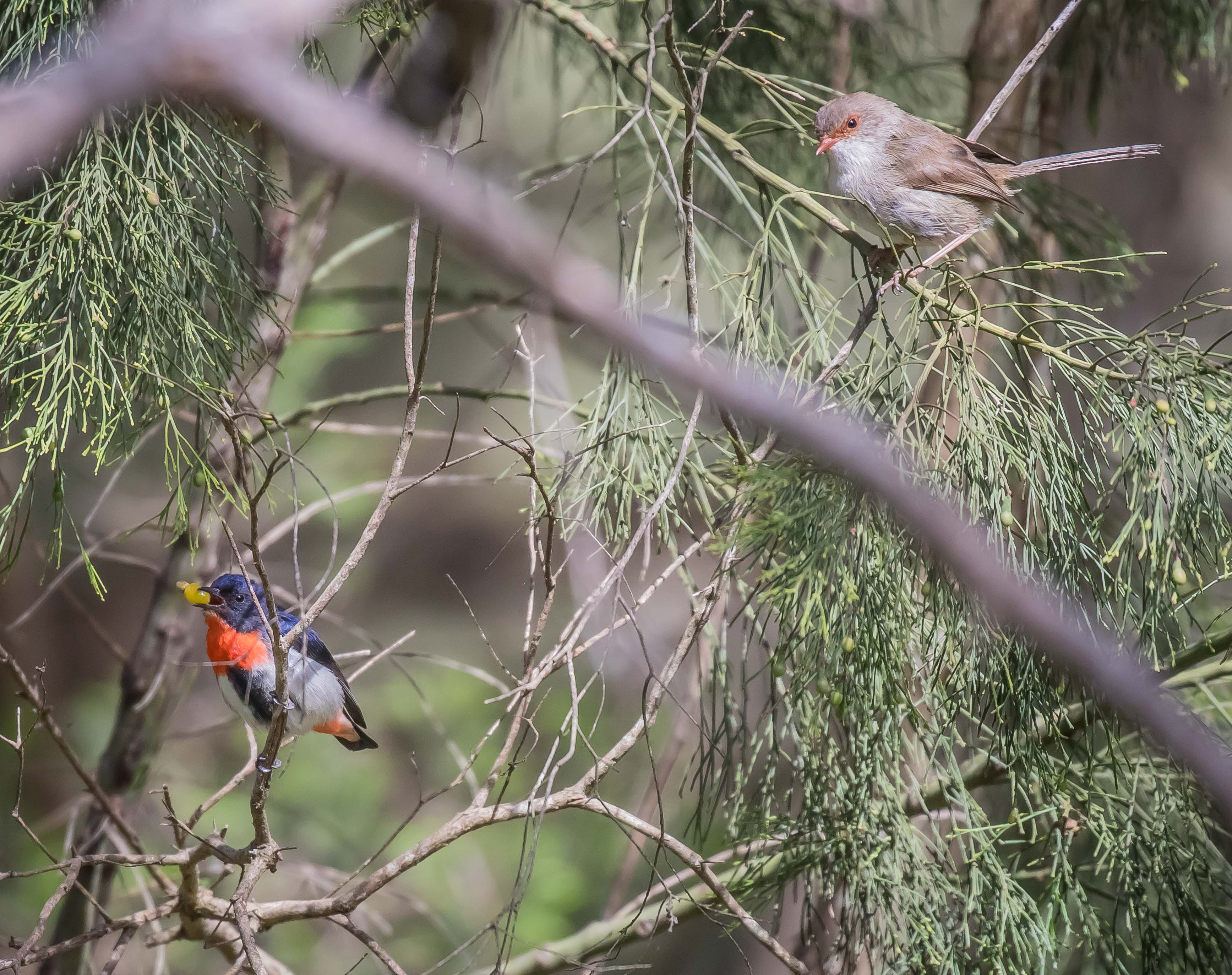
Walking along one of the tracks around the Moorooduc Quarry I heard the distinctive call of the Mistletoebird along with the alarm call of a Superb-fairy wren. Usually the fairy-wrens stay low, nearer the ground, but a female wren was calling quite loudly as a Mistletoebird helped itself to the fruit of a Cherry Ballart tree. The Mistletoebird as its name suggests has a strong relationship with various native mistletoes (Box, Drooping and Creeping) and helps spread the seed onto other trees via a very fast and sticky digestive process. I hadn’t seen one feeding in a Cherry Ballart before. The ballart is another form of parasitic plant that uses the roots of other trees to gain its nutrients rather than the branches.

Mistletoebird, Moorooduc Quarry, Mt Eliza, Vic

Mistletoebird, Moorooduc Quarry, Mt Eliza, Vic

Mistletoebird, Moorooduc Quarry, Mt Eliza, Vic

II

Mistletoebird and Superb Fairy-wren, Moorooduc Quarry, Mt Eliza, Vic

Mistletoebird has a snack while a Superb Fairy-wren frowns at the intrusion.

Small birds of Moorooduc

I often stop by Moorooduc Quarry to observe the Peregrine Falcons on the cliffs of the quarry. Afterwards I walk the nearby tracks and photograph the smaller forest birds.

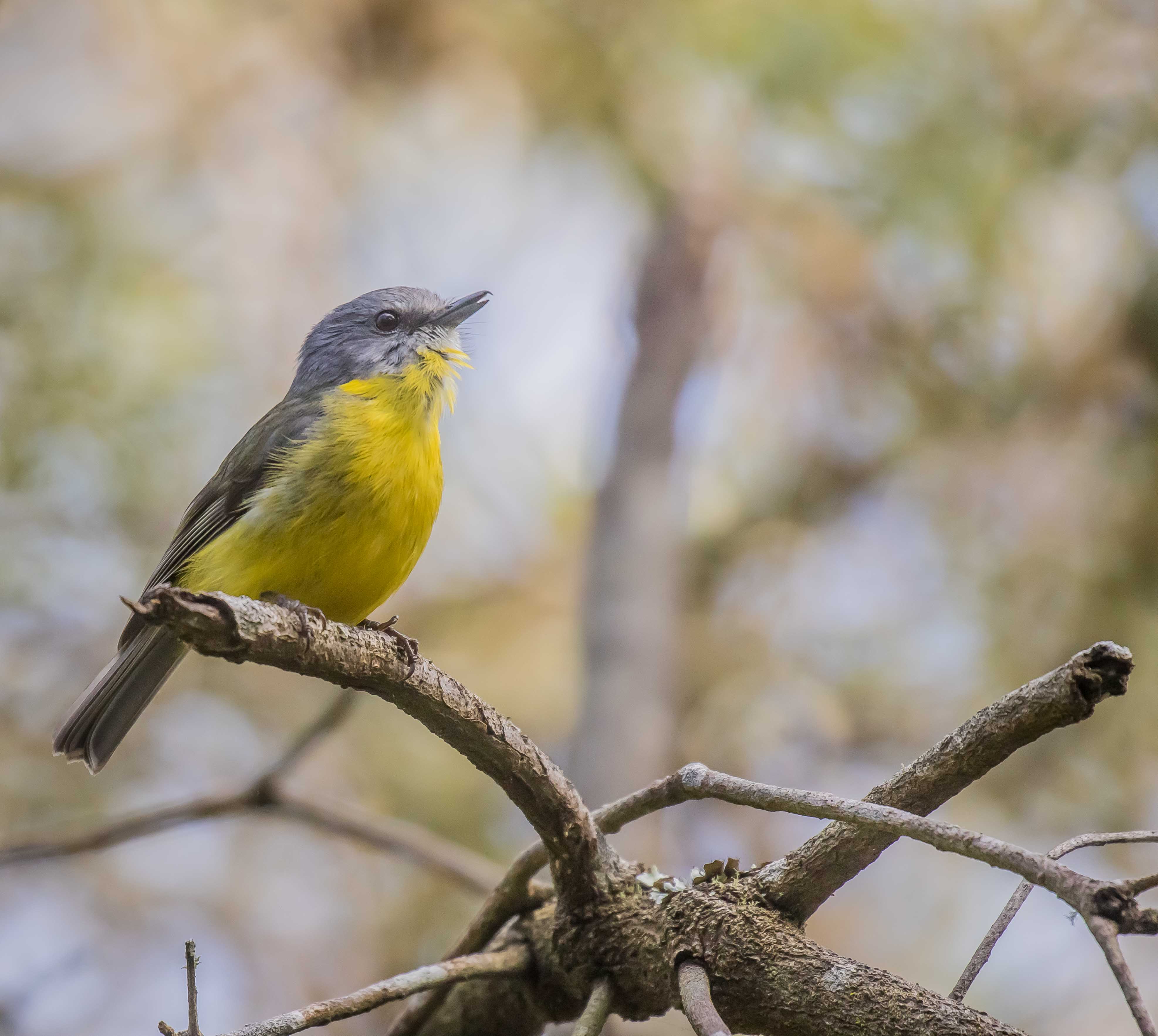
Eastern Yellow Robin, Moorooduc Quarry, Mt Eliza, Vic

Eastern Yellow Robin, Moorooduc Quarry, Mt Eliza, Vic

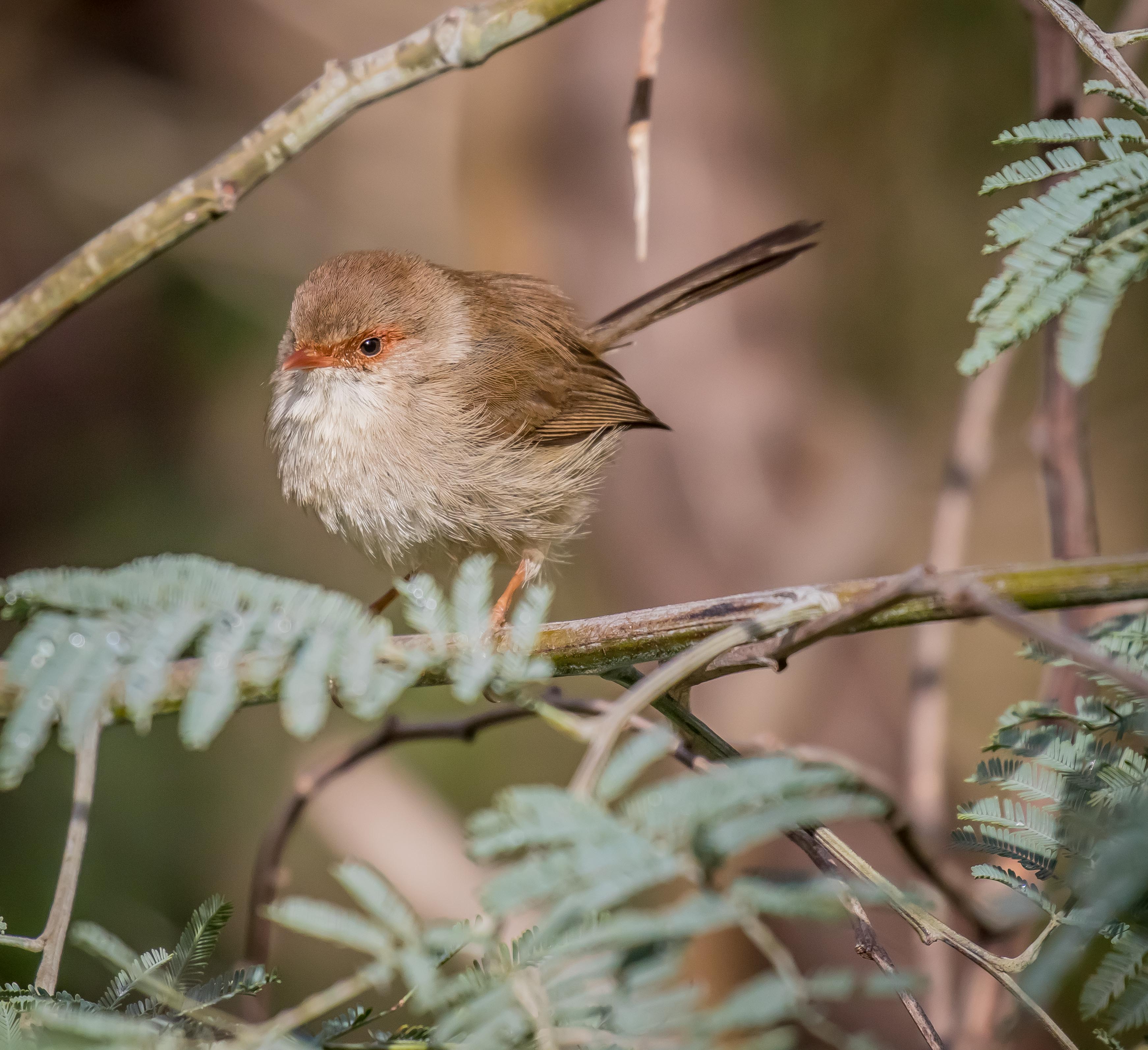
Superb Fairy-wren, Moorooduc Quarry, Mt Eliza, Vic

Female Superb Fairy-wren, Moorooduc Quarry, Mt Eliza, Vic

Superb Fairy-wren, Moorooduc Quarry, Mt Eliza, Vic

II

Walking along Elster Creek

I often stroll along the Elster Creek and up into the old golf course. I have started to take photos of the transition from a 9 hole public golf course to a wetlands. So far it is still much the same with a few trees removed and the grass growing longer. I will post up some images once things start to happen. New layout designs should be issued in March.

The evening is a great time for good light and finding fairly relaxed birds preening and having a last feed.

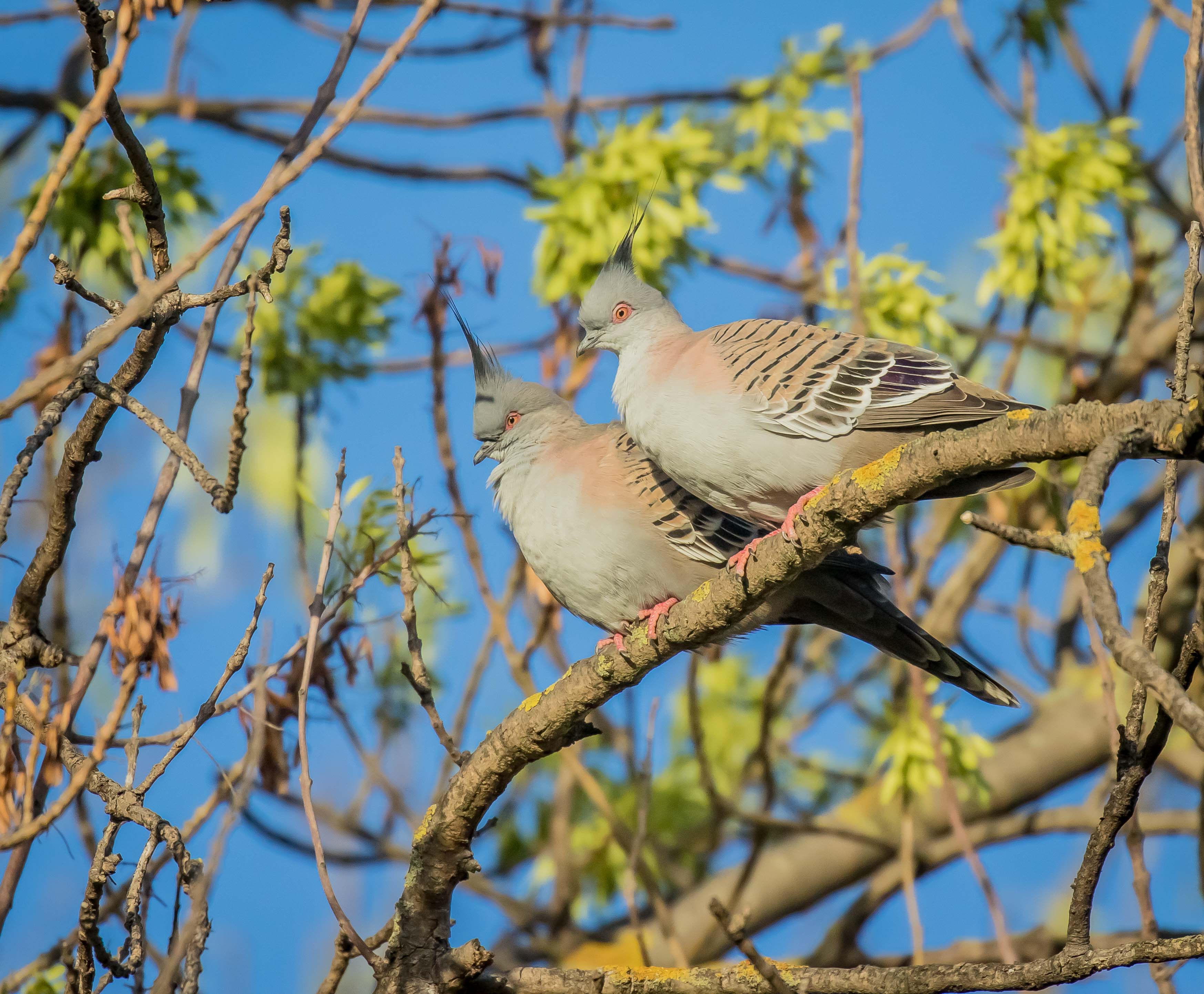
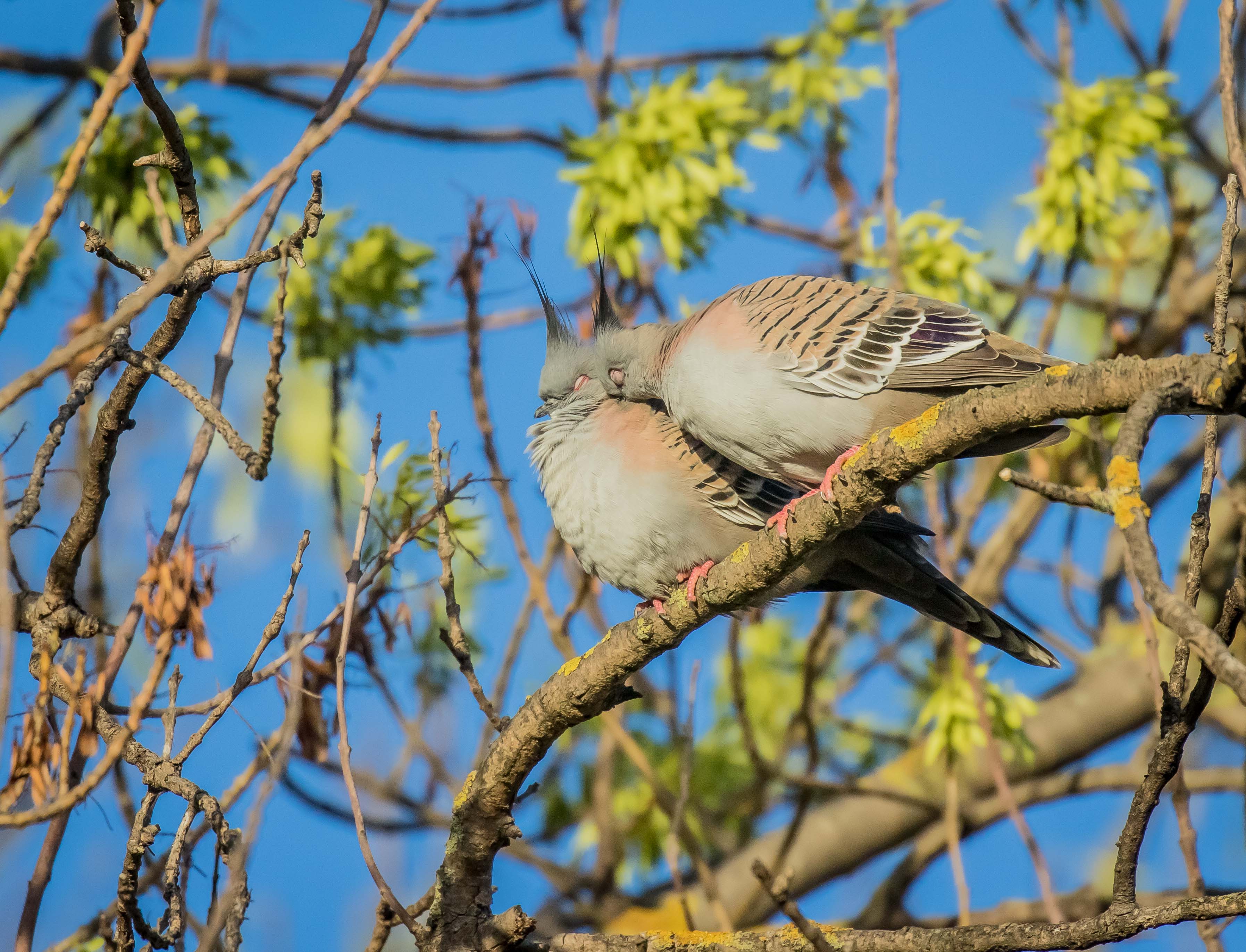
Crested Pigeons, Elster Creek, Elsternwick, Vic

Crested Pigeons, Elster Creek, Elsternwick, Vic

Crested Pigeons, Elster Creek, Elsternwick, Vic

II

White faced heron, Elster Creek, Elsternwick, Vic, 21 July 2019

White faced heron, Elster Creek, Elsternwick, Vic

A rare visitor stops by Elster Creek

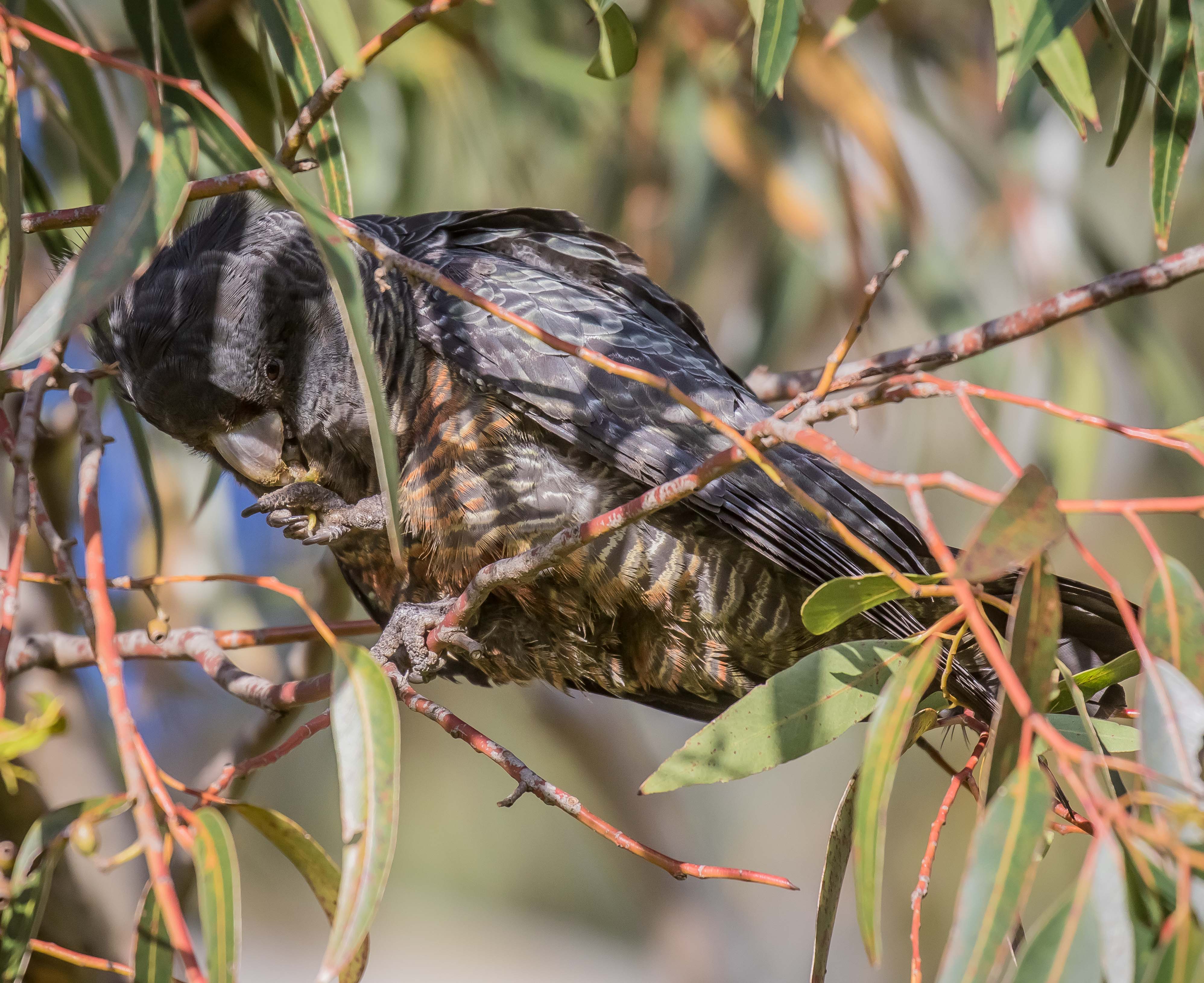
A flock of Gang-gang Cockatoos have been seen throughout the local suburbs, visiting parks and looking for food. They are usually found around inland mountain forests not along bayside beach suburbs. While walking my dog, I found four in a tall gum tree along the creek behind my house. They were squabbling with the local Magpies and Currawongs. I rushed home to get my camera gear to see if I could get a few shots of my first local sighting and only my third sighting in the last 10 years.  The flock had moved on but I did find a lone female Gang-gang feeding on green seed pods in the lower branch of a large tree at the other side of the old golf course. I watched for a while as she ate green seeds and then napped briefly, roused and ate more. After 30 mins or so the other members of her flock flew along the creek calling, she joined them and they headed further down the coast. I have not seen them since.

Gang-gang Cockatoo, Elster Creek, Elsternwick, Vic

Gang-gang Cockatoo, Elster Creek, Elsternwick, Vic

Gang-gang Cockatoo, Elster Creek, Elsternwick, Vic

II

III

Gang-gang Cockatoo, Elster Creek, Elsternwick, Vic

IV

Gang-gang Cockatoo, Elster Creek

V

A Spring visitor at the Quarry

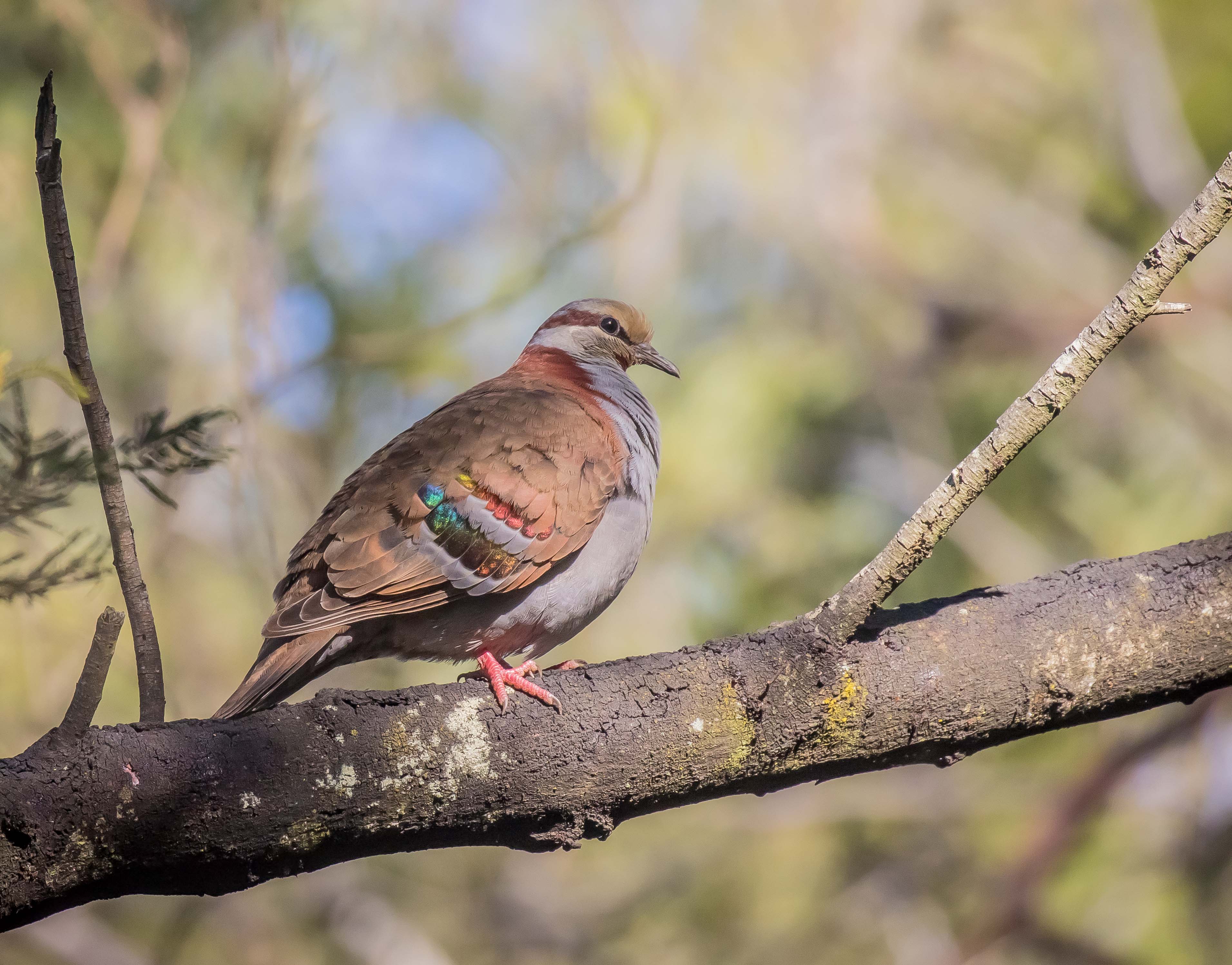
For the last few years in early spring, Moorooduc Quarry has hosted several Brush Bronzewing feeding along the grass and gravel paths. I will regularly see and hear the Common Bronzewing but the Brush is rarer and more often found further north into Central Victoria. They seem to be migrating and stopping off at Moorooduc Quarry for a few weeks for a feed and a rest. I don’t see them at other times of the year locally and I am not sure where they are headed. They may be just stopping by for a particular food source.  It is something I will have to research. I found this young male Bronzewing feeding on the path. He only flew up to a nearby perch and watched as I fiddled with my camera settings. Usually the bronzewings will take off at a decent rate and fly well into the forest before stopping. I was lucky to get a bit of good light to pick up his reflecting iridescent feathers.

Brush Bronzewing, Moorooduc Quarry, Moorooduc, Vic

Brush Bronzewing, Moorooduc Quarry, Mt Eliza, Vic

Brush Bronzewing, Moorooduc Quarry, Moorooduc, Vic

II
White-eared Honeyeater

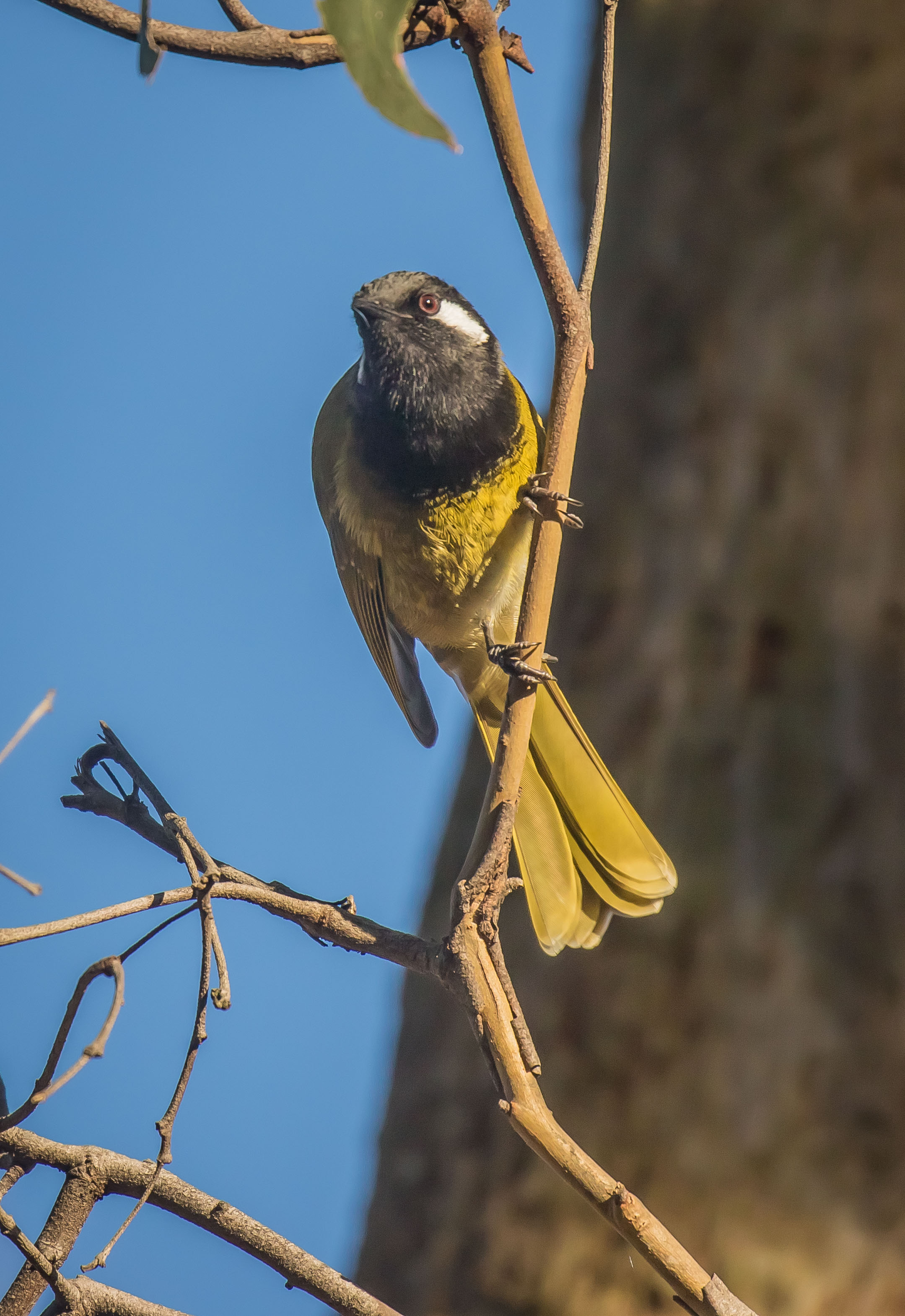
While photographing the Tawny Frogmouth at Moorooduc Quarry, a White-eared Honeyeater flew in to see what I was up to. The honeyeaters dont sit still for very long so I clucked and clicked my tongue a bit while I adjusted and focussed my camera. It seemed to work for a few moments.

White-eared Honeyeater, Moorooduc Quarry, Moorooduc, Vic

White-eared Honeyeater, Moorooduc Quarry, Moorooduc, Vic

White-eared Honeyeater, Moorooduc Quarry, Moorooduc, Vic

II
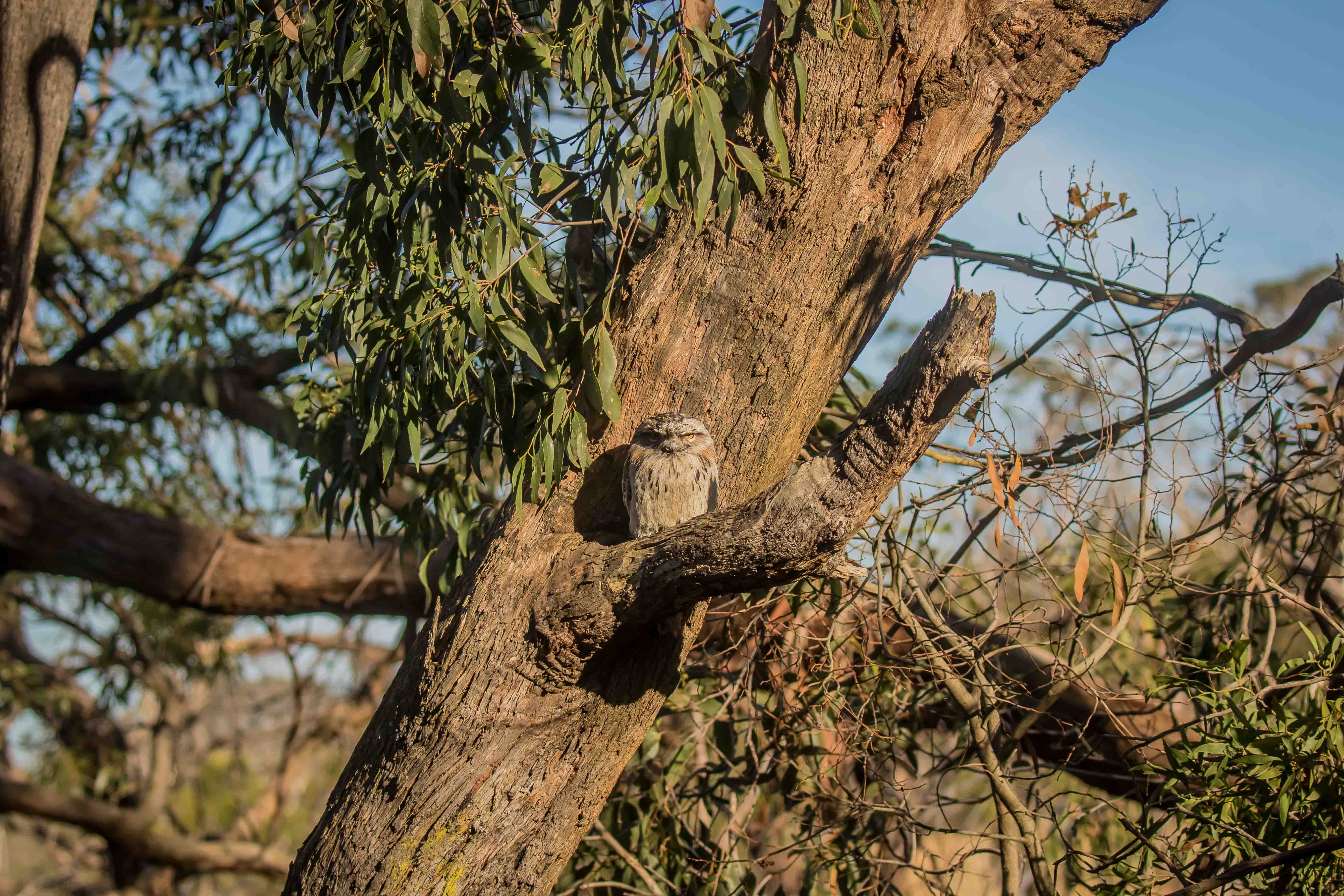
Soaking up the morning sun…

On a walk up the track to the top of the Moorooduc Quarry I found a dozing Tawny Forgmouth on a low branch. He was quite relaxed until a group of walkers joined me and he stretched into his branch like pose and then eased back once they moved on.

Tawny Frogmouth, Moorooduc Quarry, Mount Eliza, Vic

II

III

IV

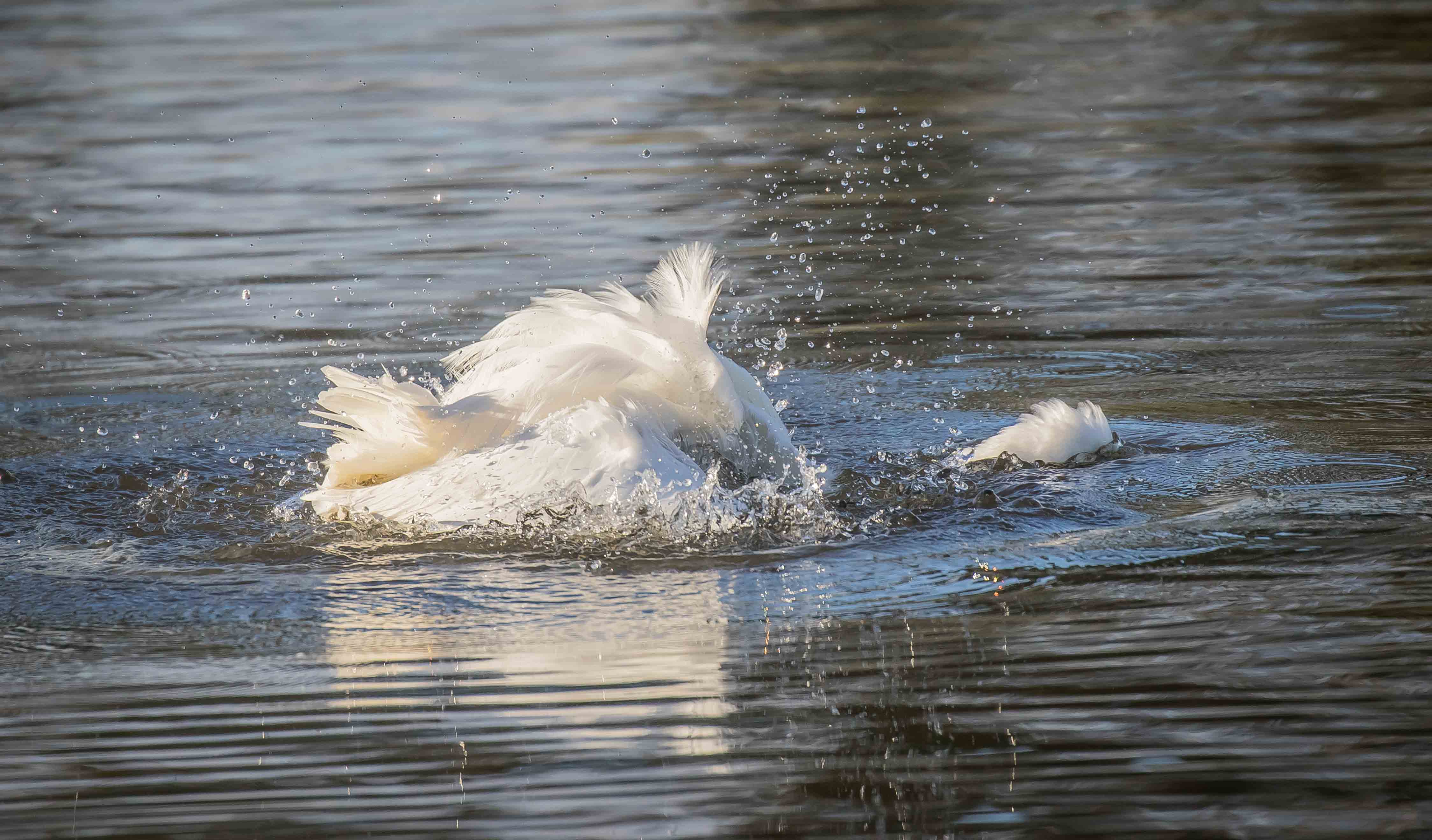
Bath time for a Great Egret

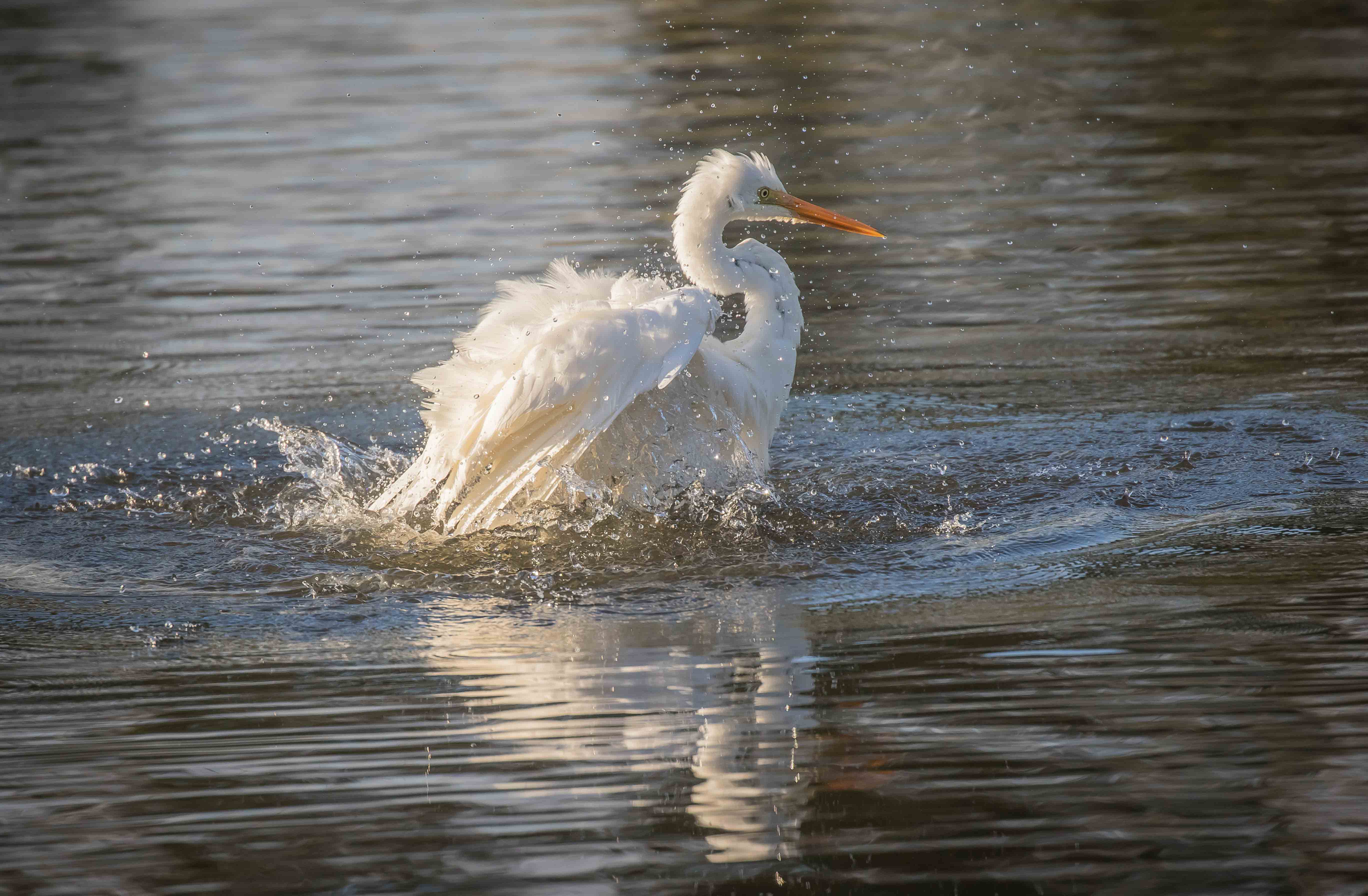
With the slow wilding of the local ex-golf course into an extensive wetlands and woodlands, more birds are spending time in the existing Elster Creek lagoons. One of the semi-regular visitors is the Great Egret below. The egret hunts along the creek during the day and in the evening flies to the larger lagoon for a quick bath and a preen.

Great Egret, Elster Creek, Elsternwick, Vic

Bathtime

III
IV

V

VI

Stranger Danger


The tracks around Green’s Bush are full of nests, juveniles and adults frantically feeding their nestlings. The Eastern Yellow Robins are all along the circuit walk hunting within their territories and alerting their mates when an intruder walks along. The Robin has a number of alert calls and this one was making a piping call and keeping an eye on me as I walked underneath. I must have been near the nest as it did not fly to a lookout a bit further away as they usually would when I try to photograph them.

Eastern Yellow Robin, Greens Bush, Mornington Peninsula National Park

ii

Varied Sittella

Over the last two years I have seen an increase in the numbers of Varied Sittellas moving in small family flocks. They may have been around much longer but they travel and feed fairly high in the tree canopy and sound very much like Striated Thornbills. It wasn’t until I stood still long enough to watch a mixed feeding flock that I discovered them. Now I see them quite often in a number of spots around the Greens Bush circuit. I read up about them recently and learned that they are quite vocal in their feeding groups (and do sound different to Striated and Red-browed Finches, all of which are high pitched chirps) and that people often mistake them for treecreepers due to their feeding habit. I watch them working the trees with treecreepers and can see that they are a fair bit smaller, more stubby. What I have not noticed is that they spiral down branches and trunks while the treecreepers spiral upwards. I can’t believe I never noticed it and it probably means I am spending too much time ticking off birds for listings rather than observing. I also read that the males have longer bills and tend to feed lower in the trees while females stay higher. Time to get more observant.

Varied Sittella, Greens Bush, Mornington Peninsula National Park, Vic